Importance – Why Welding Robotics Matter Today
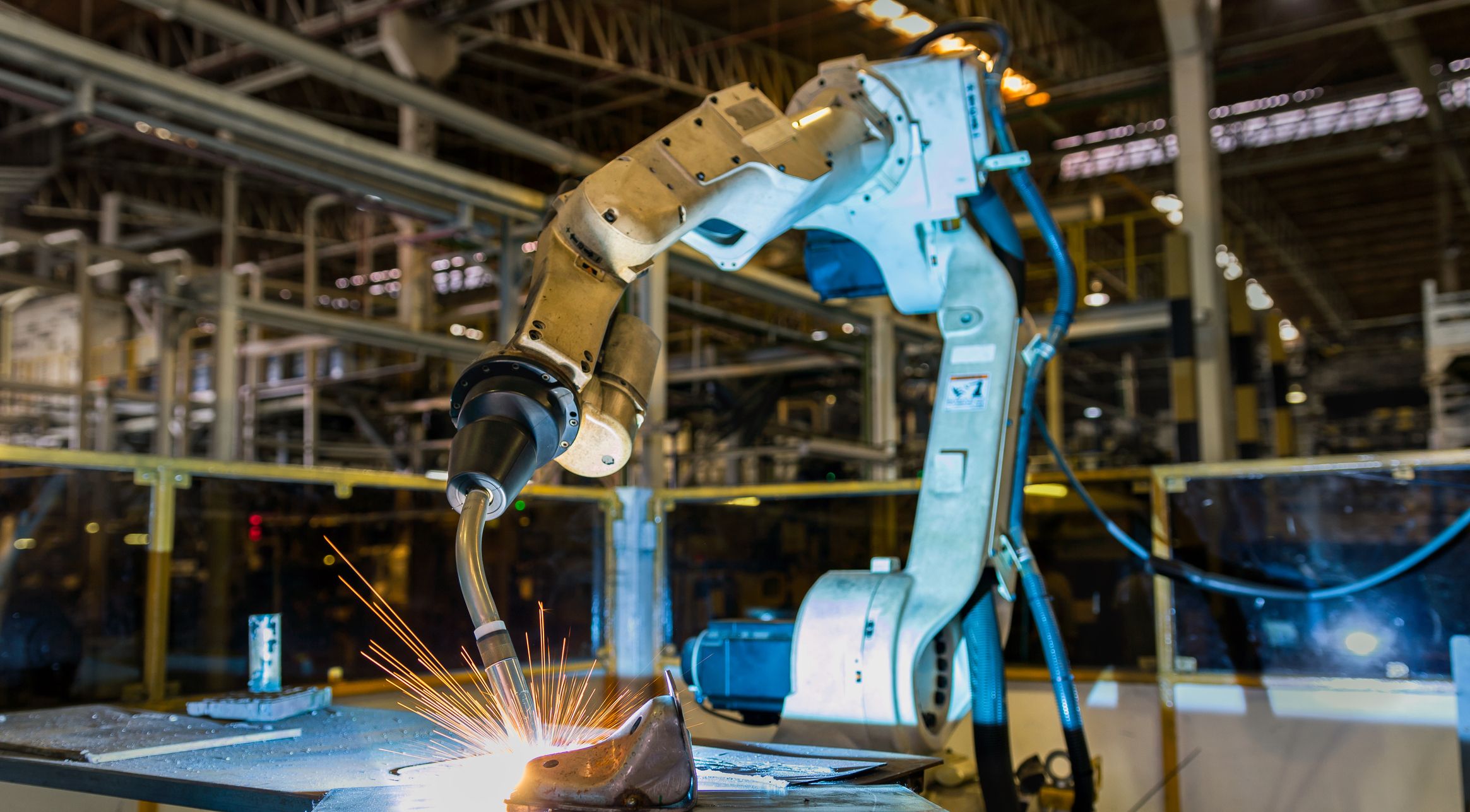
Advanced welding robotics play a critical role in modern industrial automation. As manufacturing demands increase and product tolerances become stricter, automated welding systems provide measurable advantages.
Improved Precision and Repeatability
Robotic welding ensures consistent weld penetration, bead shape, and alignment. Unlike manual welding, robotic systems can maintain identical weld parameters across thousands of cycles, improving structural integrity.
Enhanced Workplace Safety
Welding environments involve high heat, fumes, and radiation. Robotic automation reduces direct human exposure to hazardous conditions, supporting occupational safety standards.
Productivity and Operational Efficiency
Industrial welding robots operate continuously with minimal downtime. This increases throughput while maintaining consistent quality levels. Manufacturers benefit from improved production efficiency and reduced rework rates.
Data-Driven Manufacturing
Integration with AI-driven analytics platforms allows manufacturers to collect and analyze welding performance data. This supports predictive maintenance, quality assurance, and process optimization.
The industries most affected include:
-
Automotive assembly lines
-
Aerospace component fabrication
-
Oil and gas pipeline construction
-
Structural steel manufacturing
-
Heavy machinery production
Advanced welding robots address challenges such as skilled labor shortages, quality inconsistencies, and increasing regulatory compliance requirements.
Precision Control Technologies in Modern Welding Robots
Precision control is one of the defining features of advanced robotic welding systems.
Modern systems use:
-
Real-time arc monitoring
-
Laser seam tracking
-
Adaptive motion control algorithms
-
AI-based defect detection
-
Closed-loop feedback systems
Traditional vs AI-Integrated Welding Systems
| Feature | Traditional Robotic Welding | AI-Integrated Welding Systems |
|---|
| Seam Tracking | Pre-programmed paths | Real-time adaptive tracking |
| Defect Detection | Manual inspection | Automated vision analysis |
| Parameter Optimization | Static settings | Machine learning adjustments |
| Downtime Prediction | Reactive maintenance | Predictive maintenance models |
| Data Analytics | Limited | Advanced industrial analytics |
AI-enhanced welding robots can automatically adjust welding parameters such as voltage, wire feed speed, and travel speed based on material thickness and joint geometry. This reduces weld defects and improves overall quality control.
Recent Updates and Emerging Trends in Welding Automation
Recent advancements in welding robotics reflect broader trends in smart manufacturing and AI integration.
One significant development is the increasing use of collaborative welding robots, also known as cobots. Unlike traditional industrial robots, cobots are designed to operate safely alongside human workers. They use force sensors and vision systems to avoid collisions and adapt to dynamic environments.
Another trend involves cloud-connected industrial robotics platforms. These systems allow centralized monitoring of welding performance across multiple facilities. Real-time data dashboards support remote diagnostics and performance benchmarking.
AI-based weld inspection systems have also become more sophisticated. Computer vision algorithms can now detect micro-defects such as porosity, cracks, and incomplete penetration during the welding process itself rather than after production.
Additive manufacturing integration is another emerging area. Hybrid systems combine robotic welding with 3D metal printing technologies, enabling complex component fabrication with enhanced material efficiency.
Sustainability has also become a focus. Energy-efficient welding power supplies and optimized arc control algorithms help reduce energy consumption in large-scale manufacturing environments.
Laws and Policies Affecting Welding Robot Technology
Welding robot systems are influenced by national and international regulations related to safety, automation, and industrial compliance.
In many countries, robotic welding systems must comply with:
-
Occupational safety standards
-
Electrical and machinery safety directives
-
Industrial emissions regulations
-
Worker protection policies
-
Factory automation guidelines
For example, in the United States, regulatory oversight may involve agencies such as the Occupational Safety and Health Administration and standards developed by recognized engineering organizations. In the European Union, machinery directives and CE compliance standards apply to automated welding equipment.
In India, industrial safety compliance falls under regulations governed by the Ministry of Labour and Employment and relevant factory safety legislation. Manufacturers using robotic welding must ensure compliance with workplace safety norms and industrial automation standards.
Environmental policies may also influence welding processes. Regulations related to fume extraction, energy consumption, and emissions monitoring affect how robotic welding cells are designed and operated.
As governments promote advanced manufacturing initiatives, industrial robotics adoption is often aligned with national technology development programs that encourage automation, digital transformation, and skill development.
Tools and Resources for Welding Robot Technology
Several tools and platforms support implementation and optimization of advanced welding robots.
Commonly used resources include:
-
Robotic simulation software for virtual weld path testing
-
Industrial automation design platforms
-
Welding parameter calculators
-
Predictive maintenance analytics dashboards
-
Machine vision inspection systems
-
AI model training frameworks for defect detection
-
Industrial IoT monitoring systems
-
CAD/CAM integration tools
Digital Tools Overview
| Tool Category | Primary Purpose |
|---|
| Robotic Simulation Software | Test welding paths before deployment |
| Welding Parameter Calculators | Optimize voltage and current settings |
| Industrial IoT Platforms | Monitor real-time performance metrics |
| Vision Inspection Systems | Detect weld defects automatically |
| Predictive Maintenance Tools | Anticipate equipment failure |
Training programs in industrial robotics and automation engineering also support knowledge development in this field. Educational institutions and technical training centers offer certifications in robotic programming, welding automation, and AI integration for manufacturing systems.
Maintenance Tips for Advanced Welding Robots
Regular maintenance ensures consistent performance and long operational life.
Key maintenance practices include:
-
Inspecting and cleaning welding torches regularly
-
Monitoring cable wear and replacing damaged components
-
Calibrating robotic arms and sensors
-
Checking alignment of welding fixtures
-
Updating control software and AI models
-
Monitoring cooling systems for overheating prevention
-
Reviewing performance data logs for irregularities
Predictive maintenance strategies are increasingly popular. Instead of waiting for equipment failure, manufacturers use machine learning algorithms to detect early warning signs such as vibration changes or electrical irregularities.
Routine maintenance improves system reliability and reduces unexpected downtime.
Frequently Asked Questions
What is AI integration in welding robots?
AI integration refers to the use of machine learning algorithms, computer vision, and data analytics within robotic welding systems. These technologies enable real-time parameter adjustments, defect detection, and predictive maintenance.
Are welding robots suitable for small-scale manufacturing?
Yes, compact robotic welding systems and collaborative robots are designed for flexible production environments, including small and medium-sized manufacturing units.
How do welding robots improve weld quality?
They maintain consistent welding parameters, precise torch positioning, and real-time seam tracking, which reduces human variability and minimizes defects.
What industries benefit most from robotic welding?
Automotive manufacturing, aerospace fabrication, shipbuilding, heavy machinery production, and structural steel construction are major users of robotic welding systems.
Do welding robots require regular calibration?
Yes, periodic calibration of robotic arms, sensors, and welding parameters ensures accuracy and consistent weld quality.
Conclusion
Advanced welding robot technology represents a significant evolution in industrial automation and smart manufacturing. By integrating artificial intelligence, precision control systems, and data-driven monitoring tools, modern welding robots enhance productivity, safety, and quality assurance.
As manufacturing industries continue to embrace digital transformation, welding robotics will likely become even more adaptive, connected, and intelligent. Compliance with safety regulations, proper maintenance strategies, and effective use of industrial automation software are essential for maximizing performance.
Understanding AI-driven welding systems, precision control technologies, and predictive maintenance practices helps organizations align with modern manufacturing standards and long-term operational efficiency goals.