Ball Mill Machines: Unlocking the Power of Grinding Technology
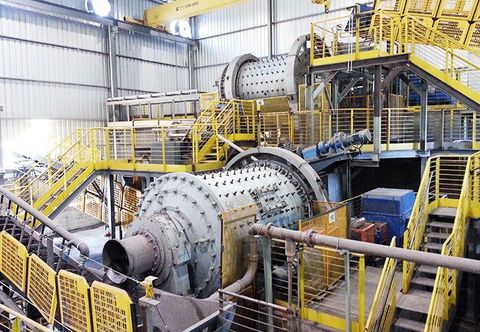
A ball mill works by placing material inside a rotating chamber along with grinding media, usually hardened steel, stainless steel, ceramic, or other suitable materials. As the chamber rotates, the grinding media move with it and eventually fall or roll through the material. The repeated impact and friction gradually reduce particle size. Ball mills are used across a wide range of industries, including mining and mineral processing, cement manufacturing, ceramics, chemicals, pharmaceuticals, pigments, food processing, and research laboratories. Their popularity comes partly from their straightforward operating principle and their ability to handle different materials and production requirements.
What Is a Ball Mill Machine?
A ball mill is a grinding machine that uses rotational movement and grinding media to reduce the size of solid materials.
The main components typically include:
- Rotating grinding chamber
- Grinding media
- Drive motor
- Gearbox or drive system
- Bearings
- Feed system
- Discharge system
- Supporting frame
- Safety guards and controls
During operation, material enters the chamber and comes into contact with the grinding media. Depending on the design and operating conditions, size reduction occurs through a combination of impact, compression, and attrition.
Some machines operate continuously, while others are designed for batch processing. Laboratory ball mills are generally smaller and intended for controlled sample preparation, whereas industrial machines can process large quantities of material continuously.
Why Ball Mills Are Used
Ball mills remain relevant because they can perform several types of grinding tasks without relying on an overly complicated operating principle.
Key benefits
| Benefit | Why it matters |
|---|---|
| Versatile grinding | Suitable for many minerals, chemicals, ceramics, and other materials |
| Scalable designs | Available for laboratory, pilot, and industrial applications |
| Controlled particle reduction | Operating conditions can be adjusted for different grinding requirements |
| Continuous operation | Certain industrial configurations can process material continuously |
| Wet or dry grinding | Designs are available for different processing environments |
| Established technology | Operating principles and maintenance practices are well understood |
| Different media options | Grinding media can be selected according to material and contamination requirements |
Ball mills can also be integrated into larger processing systems. For example, a mineral-processing plant may use a ball mill after crushing equipment to further reduce material before classification or downstream treatment.
Limitations to Understand Before Buying
Ball mills are useful, but they are not the ideal solution for every grinding application.
Energy consumption can be significant, particularly in large industrial installations. Grinding also generates heat, noise, vibration, and wear. Grinding media and internal liners gradually deteriorate and need inspection or replacement.
Another consideration is particle-size distribution. A ball mill can produce fine material, but achieving a very narrow particle-size range may require additional classification or separation equipment.
Material contamination is also worth considering. If steel grinding media are used with sensitive materials, small amounts of wear debris may enter the product. Ceramic or specialized media may be preferable where contamination must be minimized.
Before selecting equipment, it is useful to ask:
- What material will be processed?
- What is the starting particle size?
- What final particle size is required?
- Is wet or dry grinding needed?
- How much material must be processed?
- Is the process batch or continuous?
- How sensitive is the material to heat?
- Does contamination from grinding media matter?
- What level of automation is required?
Types of Ball Mill Machines
Ball mills are available in several configurations, and the best option depends heavily on the application.
1. Horizontal Ball Mills
Horizontal ball mills have a cylindrical chamber positioned horizontally. They are widely used in industrial grinding applications and can be designed for both batch and continuous operation.
2. Vertical Ball Mills
Vertical configurations use a vertically arranged grinding chamber. They can be useful where space, process requirements, or specific grinding characteristics favor a vertical design.
3. Laboratory Ball Mills
Laboratory machines are designed for research, quality control, sample preparation, and small-scale testing. They typically provide greater control over parameters such as speed, grinding time, and sample quantity.
4. Planetary Ball Mills
Planetary ball mills use rotating grinding jars combined with planetary movement. They are commonly used when very fine grinding or laboratory-scale material processing is required.
5. Wet Ball Mills
Wet grinding uses a liquid medium during the grinding process. This can help with certain materials and applications where slurry processing is appropriate.
6. Dry Ball Mills
Dry grinding takes place without adding a liquid grinding medium. These machines are often used where the final product needs to remain dry or where wet processing is unsuitable.
Latest Trends and Innovations
Modern ball mill technology is increasingly focused on efficiency, monitoring, automation, and better control rather than simply increasing machine size.
One important development is the use of sensors and digital monitoring systems. Temperature, vibration, motor load, bearing condition, and other operating parameters can be monitored to identify unusual conditions earlier.
Automation is another area receiving attention. Modern systems can integrate controls for feed rates, operating speed, material flow, and other process variables. This can help operators maintain more consistent conditions.
Energy efficiency is also an important consideration. Manufacturers continue to work on drive systems, mill internals, grinding media, and process controls intended to reduce unnecessary energy consumption.
Condition monitoring and predictive maintenance are becoming increasingly relevant as well. Instead of relying entirely on fixed maintenance schedules, operators can use equipment data to identify signs of wear or developing mechanical problems.
Key Features to Consider
When comparing ball mills, looking at the machine's advertised capacity alone is not enough.
| Feature | What to evaluate |
| Chamber size | Match it to the required batch or production volume |
| Motor and drive | Consider required operating load and efficiency |
| Operating speed | Check whether the speed range suits the material |
| Grinding media | Consider material, size, hardness, and contamination |
| Liner material | Review wear resistance and replacement requirements |
| Feed size | Confirm that the machine can accept the intended material |
| Discharge system | Compare batch and continuous discharge arrangements |
| Wet/dry capability | Choose according to the process |
| Controls | Consider manual, automated, or remotely monitored operation |
| Maintenance access | Check how easily liners, bearings, and media can be inspected |
| Safety systems | Look for appropriate guarding, emergency stops, and interlocks |
Companies and Solutions to Compare
The ball mill market includes both large industrial equipment manufacturers and companies specializing in laboratory-scale grinding.
For large mining, minerals, and industrial applications, companies such as FLSmidth, Metso, CITIC HIC, and ThyssenKrupp Industrial Solutions have been associated with large-scale grinding equipment and complete processing systems.
For laboratory and research applications, RETSCH is a well-known name, particularly for laboratory mills and sample preparation equipment. Other laboratory equipment manufacturers offer planetary and specialized milling systems for research environments.
The important point is not simply choosing the most recognized manufacturer. Buyers should compare machine configuration, application experience, service arrangements, spare-parts availability, technical documentation, testing capability, and compatibility with the existing process.
A practical comparison should focus on the equipment rather than the brand name alone.
How to Choose the Right Ball Mill
The best selection process begins with the material rather than the machine.
Buyer checklist
Identify the material being processed
Measure the typical feed particle size
Define the desired final particle size
Determine required throughput
Decide between batch and continuous operation
Determine whether wet or dry grinding is appropriate
Evaluate heat sensitivity
Consider contamination requirements
Select appropriate grinding media
Review liner materials and expected wear
Check electrical and installation requirements
Evaluate maintenance access
Consider automation and monitoring requirements
Review available technical support
Confirm availability of replacement components
If the application is unfamiliar, laboratory or pilot testing can be useful before committing to a larger industrial system. Testing can reveal how the material behaves, how much grinding time is required, and what type of media or operating conditions may be appropriate.
Tips for Better Use and Maintenance
Good maintenance can have a major effect on equipment reliability.
Operators should regularly inspect bearings, liners, drive components, seals, and other wear-prone parts. Unusual vibration, temperature changes, noise, or motor behavior should not be ignored.
Grinding media should also be monitored. As media wear down, their size and shape change, which can affect grinding performance. Replenishment or replacement should follow the equipment manufacturer's operating recommendations.
Overloading should be avoided. Feeding more material than the machine is designed to handle can increase mechanical stress and may reduce grinding effectiveness.
Proper lubrication is another basic but important maintenance task. Lubricants should be selected and applied according to the equipment manufacturer's specifications.
For wet grinding systems, attention should also be given to slurry consistency, seals, pumps, and discharge arrangements. For dry systems, dust control and ventilation may require additional consideration.
Common Questions About Ball Mills
Can a ball mill grind hard materials?
Yes. Ball mills are commonly used for hard materials, including various minerals and ceramics. However, the appropriate grinding media, liner materials, operating conditions, and machine configuration depend on the specific material.
Are ball mills suitable for fine grinding?
They can produce relatively fine particles, although the achievable result depends on the material and equipment. Very fine or tightly controlled particle sizes may require additional classification or specialized milling technology.
What is better, wet or dry grinding?
Neither is universally better. Wet grinding can be useful when slurry processing is acceptable, while dry grinding is appropriate when adding liquid is undesirable. The material and downstream process should determine the choice.
How often should a ball mill be maintained?
Maintenance frequency depends on operating hours, load, material characteristics, machine design, and manufacturer recommendations. Routine inspections should generally be combined with scheduled maintenance.
Can laboratory results be used to select an industrial mill?
Laboratory testing can provide useful information, but results should be interpreted carefully. Industrial equipment operates at different scales, and factors such as material flow, heat generation, liner behavior, and energy requirements can change with scale.
What is the most important specification when comparing machines?
There is no single specification that determines suitability. Feed size, required final size, throughput, material properties, grinding method, and operating conditions should be considered together.
Conclusion
Ball mill machines continue to play an important role in grinding technology because their basic operating principle can be adapted to many different materials and production environments. From small laboratory systems to large industrial installations, the technology offers a range of configurations for particle-size reduction.
For buyers, the most useful approach is to start with the application rather than the machine. Understanding the material, target particle size, throughput, grinding method, contamination requirements, and maintenance expectations makes it easier to narrow down suitable options.