Bitumen Tanks: A Guide to Storage Design, Heating Systems, Insulation and Temperature Control
A bitumen tank is a specially designed storage vessel used to hold bitumen, a thick petroleum-based material widely used in road construction, waterproofing, roofing, and industrial applications.
Because bitumen becomes highly viscous at ordinary temperatures, storage tanks normally incorporate heating and temperature-control arrangements to keep the material in a workable condition.
Bitumen tanks are commonly found at asphalt mixing plants, road construction sites, petroleum facilities, and material storage yards. Their design depends on the type of bitumen, required storage volume, operating temperature, heating method, and method used to transfer the material.
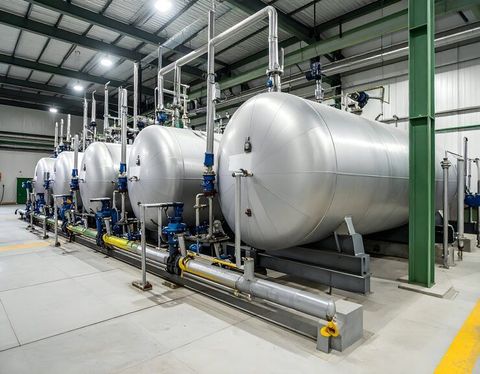
The basic purpose of a bitumen tank is to maintain the material at a controlled temperature while limiting heat loss and preventing contamination. A properly designed system normally combines a steel vessel with insulation, heating equipment, temperature measurement devices, valves, pipelines, and safety components.
How Bitumen Storage Developed
Traditional bitumen storage relied on relatively simple steel containers and external heating arrangements. As road construction became more mechanized, larger storage vessels and controlled heating systems became necessary to maintain a steady supply of usable material.
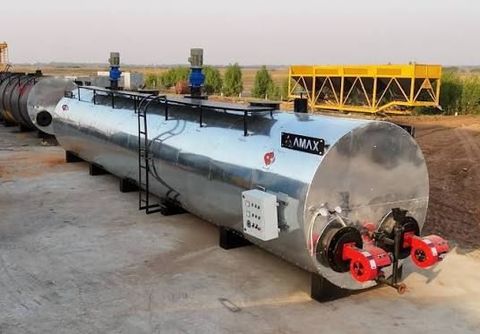
Modern systems may use horizontal or vertical tanks, depending on site layout and storage requirements. Fixed tanks are common at permanent plants, while transportable units can be used where construction activities move between locations.
The operating principle remains straightforward: bitumen enters the tank, controlled heat maintains an appropriate temperature, and pumps or other transfer equipment move the material toward the next stage of production or application.
Main Components
A typical bitumen storage system can include several interconnected components:
Storage vessel for containing the bitumen
Heating arrangement for maintaining temperature
Thermal insulation for reducing heat loss
Temperature sensors for monitoring conditions
Level indicators for tracking material quantity
Pumps and pipelines for material transfer
Valves for controlling flow
Venting arrangements for pressure management
Access openings for inspection and maintenance
Safety equipment for handling heated material
The exact configuration varies according to capacity, material characteristics, plant layout, and operating requirements.
Importance
Why Temperature Control Matters
Bitumen changes considerably in viscosity as its temperature changes. When it becomes too cool, pumping and transfer become more difficult. Excessive heating, on the other hand, can affect material characteristics and may increase safety risks.
For this reason, temperature monitoring is an important part of bitumen storage. Operators generally establish a suitable operating range based on the bitumen grade, manufacturer information, applicable technical specifications, and the requirements of the production process.
Maintaining controlled conditions also helps reduce unnecessary heating cycles. Insulation around the vessel and associated pipelines can limit heat loss and support more stable operation.
Role in Road Construction
Bitumen is a major binder used in asphalt mixtures. At an asphalt mixing plant, aggregates are heated and combined with bituminous binder according to a specified mixture design. A storage tank provides a controlled location from which the binder can be transferred to the mixing process.
The tank therefore forms part of a larger material-handling system. Its operation can influence the consistency of material flow, temperature control, and plant scheduling.
Common Applications
Bitumen tanks can be used in several industries and activities, including:
Asphalt mixing plants
Highway and road construction
Airport pavement construction
Roofing material production
Waterproofing material production
Bitumen emulsion facilities
Industrial material storage
Pavement maintenance operations
The required tank arrangement differs between these applications because the material may have different grades, temperatures, storage periods, and handling requirements.
Basic Tank Types
Bitumen tanks can be grouped according to orientation, heating arrangement, and mobility.
| Tank type | General characteristic | Typical setting |
|---|---|---|
| Horizontal tank | Low-profile vessel with horizontal orientation | Asphalt plants and storage yards |
| Vertical tank | Upright vessel with a smaller ground footprint | Fixed industrial installations |
| Heated tank | Includes a controlled heating arrangement | Long-term heated storage |
| Transportable tank | Designed for movement between locations | Temporary construction operations |
| Insulated tank | Uses thermal insulation around the vessel | Applications requiring stable temperature |
The selection depends on available space, capacity requirements, heating needs, and operating conditions.
Recent Updates
Greater Attention to Energy Management
Between 2024 and 2026, industrial heating systems have increasingly focused on reducing unnecessary energy consumption and improving temperature control. This trend also applies to bitumen storage equipment.
Modern installations may incorporate improved insulation, digital temperature monitoring, automated controls, and more precise heating regulation. These features can help operators observe tank conditions and adjust heating according to operating requirements.
The underlying principle is not simply to increase heating capacity. Instead, systems are increasingly designed around controlled heat transfer and reduced heat loss.
Digital Monitoring
Digital instruments are becoming more common in industrial storage systems. Temperature sensors, level indicators, control panels, and alarms can provide operators with information about tank conditions.
Some installations can integrate these readings with wider plant-control systems. This allows tank temperature and material levels to be monitored alongside other production parameters.
Improved Heating Arrangements
Heating systems may use thermal oil, electric heating elements, or other arrangements depending on the tank design. Indirect heating is commonly considered where controlled heat transfer is required because the heating medium does not directly contact the bitumen.
Designers also pay attention to heating distribution. Uneven heating can create localized high-temperature areas, while inadequate heating can make material transfer difficult.
Environmental Considerations
Current industrial planning places greater attention on emissions, energy use, material containment, and workplace safety. Bitumen storage systems may therefore be designed with improved insulation, controlled heating, appropriate ventilation, and measures intended to limit leaks or spills.
Environmental requirements vary according to location, facility type, and applicable regulations.
Laws or Policies
Indian Regulatory Framework
In India, bitumen storage and handling can be affected by several layers of regulation. Requirements may involve environmental authorities, workplace safety rules, construction specifications, fire-safety provisions, and standards applicable to electrical or mechanical equipment.
The Central Pollution Control Board and State Pollution Control Boards have roles in environmental regulation. Facilities may need to comply with requirements relating to emissions, waste, pollution prevention, and environmental permissions depending on their activities.
Road Construction Specifications
Road projects in India commonly refer to technical specifications issued by the Ministry of Road Transport and Highways and applicable Indian Standards. These documents can define requirements for materials, testing, construction practices, and quality control.
For asphalt-related work, project specifications may address bitumen grade, heating, mixing temperatures, storage conditions, and handling practices. The exact requirements depend on the project and material specification.
Workplace and Fire Safety
Heated bitumen presents hazards because it is handled at elevated temperatures. Facilities therefore need appropriate procedures for worker protection, equipment access, emergency response, and fire prevention.
Electrical installations, pressure-related equipment, structural arrangements, and fire protection may also be subject to applicable Indian regulations and standards. Specific compliance requirements should be established according to the facility's location, capacity, equipment configuration, and regulatory classification.
Tools and Resources
Temperature Monitoring Tools
Digital thermometers, fixed temperature sensors, infrared instruments, and control-panel displays can help operators monitor tank conditions. The measurement method should be appropriate for the tank design and operating environment.
Level Measurement
Level gauges and electronic level sensors can help determine how much material is present. Accurate level information is useful for planning material transfer and avoiding excessive filling.
Inspection Records
A simple inspection template can record:
Tank temperature
Material level
Heating-system condition
Insulation condition
Valve condition
Pipeline condition
Signs of leakage
Instrument readings
Unusual noise or vibration
Maintaining consistent records can help identify changes in equipment condition over time.
Technical References
Useful sources include the Ministry of Road Transport and Highways specifications, Bureau of Indian Standards publications, Central Pollution Control Board guidance, State Pollution Control Board requirements, and technical documentation supplied with the equipment.
Manufacturers' technical manuals can also provide information about tank dimensions, operating temperatures, heating arrangements, inspection procedures, and equipment limitations.
FAQs
What is a bitumen tank used for?
A bitumen tank is used to store and maintain bitumen at a controlled temperature before it is transferred to another process. It is commonly used at asphalt mixing plants, road construction facilities, and other industrial locations.
How does a bitumen tank heating system work?
A bitumen tank heating system transfers controlled heat to the stored material. Depending on the design, heating may use thermal oil, electrical elements, or another controlled heating arrangement. Temperature sensors help monitor operating conditions.
What temperature is used in a bitumen tank?
The appropriate temperature depends on the bitumen grade, application, and technical specification. There is no single temperature suitable for every bitumen tank. Operators generally follow the relevant material documentation and project requirements.
What are the main safety concerns with a bitumen tank?
The main concerns include exposure to hot material, burns, fire hazards, leaks, equipment failure, and excessive heating. Appropriate protective equipment, temperature controls, inspection procedures, ventilation, and emergency arrangements are important parts of safe operation.
How is a bitumen tank maintained?
Maintenance commonly includes inspection of the tank structure, heating system, insulation, valves, pipelines, sensors, pumps, and safety equipment. Inspection intervals depend on equipment design, operating conditions, applicable regulations, and the facility's maintenance program.
Conclusion
A bitumen tank is an important part of systems that store and handle heated bitumen for road construction and industrial applications. Its main functions are controlled storage, temperature management, and reliable material transfer. Modern systems increasingly incorporate improved insulation, digital monitoring, and controlled heating arrangements. In India, applicable environmental, road-construction, workplace, and safety requirements depend on the facility and project conditions.