Conveyor Systems: Types, Facts, Components, Applications and Working Principles
Conveyor systems are mechanical material-handling systems designed to move products, packages, raw materials, and other loads from one location to another. They are widely used in manufacturing plants, warehouses, distribution centers, food processing facilities, airports, and other industrial environments.
A conveyor system can transport materials horizontally, at an incline, or vertically, depending on its design. Modern systems can also connect with automated equipment, sensors, programmable controllers, and sorting technologies to coordinate material movement across a facility.
Why Conveyor Systems Are Important
Conveyor systems help organize the movement of materials and can reduce repetitive manual handling. In warehouses and distribution centers, they may support receiving, order picking, staging, sorting, packing, and outbound transportation processes.
For manufacturing operations, conveyors can connect different production stages and help maintain a consistent flow of materials. Their configuration depends on factors such as load characteristics, required throughput, available space, and integration with existing equipment.
Types of Conveyor Systems
Belt Conveyor Systems
Belt conveyors use a continuous belt supported by rollers or other structures to transport materials. They are commonly used for packages, cartons, components, bulk materials, and products moving through production or distribution areas.
Roller Conveyor Systems
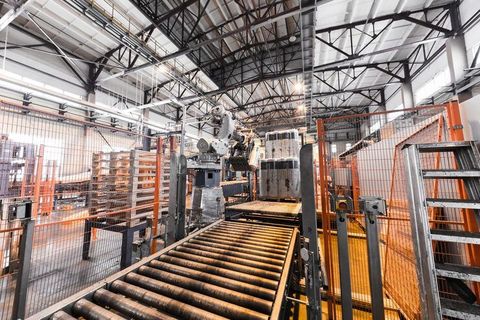
Roller conveyors move loads across a series of rollers. Gravity roller conveyors can use an incline or manual force, while powered roller conveyors use mechanical drives. They are frequently used for cartons, containers, pallets, and other loads with suitable bottom surfaces.
Chain Conveyor Systems
Chain conveyors use chains to move products or heavy loads. They can be appropriate for applications involving pallets, industrial components, and loads that require a durable conveying surface.
Screw Conveyor Systems
Screw conveyors use a rotating screw within a trough or housing to move materials. They are commonly associated with bulk-material handling and can be designed with enclosed conveying areas for particular applications.
Gravity Conveyor Systems
Gravity conveyors use gravity or manual force to move loads. Common examples include gravity roller conveyors, gravity wheel conveyors, and chute conveyors.
Overhead Conveyor Systems
Overhead conveyors transport materials above the floor and can help preserve floor space. They are used in various manufacturing and material-handling applications where the facility layout supports overhead movement.
Vertical Conveyor Systems
Vertical conveyors are designed to transfer materials between different levels of a facility. Vertical reciprocating conveyors, for example, can be incorporated into automated material-handling systems when loads need to move between floors.
Main Conveyor System Components
Conveyor Belt or Carrying Surface
The belt, rollers, chains, or other carrying surfaces directly support and move the material. The appropriate surface depends on the load type, dimensions, weight, and operating environment.
Motor and Drive System
Powered conveyors generally use motors and drive mechanisms to generate movement. The drive arrangement must be matched to the required load, speed, operating conditions, and system configuration.
Rollers, Pulleys and Sprockets
Rollers support loads in roller conveyors, while pulleys guide and drive many belt conveyors. Chain conveyor systems commonly use sprockets to transfer mechanical motion through the chain.
Sensors and Control Systems
Sensors and controllers can help detect products, monitor movement, control accumulation, and coordinate conveyor operation with other automated equipment. Modern material-handling systems can integrate networking and smart sensing technologies.
Conveyor Systems and Industrial Automation
Conveyor systems are an important part of industrial automation because they can connect production equipment, storage areas, sorting equipment, robotic systems, and shipping processes. Automated conveyor systems can move materials with limited direct manual intervention.
Integration may involve programmable logic controllers, sensors, software interfaces, barcode systems, robotic equipment, and automated sortation. The control architecture should be considered during system design because conveyor equipment often needs to communicate with other material-handling and production systems.
Conveyor Applications
Manufacturing
Manufacturing facilities use conveyors to move components and finished products between production stages, inspection areas, assembly stations, and storage locations.
Warehousing and Distribution
Warehouse conveyor systems can support receiving, inventory movement, order picking, sorting, packing, and shipping. They are particularly useful where large quantities of packages or cartons need to move through defined process areas.
Food and Beverage Processing
Conveyor technology is used to move ingredients, containers, packaged products, and materials through different processing stages. System design must account for hygiene, cleaning requirements, product characteristics, and operating conditions.
Automotive and Industrial Manufacturing
Automotive and other industrial facilities use conveyor systems to move components and assemblies between workstations. The conveyor configuration can be designed around production flow, load characteristics, and available floor space.
Factors to Consider When Selecting a Conveyor System
The type of conveyor should match the material being transported and the requirements of the facility. Important considerations include load dimensions, weight, packaging, fragility, distance, destination, available space, and required throughput.
The conveyor should also be evaluated for integration with existing machinery and control systems. Maintenance requirements, energy efficiency, ergonomics, noise, safety, and spare-component availability are additional considerations during system planning.
Conveyor Maintenance and Safety
Regular inspection and maintenance are important for reliable conveyor operation. Components such as belts, rollers, chains, bearings, guards, sensors, and drive mechanisms should be checked according to the equipment manufacturer's procedures.
Safety is equally important because moving conveyor components can create pinch points, shear points, and other mechanical hazards. OSHA recommends regular conveyor inspection, adequate guarding of pinch points, and appropriate procedures for locking out equipment when clearing jams or performing maintenance.
Future of Conveyor Systems
Modern conveyor technology is increasingly connected with warehouse automation, industrial controls, sensors, and data-driven material handling. Smart sensing and networking can provide greater visibility into conveyor operation and material flow.
Energy efficiency is also becoming an important consideration in conveyor and sortation system design. Efficient equipment selection, appropriate controls, and system design can contribute to more efficient material-handling operations.
Conclusion
Conveyor systems are an important part of modern material handling and industrial automation. Belt, roller, chain, screw, gravity, overhead, and vertical conveyors serve different transportation requirements. Selecting the appropriate system requires consideration of the material, throughput, facility layout, automation requirements, maintenance, and safety. When properly designed and maintained, conveyor technology can support organized and consistent material movement across manufacturing, warehousing, and distribution operations.