Why CNC Machines Matter Today
CNC machining plays a critical role in modern manufacturing ecosystems. As global industries move toward smart manufacturing and digital transformation, CNC systems provide:
-
High precision machining for tight tolerances
-
Consistent product quality
-
Reduced material waste
-
Scalable production capability
-
Integration with industrial automation systems
Industries affected include:
-
Aerospace engineering
-
Automotive manufacturing
-
Medical device production
-
Electronics fabrication
-
Renewable energy equipment manufacturing
CNC machines help solve major challenges such as inconsistent output, labor-intensive processes, and quality control variability. In high-performance industries, even small measurement deviations can cause equipment failure. Computer-controlled machining ensures reliability through programmable accuracy.
The importance of CNC technology is further strengthened by Industry 4.0 initiatives. Smart factories increasingly connect CNC machines to IoT platforms, enabling predictive maintenance, real-time monitoring, and advanced analytics.
A simplified comparison between manual machining and CNC machining illustrates the difference:
| Feature | Manual Machining | CNC Machining |
|---|
| Accuracy | Operator dependent | Computer controlled precision |
| Speed | Moderate | High-speed production |
| Repeatability | Variable | Highly consistent |
| Automation | Limited | Fully programmable |
| Data Integration | Minimal | Integrated with digital systems |
This shift toward automation improves productivity while maintaining compliance with strict industrial standards.
Recent Updates and Industry Trends
The CNC industry continues to evolve with digital manufacturing trends and advanced technologies.
Recent developments include:
-
Increased adoption of multi-axis machining centers for complex geometries
-
Expansion of hybrid manufacturing that combines additive manufacturing and CNC milling
-
Greater use of AI-based predictive maintenance systems
-
Enhanced cybersecurity protocols for connected industrial equipment
-
Growth in energy-efficient CNC systems to reduce industrial carbon footprints
Manufacturers are integrating advanced CNC programming software that supports simulation-based toolpath optimization. This reduces machining errors and improves material efficiency.
Another emerging trend is remote machine monitoring. Industrial operators now use cloud-based dashboards to track spindle speed, cycle time, and machine health metrics in real time. This supports better decision-making and preventive maintenance scheduling.
Automation trends also show increasing demand for robotic loading systems integrated with CNC machining centers, minimizing manual intervention and improving operational safety.
Laws, Regulations, and Industrial Compliance
CNC machining operations are influenced by safety standards, environmental regulations, and quality control frameworks. These vary by country but typically include:
-
Occupational safety regulations for machine guarding and operator protection
-
Industrial noise and emission control standards
-
Environmental compliance for coolant disposal and metal waste management
-
Electrical safety certifications for industrial equipment
-
Quality management frameworks such as ISO standards
In many countries, workplace safety agencies require CNC machines to include emergency stop systems, proper ventilation, and protective enclosures. Compliance with machine tool safety standards reduces risks of mechanical injury.
Environmental regulations often address:
-
Metal scrap recycling
-
Coolant filtration systems
-
Energy efficiency benchmarks
-
Wastewater management from machining operations
Manufacturers operating in regulated industries such as aerospace or medical devices must also meet strict documentation and traceability requirements. CNC programming records, tooling data, and inspection reports are often part of compliance audits.
Government programs promoting advanced manufacturing sometimes encourage digital transformation initiatives, automation upgrades, and skill development programs focused on CNC technology.
Tools and Resources for CNC Machining
Effective CNC operations depend on a combination of software, hardware tools, and technical knowledge.
Helpful tools and resources include:
CAD Software
-
Used to design 2D and 3D models
-
Enables precise engineering drawings
CAM Software
-
Converts design files into machine-readable G-code
-
Optimizes cutting paths
CNC Simulation Tools
-
Allow virtual testing before real machining
-
Reduce programming errors
G-code Editors
-
Help review and modify CNC programs
-
Improve code accuracy
Toolpath Calculators
-
Assist in determining spindle speed and feed rate
-
Improve machining efficiency
Digital Calipers and Measurement Instruments
-
Ensure dimensional accuracy
-
Support quality inspection
Industrial IoT Monitoring Platforms
-
Track equipment performance
-
Provide predictive maintenance alerts
Basic CNC Workflow Overview:
| Stage | Description |
|---|
| Design | Create CAD model |
| Programming | Generate G-code using CAM |
| Setup | Install tools and materials |
| Machining | Execute CNC program |
| Inspection | Measure final product |
Understanding this workflow helps learners and engineers better manage precision machining operations.
Frequently Asked Questions
What does CNC stand for?
CNC stands for Computer Numerical Control. It refers to automated control of machine tools using programmed instructions.
How accurate are CNC machines?
Modern CNC machines can achieve extremely tight tolerances, often within microns, depending on machine type and calibration.
Is CNC machining only for metal?
No. CNC machines can process metal, plastic, wood, foam, and composite materials depending on tooling and configuration.
What skills are needed to work with CNC systems?
Basic knowledge of CAD/CAM software, understanding of G-code programming, mechanical aptitude, and familiarity with safety protocols are important.
How does CNC support smart manufacturing?
CNC systems integrate with industrial automation platforms, enabling real-time data tracking, predictive maintenance, and improved production analytics.
Understanding CNC Machine Components
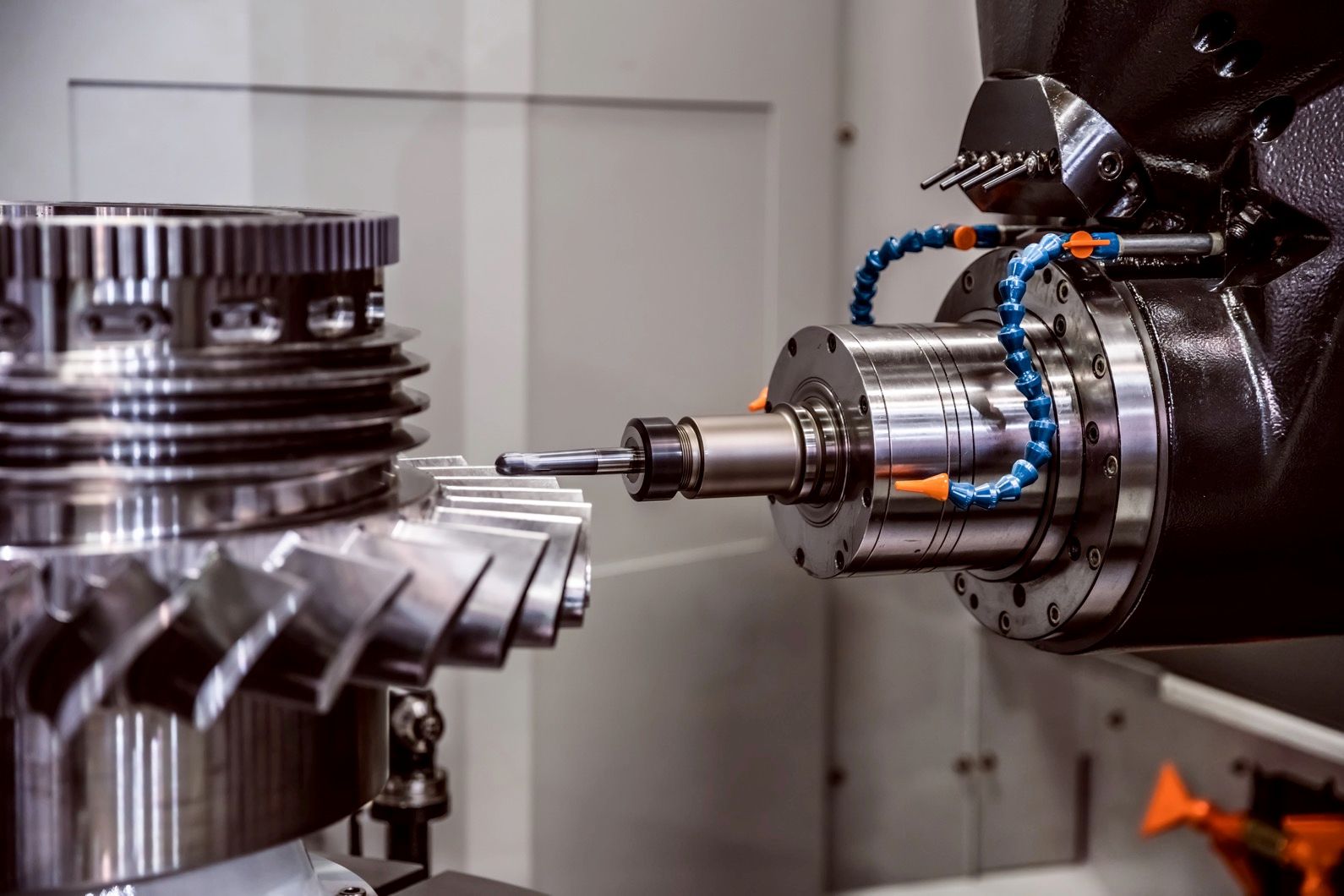
A CNC system typically includes:
-
Controller unit
-
Spindle motor
-
Tool holder
-
Machine bed
-
Drive system
-
Control panel
Advantages and Considerations
Advantages:
-
Reduced human error
-
Scalable manufacturing
-
High production efficiency
-
Complex geometry capability
-
Data-driven quality control
Considerations:
-
Requires technical training
-
Initial setup complexity
-
Regular maintenance essential
-
Software compatibility requirements
Organizations must balance automation benefits with training and maintenance strategies.
Conclusion
CNC machines represent a cornerstone of modern precision manufacturing and industrial automation. By combining digital programming with mechanical systems, they deliver consistent accuracy, scalable production, and improved operational efficiency.
As industries continue adopting smart factory technologies, CNC machining remains central to advanced manufacturing processes. From aerospace components to medical devices, computer numerical control systems enable high-performance production with measurable quality standards.
Understanding CNC technology involves learning about its purpose, industry importance, compliance frameworks, and technical tools. With continued innovation in multi-axis machining, predictive maintenance, and digital integration, CNC machines will remain essential in shaping the future of manufacturing.