Explore Smart Home Assistants: Complete Guide, Basics, Insights and Essential Information
Smart home assistants are voice-activated or app-controlled devices designed to help manage digital tasks and connected household equipment. They combine artificial intelligence, cloud computing, and voice recognition technology to respond to commands, answer questions, and automate routines inside homes.
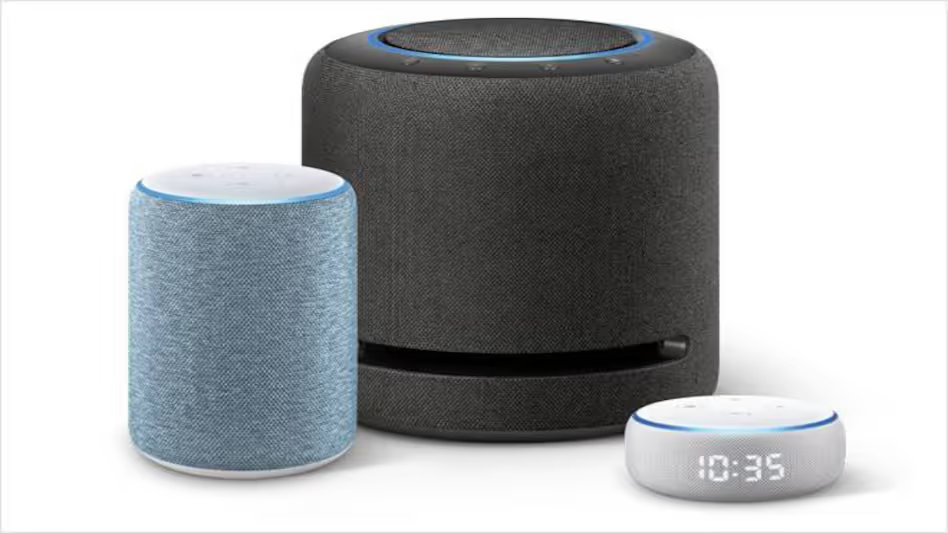
Popular examples include Amazon Echo, Google Nest Hub, and Apple HomePod. These devices work through virtual assistants such as Amazon Alexa, Google Assistant, and Siri.
The idea behind smart home assistants developed from the growth of:
-
Artificial intelligence software
-
Natural language processing systems
-
Internet of Things (IoT) devices
-
Cloud-based automation platforms
These technologies allow users to control lighting, thermostats, security cameras, entertainment systems, and appliances using voice commands or mobile applications.
In simple terms, a smart home assistant acts as a central control hub for connected devices. It exists to make digital interaction more convenient, hands-free, and integrated into daily life.
Importance – Why Smart Home Assistants Matter Today
Smart home assistants have become relevant because homes are increasingly connected. As IoT adoption expands, households now contain multiple smart devices that require coordination.
The importance of smart home automation can be understood through several key areas.
Energy efficiency and power management are major benefits. Smart thermostats, lighting controls, and power monitoring systems help optimize electricity usage. This supports energy savings and environmental awareness.
Home security monitoring is another significant function. Integration with cameras, motion sensors, and smart locks allows real-time alerts and remote monitoring.
Accessibility and convenience improve daily living. Voice control supports:
-
Elderly individuals
-
People with mobility challenges
-
Multitasking households
-
Busy professionals
For example, users can:
-
Adjust lighting through voice automation
-
Set reminders and calendar events
-
Stream music or educational content
-
Control climate systems remotely
Smart assistants also integrate with cloud computing platforms, enabling:
-
Multi-device synchronization
-
Real-time data updates
-
AI-powered learning of user preferences
Below is a simple comparison of core features:
| Feature | Basic Smart Speaker | Smart Display | Advanced Smart Hub |
|---|---|---|---|
| Voice Commands | Yes | Yes | Yes |
| Screen Interface | No | Yes | Sometimes |
| Smart Device Control | Yes | Yes | Yes |
| Video Calling | No | Yes | Yes |
| Automation Routines | Basic | Moderate | Advanced |
As artificial intelligence evolves, smart assistants are becoming more context-aware. They can recognize user patterns, suggest reminders, and automate tasks based on behavior trends.
This makes them central to digital home ecosystems.
Recent Updates – Emerging Trends and Technological Shifts
Recent developments in smart home technology have focused on interoperability, privacy, and artificial intelligence upgrades.
One major shift is the adoption of the Matter protocol. Matter is an industry-wide standard designed to ensure compatibility between devices from different manufacturers. This reduces technical barriers and improves cross-platform integration.
Another key update is the expansion of on-device AI processing. Instead of sending all data to cloud servers, some smart assistants now process voice commands locally. This enhances:
-
Data privacy
-
Faster response times
-
Reduced cloud dependency
Privacy dashboard features have also been strengthened. Many systems now allow users to:
-
Review stored voice recordings
-
Delete conversation history
-
Manage microphone access
-
Set personalized privacy preferences
Artificial intelligence improvements have enabled better contextual awareness. Assistants can now:
-
Understand multi-step commands
-
Provide more natural conversational responses
-
Integrate generative AI models for advanced query handling
Energy management tools have expanded as well. Some systems now provide:
-
Real-time energy consumption insights
-
Automated peak-hour adjustments
-
Integration with smart grid programs
The focus across the industry is moving toward unified smart home ecosystems rather than isolated devices.
Laws or Policies – Regulatory and Government Considerations
Smart home assistants operate within digital privacy and consumer protection regulations. Because these devices collect voice data and usage patterns, they fall under data protection frameworks in many countries.
In India, digital data protection is guided by the Digital Personal Data Protection framework. It emphasizes:
-
User consent before data collection
-
Transparency in data usage
-
Secure storage practices
-
Accountability of technology providers
Smart device manufacturers must comply with cybersecurity standards to prevent unauthorized access or data breaches.
In the European Union, regulations such as GDPR influence global device practices. Even if a product is used outside the EU, companies often design privacy settings to align with international compliance standards.
Key regulatory concerns include:
-
Voice recording storage policies
-
Data encryption standards
-
Third-party integration permissions
-
Cross-border data transfers
Some governments also promote smart home adoption under energy efficiency initiatives. Smart thermostats and energy monitoring systems can support sustainability programs.
Consumers are encouraged to review privacy settings and understand data policies before enabling automation features.
Tools and Resources – Helpful Platforms and Applications
Several digital tools help users manage and optimize smart home assistants.
Smart home management apps allow centralized control over connected devices. Common ecosystems include:
-
Amazon Alexa app
-
Google Home
-
Apple HomeKit
These platforms support:
-
Device pairing
-
Automation scheduling
-
Energy tracking
-
Security notifications
Voice command simulators and configuration dashboards assist users in setting up automation routines.
Home network monitoring tools help ensure stable Wi-Fi performance, which is essential for IoT reliability.
Energy tracking dashboards integrated within smart assistants can display:
-
Daily power usage
-
Device-level consumption
-
Optimization suggestions
Below is a simplified automation flow example:
| Trigger | Condition | Action |
|---|---|---|
| Motion detected | After sunset | Turn on hallway lights |
| Temperature above set level | Afternoon | Adjust thermostat |
| User says “Good night” | Anytime | Lock doors and switch off lights |
These automation templates help users create structured smart routines without complex technical knowledge.
FAQs – Frequently Asked Questions
What is a smart home assistant?
A smart home assistant is an AI-powered device or software system that responds to voice or app commands to control connected home devices, provide information, and automate tasks.
Do smart home assistants record conversations?
Most assistants activate when they detect a wake word. Some audio data may be stored for processing and improvement purposes. Users can review and manage recordings in device settings.
Can smart assistants work without the internet?
Basic functions may operate locally in certain models, but most advanced features require internet connectivity for cloud-based processing and real-time data access.
Are smart home assistants secure?
Security depends on device configuration, password strength, encryption protocols, and network protection. Regular software updates enhance system security.
What devices can connect to a smart home assistant?
Common compatible devices include smart bulbs, thermostats, security cameras, smart locks, entertainment systems, and home appliances designed for IoT integration.
Conclusion
Smart home assistants represent the convergence of artificial intelligence, IoT automation, cloud computing, and voice recognition technology. They serve as centralized digital hubs that simplify device management and improve household efficiency.
Their growing relevance reflects broader technological trends toward connected living environments. Advances in interoperability standards, privacy controls, and AI-driven automation continue to shape the future of smart home ecosystems.
At the same time, regulatory frameworks emphasize data protection and user consent. Understanding privacy settings and compliance considerations remains important for responsible adoption.
As smart home infrastructure expands, these assistants are evolving from simple voice tools into intelligent digital coordinators that enhance convenience, accessibility, and energy awareness in modern households.

