Future of the Semiconductor Industry: An Overview to Explore Basics and Key Insights
The future of the semiconductor industry refers to how chip design, manufacturing, and global supply systems are expected to evolve in response to technological, economic, and societal demands. Semiconductor chips are the foundation of modern digital systems, enabling computing, communication, automation, and data processing across industries.
This topic exists because the role of semiconductors has expanded far beyond traditional electronics. Chips now support artificial intelligence, electric vehicles, smart infrastructure, healthcare equipment, and industrial automation. As digital transformation accelerates, demand for advanced, efficient, and reliable chips continues to grow.
In earlier decades, the industry focused mainly on shrinking transistor sizes to improve performance. While miniaturization remains important, future development also emphasizes energy efficiency, system integration, and resilient supply chains. The semiconductor industry is no longer just about faster chips, but about building sustainable, secure, and scalable technology foundations.
Understanding this topic helps explain how digital infrastructure will evolve and how societies will support increasingly data-driven environments.
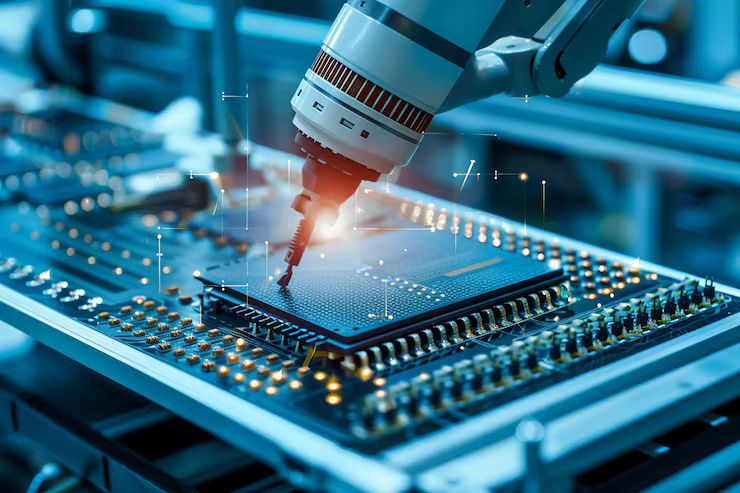
Importance: Why the Future of the Semiconductor Industry Matters
The future of the semiconductor industry matters because nearly every modern system depends on chips. From personal devices to national infrastructure, semiconductors influence productivity, connectivity, and innovation.
This topic is important for several reasons:
-
Digital transformation relies on advanced computing hardware
-
Artificial intelligence requires high-performance processing
-
Electric vehicles depend on power-efficient chips
-
Healthcare systems use chips for diagnostics and monitoring
-
Communication networks rely on semiconductor technology
Semiconductors affect consumers, businesses, researchers, manufacturers, governments, and infrastructure planners. For individuals, they power everyday tools such as smartphones, computers, and smart home devices. For industries, they enable automation, precision, and real-time data processing. For governments, semiconductors are critical to economic growth, national security, and technological independence.
The future direction of the industry also influences global supply chains, workforce development, and environmental sustainability. Reliable chip production supports stable digital economies, while innovation in chip design enables new technologies to emerge.
Recent Updates and Trends in the Semiconductor Industry
Over the past year, the semiconductor industry has focused on balancing performance innovation with supply stability and energy efficiency. Between January 2025 and December 2025, several key trends became more visible.
In early 2025, energy-efficient chip architectures gained attention. Manufacturers focused on reducing power consumption while maintaining processing performance. This was especially important for data centers, mobile devices, and edge computing systems.
By mid-2025, advanced packaging technologies became more prominent. Instead of relying only on smaller transistors, companies explored stacking multiple chip components together. This approach improved performance, reduced space usage, and allowed different chip functions to work more closely.
Later in 2025, artificial intelligence capabilities became more integrated into general-purpose processors. Chips were designed to handle AI-related tasks such as image processing, language analysis, and predictive modeling directly on devices.
Toward the end of 2025, supply chain resilience became a major focus. Governments and industry groups invested in regional manufacturing ecosystems to reduce dependence on a small number of global production hubs.
The table below summarizes recent trends:
Trend area
Energy-efficient architectures
Advanced chip packaging
AI integration
Supply chain diversification
Observed impact
Lower power consumption
Higher performance density
Local AI processing
Improved production stability
These trends show that the semiconductor industry is moving toward smarter, more efficient, and more resilient systems.
Laws and Policies Affecting the Semiconductor Industry in India
In India, the semiconductor industry is shaped by industrial policy, digital infrastructure programs, and technology investment initiatives rather than consumer-focused regulations.
Government programs encourage domestic semiconductor manufacturing, research, and ecosystem development. These initiatives aim to strengthen supply chain resilience, support technological independence, and expand advanced electronics capabilities.
Digital governance frameworks such as the Information Technology Act, 2000 influence how chip-powered systems manage data and cybersecurity. While the Act does not regulate chip manufacturing directly, it shapes the environment in which semiconductor-enabled technologies operate.
Standards related to electronics manufacturing, quality assurance, and safety also influence semiconductor production and integration. These frameworks support consistency, reliability, and accountability across electronic systems.
Policy alignment between industry, research institutions, and infrastructure planners plays an important role in shaping the future growth of the semiconductor sector.
Key Technology Drivers Shaping the Future
Several technology drivers are shaping how the semiconductor industry will evolve.
Artificial intelligence workloads require specialized processing capabilities. Chips must handle large volumes of data quickly while maintaining energy efficiency.
Electric mobility and renewable energy systems rely on power semiconductors that manage electricity flow safely and efficiently.
High-speed communication networks require advanced chips to support faster data transmission and lower latency.
Edge computing and Internet of Things devices need compact, energy-efficient chips for real-time processing.
These drivers influence how chips are designed, manufactured, and deployed across industries.
Shift from Miniaturization to System Integration
For decades, the semiconductor industry focused on shrinking transistor sizes to increase speed and reduce power usage. While this trend continues, future progress also depends on system-level integration.
Instead of relying only on smaller components, manufacturers now combine multiple chip functions into unified packages. This allows processors, memory, and specialized accelerators to work together more efficiently.
System integration improves performance without requiring extreme miniaturization. It also enables customized chip designs for specific applications such as AI, automotive systems, and industrial automation.
This shift supports flexibility and scalability in future semiconductor development.
Energy Efficiency and Sustainability
Energy efficiency is becoming a central priority for the semiconductor industry. As digital systems grow, so does global energy consumption.
Future chip designs aim to deliver higher performance per unit of energy. This is especially important for data centers, mobile devices, and smart infrastructure.
Manufacturing sustainability is also gaining attention. Semiconductor fabrication requires significant water, energy, and material resources. Improving production efficiency and environmental responsibility supports long-term industry stability.
Energy-efficient chips and sustainable manufacturing practices help balance technological growth with environmental concerns.
Role of Semiconductors in Artificial Intelligence
Artificial intelligence relies heavily on semiconductor innovation. AI workloads require fast, parallel data processing and efficient memory access.
Specialized chips are designed to handle machine learning tasks such as image recognition, language processing, and predictive analysis. These chips support both cloud-based and on-device AI applications.
As AI adoption expands into healthcare, finance, manufacturing, and transportation, demand for AI-optimized semiconductors will continue to grow.
The future of AI development is closely linked to advances in semiconductor technology.
Semiconductor Supply Chain Evolution
The semiconductor supply chain involves multiple stages, including raw material processing, wafer fabrication, chip design, packaging, and distribution. These stages often occur in different regions.
Recent disruptions highlighted the importance of supply chain resilience. Many countries are now strengthening local manufacturing capabilities to reduce dependence on limited production hubs.
Future supply chains are expected to be more diversified, with greater regional participation and collaboration.
A resilient supply chain supports stable technology production and economic growth.
Workforce and Skills Development
The future semiconductor industry requires a skilled workforce in areas such as chip design, materials science, manufacturing engineering, and data systems.
Education and training programs play a critical role in developing this talent. Universities, research institutions, and industry partnerships help build technical expertise.
As chip technology becomes more complex, continuous learning and innovation become essential.
A strong talent ecosystem supports long-term industry competitiveness.
Semiconductor Applications in Emerging Technologies
Semiconductors enable many emerging technologies that shape future industries.
In healthcare, chips support imaging, diagnostics, and remote monitoring.
In transportation, they power electric vehicles, navigation systems, and safety features.
In manufacturing, they control robotics, sensors, and automation systems.
In smart cities, they support energy management, traffic control, and connectivity.
These applications expand the importance of semiconductor innovation beyond traditional computing.
Challenges Facing the Semiconductor Industry
Despite strong growth potential, the semiconductor industry faces several challenges.
Advanced manufacturing requires high investment and technical precision.
Global competition increases pressure on innovation speed.
Supply chain complexity requires careful coordination.
Environmental impact needs sustainable solutions.
Geopolitical factors influence trade and technology access.
Addressing these challenges requires collaboration between industry, governments, and research organizations.
Tools and Resources Related to the Semiconductor Industry
Several tools and informational resources support understanding and development in the semiconductor field.
Common resource categories include:
-
Semiconductor design reference frameworks
-
Electronics engineering learning materials
-
Manufacturing process documentation
-
Industry standards and guidelines
-
Technology trend reports
These resources help professionals, researchers, and policymakers stay informed and aligned with industry progress.
Frequently Asked Questions
What does the future of the semiconductor industry involve?
It involves innovation in chip design, manufacturing, energy efficiency, and supply chains.
Why are semiconductors important for future technologies?
They enable AI, electric vehicles, smart infrastructure, and digital systems.
Is the semiconductor industry still focused on smaller chips?
Yes, but system integration and efficiency are also major priorities.
How does policy influence semiconductor growth?
Policies support manufacturing, research, and supply chain resilience.
Are semiconductors important for sustainability?
Yes, energy-efficient chips support lower power consumption.
Conclusion
The future of the semiconductor industry is defined by innovation, integration, and resilience. As digital systems expand across all sectors, semiconductors remain the foundation of modern technology.
Recent trends highlight energy-efficient designs, advanced packaging, AI integration, and supply chain diversification. In India, industrial policies and digital infrastructure initiatives support ecosystem development.
Understanding the basics, importance, trends, policy context, technology drivers, challenges, and key insights of the semiconductor industry helps readers see how chips shape the future of computing, connectivity, and innovation. As technology continues to evolve, semiconductors will remain central to global progress.