Guide to Asphalt Mixing Plant: Types, Components, Process and Applications Facts
Asphalt mixing plants play an important role in road construction, highway development, airport projects, and infrastructure maintenance. These industrial facilities combine aggregates, bitumen, mineral fillers, and other additives to produce asphalt mixtures used for paving and surface repair. Modern asphalt plants are designed to control material proportions, heating temperatures, mixing time, and production rates. The quality of the finished asphalt depends on the raw materials, plant configuration, operating conditions, and quality control procedures. Different projects require different production capacities and asphalt mixtures. Some facilities use batch plants for flexible production, while others use continuous drum-mix plants for larger and more consistent output. Mobile and stationary configurations also provide options for different construction environments.
What Is an Asphalt Mixing Plant?
An asphalt mixing plant is an industrial facility that produces asphalt mixtures by combining heated aggregates with bitumen and other materials in controlled proportions.
The finished mixture is commonly known as hot mix asphalt (HMA). It is transported to construction sites, where it is placed and compacted to create road surfaces and other paved areas.
The main ingredients include:
Aggregates: Crushed stone, gravel, and sand that provide strength and structure.
Bitumen: A petroleum-based binder that holds the aggregate particles together.
Mineral filler: Fine materials, such as stone dust or other approved fillers, that help control the properties of the mixture.
Additives: Materials such as polymers, fibres, or adhesion promoters used in certain asphalt formulations.
Reclaimed asphalt pavement (RAP): Recycled material from existing asphalt surfaces that can be processed and reused in new mixtures.
The proportions depend on the required asphalt mix design and project specifications.
An asphalt mixing plant must perform several basic operations: store materials, measure and feed aggregates, remove moisture, heat the materials, combine the ingredients, control dust emissions, and discharge the finished mixture.
Main Types of Asphalt Mixing Plants
Asphalt plants can be classified according to their production method, mobility, and heating or mixing configuration. The two main production categories are batch plants and continuous drum-mix plants.
1. Batch Mix Asphalt Plant
<AsyncImage query="asphalt batch mix plant industrial tower hot bins dryer pugmill construction" aspectRatio="16:9" width="100%"/>
A batch mix asphalt plant produces asphalt in separate batches. Each batch contains measured quantities of aggregate, bitumen, mineral filler, and any required additives.
The plant heats and dries the aggregates before separating them into different size fractions. These materials are then weighed and transferred to a mixing chamber, where they are blended with bitumen.
Main characteristics:
Produces asphalt in individual batches.
Allows operators to adjust the mix design between batches.
Uses hot aggregate screens and storage bins.
Provides separate weighing of key ingredients.
Supports different asphalt formulations.
Applications:
Highway construction
Urban road development
Airport pavement projects
Road resurfacing
Projects requiring frequent changes in asphalt specifications
Batch plants can be useful when a project requires several asphalt mix designs or precise control over individual production batches.
2. Drum Mix Asphalt Plant
<AsyncImage query="continuous drum mix asphalt plant industrial rotary dryer mixing equipment" aspectRatio="16:9" width="100%"/>
A drum mix asphalt plant produces asphalt through a continuous process. Aggregates are fed into the rotating drum, where they are dried and heated. Bitumen and other materials are introduced at controlled points in the system and mixed with the aggregates.
Unlike a conventional batch plant, a drum-mix plant generally does not use hot screening, separate hot aggregate bins, and individual batch weighing.
Main characteristics:
Continuous production process.
Combines aggregate heating and mixing operations.
Uses controlled material feeding and binder dosing.
Can support high-volume production.
Has a comparatively streamlined production arrangement.
Applications:
Highway construction
Large road projects
Industrial roads
Road maintenance
Projects with steady asphalt demand
The quality of a drum-mix plant's output depends on accurate feed rates, aggregate gradation, moisture control, temperature management, and stable operation.
3. Mobile Asphalt Mixing Plant
<AsyncImage query="mobile asphalt mixing plant trailer mounted road construction equipment" aspectRatio="16:9" width="100%"/>
A mobile asphalt mixing plant is designed to be transported between construction locations. Its main equipment is arranged in transportable modules or mounted on trailers, depending on the model.
Mobile plants may be available in batch or continuous configurations.
Main characteristics:
Designed for relocation between projects.
Can reduce the need to transport finished asphalt over long distances.
May require less permanent infrastructure than a fixed facility.
Production capacity depends on the specific configuration.
Applications:
Remote road construction
Rural infrastructure projects
Temporary construction sites
Road repair and rehabilitation
Projects spread across different locations
Transport, installation, site preparation, and commissioning requirements should be checked before selecting a mobile plant.
4. Stationary Asphalt Mixing Plant
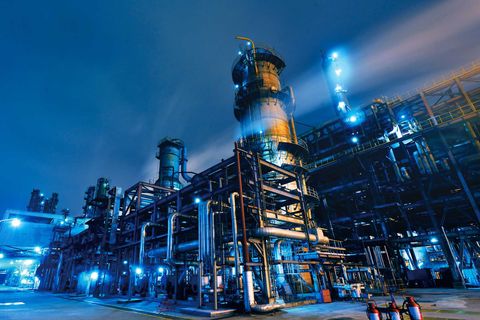
<AsyncImage query="large stationary asphalt mixing plant permanent industrial road construction facility" aspectRatio="16:9" width="100%"/>
A stationary asphalt mixing plant is installed at a permanent location. It is generally designed for long-term operation and may have a larger production capacity than some mobile systems.
Main characteristics:
Permanent installation.
Suitable for regular production.
Can support larger material storage systems.
May accommodate additional recycling and emission-control equipment.
Requires suitable land, utilities, and infrastructure.
Applications:
Highway networks
Large infrastructure programmes
Commercial asphalt production
Airport construction
Long-term road development projects
5. Hot Mix Asphalt Plant
Hot mix asphalt plants heat aggregates and combine them with bitumen to produce a mixture that is transported and compacted while it remains within a suitable temperature range.
These plants are commonly used for road construction and resurfacing.
The exact production temperature depends on the binder grade, mix design, material moisture, and project requirements. It should be controlled according to the approved specifications rather than a single universal temperature.
6. Warm Mix Asphalt Plant
Warm mix asphalt (WMA) production uses technologies or additives that allow asphalt to be mixed and placed at lower temperatures than conventional hot mix asphalt.
Depending on the process, the plant may use:
Chemical additives
Organic additives
Foaming systems
Special binder preparation methods
Potential benefits:
Lower production temperatures.
Reduced fuel consumption in suitable applications.
Potentially lower production emissions.
Improved workability under certain conditions.
Greater flexibility for selected paving situations.
Warm mix asphalt still requires appropriate mix design, quality testing, and temperature control.
Important Components of an Asphalt Mixing Plant
An asphalt plant contains several interconnected mechanical, electrical, and control systems. Each component performs a specific function during production.
<AsyncImage query="asphalt batch mixing plant labeled industrial components equipment diagram" aspectRatio="16:9" width="100%"/>
1. Cold Aggregate Feeder Bins
Cold-feed bins store different aggregate sizes before production. Each bin supplies material to the conveyor system through a controlled feeder.
Accurate feeding helps maintain the required aggregate proportions.
2. Conveyor System
Conveyor belts transport aggregates from the cold-feed bins to the drying drum.
Some systems include weighing equipment to monitor the quantity of material moving through the plant.
3. Drying Drum
The drying drum is a rotating cylindrical unit that removes moisture from the aggregates and raises their temperature.
Its operation is important because excessive moisture can affect production efficiency, fuel consumption, and asphalt quality.
4. Burner System
The burner supplies heat to the drying process. Depending on the plant design, it may use fuels such as diesel, natural gas, or other suitable energy sources.
Fuel efficiency, temperature control, combustion performance, and emissions are important operating considerations.
5. Hot Aggregate Elevator
In a batch plant, the hot aggregate elevator transfers heated materials from the dryer to the screening and mixing tower.
It is designed to move aggregates while limiting material loss and heat reduction.
6. Vibrating Screen
The vibrating screen separates heated aggregates into different size categories.
This allows the batch plant to store and measure different aggregate fractions before mixing.
Conventional drum-mix plants generally do not use the same hot-screening arrangement.
7. Hot Aggregate Storage Bins
Hot bins store screened aggregate fractions in separate compartments.
The weighing system takes the required quantities from these bins according to the approved mix design.
8. Bitumen Storage and Heating Tank
Bitumen is stored in insulated tanks and heated to maintain suitable handling and pumping conditions.
Pumps and flow-control systems transfer the binder to the mixing unit.
Temperature control is important because excessively high temperatures can damage the binder, while insufficient heating can make accurate pumping and mixing difficult.
9. Mineral Filler System
The filler system stores and feeds fine mineral materials into the mixing process.
The filler helps control the properties of the asphalt mixture and must be measured accurately.
10. Mixing Unit
The mixing unit combines the aggregates, bitumen, filler, and approved additives.
Batch plants generally use a pugmill mixer, while drum-mix plants combine materials continuously inside the drum or through a separate continuous mixer.
11. Dust Collection System
Drying and handling aggregates can generate dust. Dust collection equipment captures airborne particles before exhaust gases are released.
Common components include:
Primary dust collectors
Cyclone separators
Baghouse filters
Exhaust fans
Dust return systems
Collected material may be reused as filler when permitted by the mix design and applicable requirements.
12. Control Cabin and Automation System
The control system monitors plant operations and allows operators to manage production parameters.
It may include:
Aggregate feed-rate controls
Temperature monitoring
Bitumen dosing
Weighing systems
Production records
Equipment alarms
Automated operating sequences
Modern systems can help improve consistency and identify operating problems.
How Does an Asphalt Mixing Plant Work?
The production process follows a series of controlled steps. Some operations are common to both batch and drum-mix plants, while the mixing and proportioning arrangements differ.
<AsyncImage query="asphalt hot mix production process aggregate dryer mixing plant industrial diagram" aspectRatio="16:9" width="100%"/>
Step 1: Aggregate Storage and Feeding
Aggregates are stored in stockpiles according to their size and type. They are loaded into separate cold-feed bins.
The feeders control the quantity of each aggregate fraction entering the conveyor system.
Step 2: Aggregate Proportioning
The plant combines different aggregate sizes according to the approved job mix formula.
Accurate proportioning helps maintain the required particle-size distribution and supports consistent asphalt performance.
Step 3: Drying and Heating
The aggregates enter the drying drum, where moisture is removed and the material is heated.
The required temperature depends on the binder, mix design, production method, and project specifications.
Step 4: Screening and Hot Storage
In a batch plant, heated aggregates pass through vibrating screens that separate them into different sizes.
The separated materials are stored in hot bins until they are needed for a particular batch.
This stage is generally not used in the same way in a conventional drum-mix plant.
Step 5: Bitumen and Filler Dosing
Bitumen is pumped from the storage tank and measured according to the mix design.
Mineral filler and other additives are also supplied in controlled quantities.
Step 6: Mixing
In a batch plant, measured aggregates and other ingredients enter a pugmill mixer, where they are blended for a controlled period.
In a drum-mix plant, the materials are combined continuously according to the system's design.
The objective is to produce a uniform mixture with the required composition and coating of aggregate particles.
Step 7: Finished Asphalt Storage
The finished asphalt mixture may be transferred to an insulated storage silo or surge bin.
These systems help manage production and truck loading while reducing unnecessary heat loss.
Step 8: Transportation to the Construction Site
The hot asphalt is loaded into suitable trucks and transported to the paving location.
The delivery process must maintain suitable material conditions so that the asphalt can be placed and compacted according to project requirements.
Batch Mix Plant vs. Drum Mix Plant
Both plant types can produce asphalt that meets project specifications. The choice depends on production requirements, operating costs, mix-design flexibility, and the availability of materials.
| Comparison factor | Batch mix plant | Drum mix plant |
|---|---|---|
| Production method | Separate batches | Continuous production |
| Aggregate screening | Usually uses hot screens | Usually controlled through cold-feed systems |
| Hot aggregate bins | Yes | Generally no |
| Weighing | Individual batch weighing | Continuous feed-rate and dosing control |
| Mixing arrangement | Separate pugmill | Inside drum or separate continuous mixer |
| Mix changes | Convenient between batches | Requires controlled adjustment of continuous operation |
| Plant arrangement | More components and a mixing tower | Generally more streamlined |
| Typical use | Varied mix requirements | Steady, high-volume production |
Neither type is automatically better. A properly designed and operated plant of either category can produce quality asphalt when materials, equipment, and production controls meet the required specifications.
Applications of Asphalt Mixing Plants
Asphalt mixing plants support many types of construction and infrastructure projects.
1. Highway Construction
Highways require durable pavement that can handle heavy traffic, repeated loading, and changing weather conditions.
Asphalt plants produce mixtures for different pavement layers, including base, binder, and surface courses.
2. Urban and Rural Roads
Asphalt is widely used for city streets, residential roads, village roads, and connecting routes.
Plant production helps provide a consistent supply of material for paving and road improvement projects.
3. Airport Runways and Taxiways
Airports use specially designed pavement mixtures to support aircraft movement and heavy wheel loads.
The asphalt mix design and quality requirements depend on the airport's operational and engineering specifications.
4. Road Repair and Resurfacing
Asphalt plants supply material for repairing damaged surfaces, filling selected pavement defects, and resurfacing existing roads.
Rehabilitation projects may also use reclaimed asphalt pavement when permitted by the approved design.
5. Industrial and Commercial Areas
Factories, warehouses, logistics centres, parking areas, and commercial developments may use asphalt surfaces for vehicle movement and access.
6. Bridge Approaches and Access Roads
Asphalt mixtures are used on selected bridge approaches, connecting roads, and access routes. The mixture must meet the structural and performance requirements of the project.
Reclaimed Asphalt Pavement and Recycling
Reclaimed asphalt pavement (RAP) is material removed from existing asphalt surfaces during road rehabilitation or reconstruction.
It contains aggregates and residual bitumen that may be processed and incorporated into new asphalt mixtures.
<AsyncImage query="reclaimed asphalt pavement RAP recycling asphalt plant conveyor stockpile" aspectRatio="16:9" width="100%"/>
Recycling can help reduce the demand for virgin aggregates and new bitumen. It may also reduce the quantity of old pavement material sent for disposal.
Important considerations include:
RAP quality and consistency.
Moisture content.
Particle-size distribution.
Residual binder properties.
Heating and material transfer arrangements.
Emissions control.
Approved recycled-material percentage.
Batch and drum-mix plants may use different RAP feeding and processing arrangements. Higher RAP content requires careful engineering and process control.
Factors to Consider When Selecting an Asphalt Mixing Plant
Selecting a plant requires an assessment of technical requirements, project demand, site conditions, and long-term operating costs.
1. Production Capacity
Plant capacity should match expected asphalt demand.
A system with insufficient capacity may delay projects, while an oversized plant may create unnecessary capital and operating costs.
Consider actual output under expected operating conditions rather than relying only on the manufacturer's maximum rated capacity.
2. Plant Type and Production Flexibility
Batch plants may be useful for facilities producing several mix designs. Drum-mix plants may suit projects requiring steady, continuous production.
The decision should reflect the number of mix specifications, daily output, and expected changes in project requirements.
3. Fuel and Energy Consumption
Drying and heating aggregates require significant energy.
Compare burner efficiency, insulation, fuel compatibility, control systems, and expected consumption under similar operating conditions.
4. Environmental Performance
Asphalt plants can generate dust, combustion emissions, fumes, and noise.
Important features include:
Efficient dust collection
Suitable baghouse filtration
Burner and combustion controls
Proper material storage
Emission monitoring
Noise management
Safe handling of bitumen and additives
Facilities must comply with applicable environmental permissions and pollution-control requirements.
5. Automation and Quality Control
Automated controls can support accurate feeding, weighing, temperature monitoring, and production records.
However, automation does not replace proper calibration, laboratory testing, operator training, and routine inspection.
6. Installation and Site Requirements
Before installation, review:
Available land and access roads
Foundation requirements
Electrical supply
Fuel storage and handling
Aggregate stockpile areas
Dust and emissions control arrangements
Truck movement and loading areas
Maintenance access
Mobile and stationary plants may have different site preparation requirements.
7. Maintenance and Spare Parts
A reliable maintenance arrangement can reduce unexpected downtime.
Check the availability of replacement parts for burners, motors, conveyors, pumps, filters, mixers, and control systems.
Also review the supplier's warranty, technical training, service response times, and preventive maintenance schedule.
8. Total Cost of Ownership
The purchase price is only one part of the overall investment.
A complete cost assessment should include:
Equipment purchase
Transportation and installation
Site preparation
Fuel and electricity
Labour
Maintenance
Spare parts
Environmental compliance
Insurance and operating expenses
Comparing total ownership costs can provide a more useful picture than selecting a plant based only on its initial price.
Environmental and Safety Considerations
Asphalt production involves high temperatures, rotating machinery, fuel systems, heavy vehicles, and airborne emissions. Proper safety procedures are essential.
Key considerations include:
Use suitable personal protective equipment.
Provide training for operators and maintenance personnel.
Guard moving belts, pulleys, and rotating equipment.
Follow safe procedures for hot bitumen handling.
Maintain burner and fuel systems.
Monitor dust collection equipment.
Keep emergency shutdown systems accessible.
Follow site traffic and vehicle movement plans.
Maintain appropriate fire prevention arrangements.
In India, plant operators and project owners should check the applicable requirements of the State Pollution Control Board or Pollution Control Committee, along with relevant environmental, factory safety, and local permissions. Requirements depend on the plant, location, fuel, capacity, and project circumstances.
Frequently Asked Questions
What is the main purpose of an asphalt mixing plant?
Its main purpose is to combine aggregates, bitumen, mineral filler, and approved additives in controlled proportions to produce asphalt for road construction and pavement maintenance.
What are the two main types of asphalt mixing plants?
The two main production types are batch mix plants and continuous drum-mix plants. Batch plants produce separate quantities of asphalt, while drum-mix plants operate continuously.
What is the difference between a mobile and stationary asphalt plant?
A mobile plant is designed to be transported between construction sites, while a stationary plant is installed at a permanent location for longer-term production.
Which components are essential in an asphalt mixing plant?
Common components include cold-feed bins, conveyors, a drying drum, burner, bitumen storage and supply system, mixing equipment, dust collection system, and control system. Batch plants also commonly include hot screens, hot bins, weighing hoppers, and a pugmill.
Can asphalt plants use recycled materials?
Yes. Many plants can incorporate reclaimed asphalt pavement (RAP) through suitable feeding and processing systems. The permitted percentage depends on the plant configuration, material quality, mix design, and project specifications.
What is the difference between hot mix and warm mix asphalt?
Hot mix asphalt is produced at conventional higher temperatures. Warm mix asphalt uses technologies or additives that allow production and placement at lower temperatures under suitable conditions.
How does a baghouse work in an asphalt plant?
A baghouse uses fabric filter bags to capture dust from the plant's exhaust stream. The collected material can sometimes be returned to the production process when allowed by the mix design and operating requirements.
What determines asphalt plant production capacity?
Capacity depends on equipment design, aggregate moisture, fuel and heating performance, material supply, mix specifications, operating conditions, and the plant's rated configuration.
Conclusion
Asphalt mixing plants are essential facilities for producing the materials used in modern road and infrastructure projects. They combine aggregates, bitumen, fillers, and additives through controlled heating, proportioning, and mixing operations.
Batch mix and drum-mix plants are the two main production categories, while mobile and stationary configurations serve different project requirements. Components such as cold-feed bins, drying drums, burners, mixers, bitumen systems, dust collectors, and automated controls work together to maintain production consistency.