Heavy Equipment: Information on Machinery Types, Functions and Applications
Heavy equipment refers to large machines designed to perform demanding physical tasks such as excavation, lifting, earthmoving, grading, drilling, demolition, material handling, and road construction. Heavy Equipment is widely used in construction, mining, agriculture, infrastructure development, waste handling, forestry, and industrial operations.
These machines reduce the need for intensive manual effort and allow large quantities of material to be moved or processed within organized work areas.
Context
What Is Heavy Equipment?
Heavy equipment includes machines with substantial size, weight, power, and structural strength. Many are powered by diesel engines, while newer systems may use electric drives, hybrid powertrains, or alternative energy systems. Their design depends on the task, terrain, material being handled, and operating environment.
Common examples include excavators, bulldozers, wheel loaders, backhoe loaders, motor graders, cranes, forklifts, dump trucks, compactors, drilling rigs, and concrete equipment. Each machine has a particular operating principle and attachment system suited to specific activities.
How Heavy Equipment Developed
Early construction and earthmoving activities relied heavily on human labor, animal power, simple mechanical tools, and basic lifting systems. The development of steam-powered machinery introduced greater mechanical force, while internal combustion engines later made mobile equipment more practical.
Hydraulic systems played an important role in modern equipment development. Hydraulic cylinders and pumps allow machines such as excavators and loaders to control heavy attachments with precise movement. Electronic controls, sensors, and computerized systems have further changed how operators monitor and control machines.
Main Categories
Heavy Equipment can be grouped according to its primary function. Common categories include:
- Earthmoving equipment for excavation, digging, grading, and soil movement
- Material-handling equipment for lifting, transporting, and positioning loads
- Road construction equipment for paving, compacting, and surface preparation
- Drilling equipment for foundations, mining, geotechnical work, and resource exploration
- Demolition equipment for controlled removal of structures and materials
- Agricultural equipment for soil preparation, planting, harvesting, and material handling
The same machine may perform several functions when equipped with different attachments.
Importance
Construction and Infrastructure
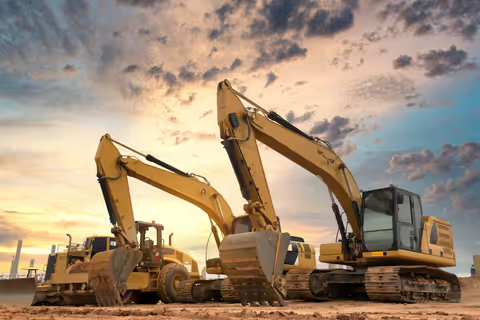
Heavy equipment plays an important role in roads, bridges, buildings, tunnels, drainage systems, ports, railways, and utility projects. Excavators can remove soil, loaders can move aggregates, and graders can shape surfaces according to project requirements.
Large infrastructure activities often involve substantial quantities of earth, concrete, stone, or other materials. Mechanical equipment helps organize these physical tasks within controlled work areas.
Mining and Quarrying
Mining operations use heavy machinery for drilling, excavation, loading, hauling, crushing, and material handling. Equipment selection depends on geological conditions, material characteristics, excavation depth, site layout, and production requirements.
Large haul trucks, hydraulic excavators, wheel loaders, drilling rigs, and crushing equipment may operate together as part of an integrated material-handling system.
Agriculture and Land Management
Agricultural machinery has expanded beyond conventional tractors. Modern operations may use loaders, excavators, graders, harvesters, sprayers, and specialized attachments for land preparation and material movement.
The use of mechanical equipment can also support activities such as drainage work, irrigation infrastructure preparation, soil movement, and handling of agricultural materials.
Safety and Operational Challenges
Heavy Equipment can create significant hazards when machines are incorrectly selected, poorly maintained, overloaded, or operated without adequate training. Risks may include struck-by incidents, equipment overturning, falling loads, unexpected movement, limited visibility, and contact with overhead or underground infrastructure.
Important operating considerations include:
- Machine stability and ground conditions
- Rated load and lifting capacity
- Visibility around the machine
- Attachment compatibility
- Operator training
- Inspection and maintenance records
- Traffic movement within the work area
- Emergency procedures
Equipment Type and Typical Application
| Equipment type | Main function | Common application |
|---|---|---|
| Excavator | Digging and material handling | Foundations, trenches, mining |
| Bulldozer | Pushing and grading material | Earthmoving and site preparation |
| Wheel loader | Loading and transporting material | Aggregates, construction sites |
| Motor grader | Surface shaping | Roads and drainage areas |
| Crane | Vertical and horizontal lifting | Construction and industrial work |
| Forklift | Pallet and load movement | Warehouses and industrial facilities |
| Compactor | Soil or asphalt compaction | Roads and site preparation |
| Drill rig | Ground or rock drilling | Foundations, mining, exploration |
Recent Updates
Automation and Digital Controls
Recent developments in Heavy Equipment increasingly involve electronic control systems, onboard sensors, satellite positioning, and digital monitoring. These technologies can provide information about machine location, operating conditions, fuel or energy use, engine status, and maintenance requirements.
Machine-control systems can also assist with grading, excavation depth, positioning, and other activities. Their role is generally to provide operators with additional information and control rather than completely remove human involvement.
Electrification and Hybrid Systems
Electric and hybrid equipment has gained attention, particularly for indoor construction, urban projects, warehouses, and locations where noise or local emissions are important considerations. Battery-electric excavators, loaders, forklifts, and compact equipment are among the technologies being developed and deployed.
Larger machines face different technical challenges because they require substantial energy for extended operating periods. Battery capacity, charging infrastructure, operating conditions, and duty cycles all influence equipment selection.
Connected Equipment
Connected Heavy Equipment can transmit operational information through wireless networks. Fleet monitoring platforms may collect data about location, engine condition, operating hours, fault codes, and machine utilization.
This information can help organizations maintain equipment records and identify unusual operating patterns. Cybersecurity has also become more relevant as machines become increasingly connected to organizational networks.
Advanced Safety Technology
Manufacturers and technology developers are incorporating cameras, proximity detection, object recognition, operator-assistance systems, and improved visibility features into modern machinery. These systems can provide additional awareness around machines, especially in busy work areas.
Technology does not replace established safety procedures. Site planning, operator training, machine inspections, communication systems, and physical separation remain important parts of equipment safety.
Lower-Emission Technologies
Environmental considerations are influencing equipment development. Engine efficiency improvements, emissions-control systems, hybrid powertrains, battery-electric machines, and alternative fuels are being explored across different equipment categories.
The practical suitability of each technology depends on machine size, duty cycle, charging or fueling infrastructure, local conditions, and regulatory requirements.
Laws or Policies
Occupational Safety in India
In India, workplace safety requirements for industrial and construction activities are influenced by the Occupational Safety, Health and Working Conditions Code, 2020, along with applicable rules and state-level implementation provisions.
Requirements can cover worker safety, workplace conditions, protective measures, training, and other occupational health considerations. Specific obligations depend on the type of establishment and activity.
Equipment and Lifting Operations
Cranes, lifting equipment, pressure-related systems, electrical installations, and other machinery may be subject to additional technical or safety requirements. Applicable Indian standards can include relevant Bureau of Indian Standards specifications.
For lifting operations, organizations generally need to consider rated capacity, inspection, load handling, equipment condition, and competent operation. Requirements can vary according to the equipment category and work environment.
Environmental Requirements
Construction, mining, manufacturing, and other activities involving Heavy Equipment may also fall under environmental rules administered through authorities such as the Central Pollution Control Board and State Pollution Control Boards.
Requirements can relate to emissions, noise, waste handling, dust control, and environmental permissions. Mining operations may also have additional requirements under applicable mineral and environmental regulations.
Because regulations can change and may differ by state and activity, organizations should consult the current requirements applicable to their specific operation.
Tools and Resources
Equipment Specifications
Manufacturer technical manuals, equipment specification sheets, operator manuals, and attachment documentation provide information about operating limits, dimensions, hydraulic capacity, rated loads, and recommended procedures.
Digital Monitoring Tools
Fleet-management platforms and onboard diagnostic systems can track operating hours, location, fault information, machine condition, and other operational parameters. These records can help organize equipment information across multiple machines.
Measurement and Planning Tools
Common planning resources include:
- Load charts for lifting equipment
- Grade-control systems for earthmoving
- Soil and compaction measurement instruments
- Fuel or energy monitoring systems
- Maintenance record templates
- Site layout and equipment planning software
- Geographic information and positioning systems
Training and Technical Resources
Training materials from recognized safety authorities, equipment manufacturers, technical institutions, and standards organizations can help explain machine operation and workplace precautions. In India, the Bureau of Indian Standards, government safety authorities, and relevant regulatory agencies provide useful reference material for applicable requirements.
FAQs
What is Heavy Equipment used for?
Heavy Equipment is used for excavation, earthmoving, lifting, grading, drilling, transportation, compaction, demolition, agriculture, mining, and industrial material handling. The exact application depends on the machine and its attachments.
What are the main types of Heavy Equipment?
Major types include excavators, bulldozers, wheel loaders, backhoe loaders, cranes, motor graders, compactors, forklifts, dump trucks, and drilling rigs. Each category is designed around particular operating requirements.
How does technology affect Heavy Equipment?
Modern Heavy Equipment increasingly uses sensors, digital controls, satellite positioning, cameras, machine-control systems, and connected monitoring. These technologies can provide information about machine condition, location, operating parameters, and site activities.
What safety factors matter when using Heavy Equipment?
Important factors include operator competence, machine condition, ground stability, load limits, visibility, attachment compatibility, traffic control, overhead hazards, and emergency procedures. Equipment should be operated according to applicable instructions and workplace safety requirements.
What regulations apply to Heavy Equipment in India?
Requirements can involve occupational safety, lifting operations, environmental protection, machinery standards, and state-specific rules. The applicable requirements depend on the machine, industry, workplace, and type of activity.
Conclusion
Heavy Equipment supports a wide range of construction, infrastructure, mining, agricultural, and industrial activities. Excavators, loaders, cranes, graders, compactors, and drilling machines perform different physical tasks based on their design and operating systems. Recent developments increasingly involve digital controls, connected monitoring, electrification, automation, and enhanced safety technology. In India, equipment use is shaped by occupational safety, technical standards, environmental requirements, and regulations applicable to specific industries and workplaces.