Humanoid Robots and the Future of Automation: An Overview to Explore Global Trends and Key Insights
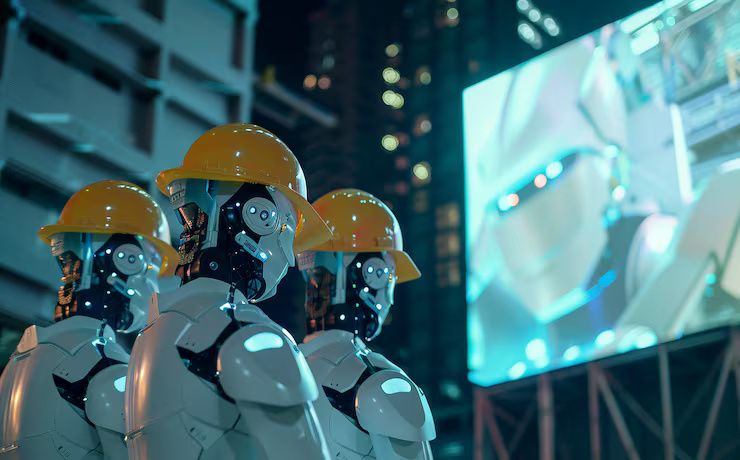
Humanoid robots are machines designed with a human-like physical structure, typically including a head, torso, arms, and legs. They are built to operate in environments created for humans, such as factories, offices, hospitals, and public spaces. Automation refers to the use of machines, software, and control systems to perform tasks with minimal human intervention.
The idea of humanoid robots has existed for decades, but early versions were limited by computing power, sensor capability, and mechanical precision. As robotics engineering, artificial intelligence, and materials science advanced, humanoid robots became more capable of movement, perception, and interaction.
Humanoid robots exist because many workplaces and tools are designed around human form and behavior. Instead of redesigning entire environments for machines, humanoid robots aim to adapt to existing human-centered spaces. Understanding this topic involves learning how humanoid robots differ from traditional industrial robots and how they fit into the broader automation landscape.

Importance: Why Humanoid Robots Matter in the Future of Automation
Humanoid robots matter because automation is expanding beyond repetitive, fixed-location tasks into more flexible and dynamic activities. Traditional automation excels in controlled environments, while many real-world tasks require mobility, adaptability, and interaction.
Key reasons this topic is important today include:
-
Growing labor shortages in certain industries
-
Increasing complexity of tasks requiring flexibility
-
Need for automation in human-designed environments
-
Advances in AI, sensors, and robotics hardware
Humanoid robots affect manufacturing, logistics, healthcare, retail, research, and public services. For organizations, they represent a potential way to automate tasks that are currently difficult to mechanize. For societies, they raise questions about workforce transformation, safety, and ethical use.
From a global perspective, humanoid robots are becoming a focal point in discussions about the next phase of automation.
Global Trends in Humanoid Robotics
Over the past year, humanoid robots have moved closer to practical deployment as technology maturity improves. Several notable global trends were observed between January 2025 and December 2025.
In March 2025, increased attention was given to mobility and balance control. Research and industry discussions highlighted improvements in walking stability and object handling in real-world settings.
By July 2025, focus expanded toward task learning and adaptation. Learning materials emphasized robots that can observe human actions and generalize skills across similar tasks.
In November 2025, emphasis grew on pilot deployments. Resources discussed controlled trials of humanoid robots in warehouses, laboratories, and service environments to evaluate safety and productivity.
The table below summarizes global trends:
| Trend Area | Observation (2025) | Implication |
|---|---|---|
| Mobility control | Improved balance and walking | Safer movement |
| Task learning | Skill generalization | Greater flexibility |
| Pilot deployments | Real-world testing | Practical insight |
| Human–robot interaction | Natural gestures and speech | Better collaboration |
These trends indicate a shift from laboratory prototypes toward applied automation.
Laws, Policies, and Regulatory Considerations
Globally, humanoid robots are governed by existing robotics, safety, and labor regulations rather than robot-specific humanoid laws. Regulation focuses on safe operation, accountability, and ethical deployment.
In India, digital and robotic systems fall under general technology and safety governance frameworks. The Information Technology Act, 2000, influences data handling and system security when robots process or transmit information. Workplace safety laws apply where robots operate alongside humans.
Internationally, standards organizations provide guidance on robot safety, human–machine interaction, and risk assessment. These frameworks influence how humanoid robots are tested, deployed, and monitored.
Regulatory discussions increasingly focus on transparency, responsibility, and human oversight as humanoid robots become more capable.
How Humanoid Robots Differ from Traditional Automation
Humanoid robots differ from conventional automation systems in several key ways.
Traditional industrial robots are typically fixed in place and programmed for specific, repetitive tasks. Humanoid robots are mobile, adaptable, and designed to handle a variety of tasks in changing environments.
The table below highlights the differences:
| Aspect | Traditional Automation | Humanoid Robots |
|---|---|---|
| Mobility | Fixed | Mobile |
| Environment | Structured | Human-oriented |
| Task variety | Limited | Broad |
| Interaction | Minimal | Collaborative |
| Adaptability | Low | Higher |
These differences explain why humanoid robots are seen as a complement, not a replacement, for existing automation.
Core Technologies Behind Humanoid Robots
Humanoid robots rely on multiple advanced technologies working together.
Mechanical design and actuation
Enable human-like movement and manipulation.
Sensors and perception systems
Allow robots to see, hear, and sense their surroundings.
Artificial intelligence and control software
Support decision-making, learning, and coordination.
Power and energy management
Ensure stable operation during movement and tasks.
Human–robot interaction systems
Enable communication through speech, gestures, or visual cues.
The table below summarizes core technologies:
| Technology Area | Role |
|---|---|
| Mechanics | Physical movement |
| Sensors | Environmental awareness |
| AI control | Decision-making |
| Power systems | Operational stability |
| Interaction | Collaboration |
Integration of these technologies defines robot capability.
Applications in Automation
Humanoid robots are being explored for tasks that combine physical activity and adaptability.
Common application areas include:
-
Material handling and internal logistics
-
Inspection and monitoring in complex facilities
-
Assistance in laboratories and controlled environments
-
Support roles in healthcare and public spaces
-
Research and training simulations
The table below highlights application focus:
| Application Area | Automation Role |
|---|---|
| Logistics | Flexible handling |
| Manufacturing support | Task assistance |
| Healthcare | Physical support |
| Facilities | Inspection tasks |
| Research | Experimentation |
These applications emphasize augmentation rather than full replacement of human labor.
Impact on Workforce and Productivity
Humanoid robots influence how work is organized rather than simply replacing jobs.
They can take over physically demanding, repetitive, or hazardous tasks, allowing human workers to focus on supervision, creativity, and problem-solving. Productivity gains depend on effective integration and clear role definition.
The table below summarizes workforce impact:
| Aspect | Potential Effect |
|---|---|
| Physical strain | Reduced |
| Task consistency | Improved |
| Skill requirements | Shifted |
| Collaboration | Increased |
Workforce adaptation is a key success factor.
Ethical and Social Considerations
Humanoid robots raise ethical and social questions.
Key considerations include worker safety, transparency of robot decision-making, data privacy, and public acceptance. Clear guidelines and responsible design help address these concerns.
The table below highlights ethical focus areas:
| Consideration | Importance |
|---|---|
| Safety | Human protection |
| Transparency | Trust |
| Privacy | Data protection |
| Accountability | Clear responsibility |
Ethics are integral to sustainable automation.
Tools and Resources for Learning and Evaluation
Several educational resources support understanding humanoid robots and automation.
Useful resource categories include:
-
Robotics system architecture diagrams
-
Human–robot interaction frameworks
-
Automation impact assessment models
-
Safety and risk evaluation guidelines
-
Global robotics trend reports
The table below highlights common resources:
| Resource Type | Purpose |
|---|---|
| Architecture diagrams | System understanding |
| Interaction frameworks | Collaboration design |
| Impact models | Productivity analysis |
| Safety guidelines | Risk management |
| Trend reports | Global awareness |
These resources support informed evaluation.
Practical Challenges and Limitations
Humanoid robots still face practical challenges.
High complexity, energy constraints, reliability in unstructured environments, and integration with existing workflows can limit adoption. Overestimating near-term capabilities may lead to unrealistic expectations.
Balanced automation strategies focus on gradual deployment and clear use cases.
Frequently Asked Questions
What are humanoid robots?
They are robots designed with a human-like physical structure.
How are humanoid robots used in automation?
They support flexible tasks in human-oriented environments.
Do humanoid robots replace traditional robots?
No. They complement existing automation systems.
Are humanoid robots safe to work with humans?
They are designed with safety systems, but require oversight.
Are humanoid robots relevant globally?
Yes. They are part of worldwide automation research and deployment.
Conclusion
Humanoid robots represent an important frontier in the future of automation. By combining human-like form with advanced sensing, intelligence, and mobility, they aim to extend automation into environments and tasks that were previously difficult to mechanize.
Global trends show progress in mobility, learning, and real-world testing, while regulations and ethical frameworks continue to evolve. Rather than replacing existing automation, humanoid robots are expected to work alongside humans and traditional machines to improve flexibility, safety, and productivity.
Understanding the basics, technologies, applications, global trends, challenges, and key insights related to humanoid robots helps organizations and individuals prepare for the next phase of automation. As technology matures, humanoid robots are likely to play a growing role in shaping how work is performed across industries worldwide.