Hydraulic Cylinder: Working, Types, Components and Applications , Facts
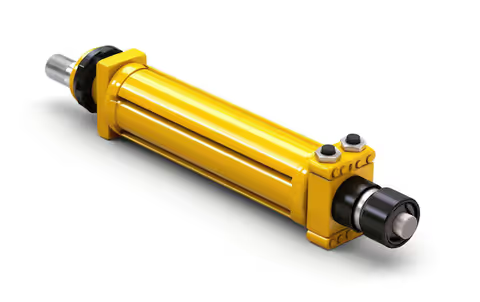
A hydraulic cylinder is an important mechanical actuator used in hydraulic systems to convert fluid pressure into controlled linear movement. These components are widely used in industrial machinery, construction equipment, agricultural machinery, manufacturing systems, material-handling equipment, and mobile hydraulic applications. By using pressurized hydraulic fluid, a cylinder can generate substantial force while maintaining controlled movement.
Hydraulic cylinders are part of a broader hydraulic power system that may include pumps, valves, reservoirs, hoses, filters, and other hydraulic components. The cylinder itself performs the final mechanical movement required by the machine. Understanding its construction, operating principle, types, and maintenance requirements can help equipment operators, engineers, and maintenance professionals better understand hydraulic machinery.
What Is a Hydraulic Cylinder?
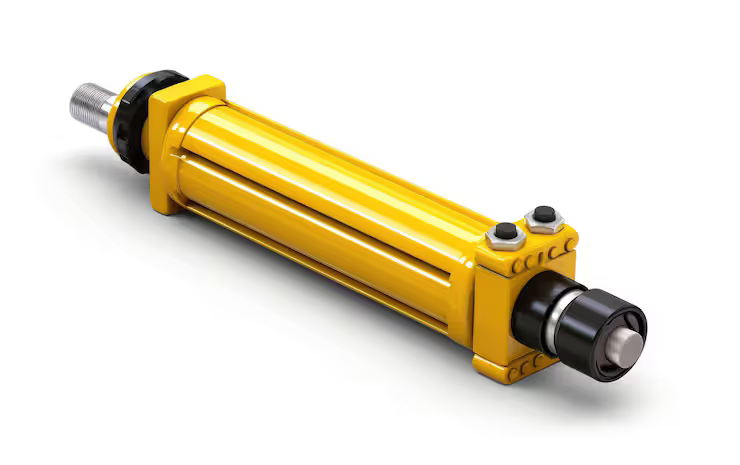
A hydraulic cylinder is a fluid-powered actuator that produces linear force and motion. It generally consists of a cylindrical barrel, piston, piston rod, seals, and mounting components. Hydraulic fluid enters one side of the cylinder and applies pressure against the piston. This pressure causes the piston and rod to move in a particular direction.
The amount of force produced depends largely on hydraulic pressure and the effective piston area. This makes hydraulic cylinders suitable for applications where machines need significant pushing or pulling force. Unlike rotary hydraulic motors, which produce rotational movement, hydraulic cylinders primarily provide linear movement.
How Does a Hydraulic Cylinder Work?
Basic Working Principle
The working principle of a hydraulic cylinder is based on hydraulic pressure. A hydraulic pump moves fluid through the hydraulic circuit, while control valves determine where the fluid flows. When pressurized fluid enters the cylinder, it acts against the piston surface.
The resulting pressure creates a force that moves the piston. Because the piston is connected to the piston rod, the rod also moves and transfers mechanical force to the machine component. Reversing the direction of fluid flow can retract or extend the cylinder, depending on the cylinder design.
Hydraulic Pressure and Force
Hydraulic cylinder force can be explained using a basic relationship between pressure and piston area. In simplified terms, higher hydraulic pressure or a larger effective piston area can produce greater force.
This relationship is one reason hydraulic systems are commonly used for heavy-duty machinery. However, actual cylinder performance also depends on factors such as operating pressure, fluid characteristics, cylinder dimensions, friction, seal condition, temperature, and system design.
Main Components of a Hydraulic Cylinder
Cylinder Barrel
The cylinder barrel forms the main pressure-containing body of the actuator. It provides the internal surface along which the piston moves. The material and manufacturing quality of the barrel are important because it must withstand repeated hydraulic pressure and mechanical loading.
Piston
The piston separates different fluid chambers within the cylinder. Hydraulic pressure acting on the piston creates the force required to move the piston and piston rod. Piston seals help reduce internal leakage between the chambers.
Piston Rod
The piston rod transfers the force generated inside the cylinder to the external machinery. It is exposed to mechanical loads and environmental conditions, so surface condition, alignment, and protection are important considerations.
Seals
Hydraulic seals help prevent fluid leakage and maintain pressure inside the cylinder. Different seals may be used for piston sealing, rod sealing, dust protection, and other functions. Seal selection depends on pressure, temperature, hydraulic fluid, movement speed, and operating environment.
Rod and Cylinder Mounts
Mounting arrangements connect the hydraulic cylinder to the machine. Common designs include clevis mounts, flange mounts, trunnion mounts, and other specialized configurations. Proper mounting helps maintain alignment and reduces unnecessary mechanical stress.
Types of Hydraulic Cylinders
Single-Acting Hydraulic Cylinder
A single-acting cylinder uses hydraulic pressure primarily to move the piston in one direction. The return movement may occur through gravity, an external mechanical force, or another mechanism.
These cylinders can be suitable for applications where powered movement is required in only one direction.
Double-Acting Hydraulic Cylinder
A double-acting cylinder uses hydraulic pressure to control movement in both directions. Hydraulic fluid can be directed to either side of the piston, allowing the cylinder to extend and retract under hydraulic power.
Double-acting cylinders are widely used in industrial machinery, construction equipment, agricultural equipment, and automated hydraulic systems.
Telescopic Hydraulic Cylinder
A telescopic cylinder contains multiple stages that extend from one another. Its design allows a relatively long stroke while maintaining a shorter retracted length.
These cylinders can be found in applications where available installation space is limited but substantial extension is required.
Tie-Rod Hydraulic Cylinder
Tie-rod cylinders use external rods to hold the cylinder components together. They are commonly associated with industrial hydraulic applications and can be configured for different operating requirements.
Welded Hydraulic Cylinder
Welded cylinders have components that are welded together as part of their construction. They are frequently used in mobile equipment and demanding applications where compact construction and durability are important.
Hydraulic Cylinder Applications
Construction Equipment
Hydraulic cylinders are widely associated with excavators, loaders, bulldozers, cranes, lifting systems, and other construction machinery. They can control functions such as boom movement, bucket positioning, lifting, steering, and attachment operation.
Manufacturing Machinery
Industrial hydraulic cylinders are used in presses, forming machines, injection equipment, material-handling systems, and automated production machinery. Their ability to generate controlled linear force makes them useful in manufacturing processes.
Agricultural Machinery
Agricultural equipment can use hydraulic cylinders for functions such as implement positioning, lifting mechanisms, steering systems, and adjustment mechanisms. Hydraulic power allows operators to control mechanical movements from the machine's hydraulic circuit.
Material Handling Systems
Forklifts, lifting platforms, compactors, conveyors, and other material-handling equipment may use hydraulic actuators. Cylinder dimensions and operating specifications vary according to the load and movement requirements.
Factors to Consider When Selecting a Hydraulic Cylinder
Operating Pressure
Operating pressure is an important specification when evaluating a hydraulic cylinder. The cylinder should be appropriate for the pressure range of the hydraulic system. Exceeding the rated operating conditions can create safety and equipment-performance concerns.
Bore Diameter and Stroke Length
Bore diameter influences the available piston area and therefore the potential force generated at a particular pressure. Stroke length determines how far the piston rod can travel.
The required bore and stroke should be determined from the machine's force, movement, space, and operating requirements.
Mounting Configuration
The mounting arrangement should match the mechanical structure of the equipment. Incorrect alignment or unsuitable mounting can increase side loading and mechanical stress.
Hydraulic Fluid and Temperature
Hydraulic cylinders operate with hydraulic fluids whose properties can vary according to system design and operating conditions. Temperature can influence fluid viscosity, seal performance, and overall hydraulic-system behavior.
Environmental Conditions
Dust, moisture, chemicals, extreme temperatures, and outdoor exposure can influence cylinder performance and service life. Appropriate materials, coatings, seals, and protective arrangements may be required for demanding environments.
Hydraulic Cylinder Maintenance
Regular hydraulic equipment maintenance can help identify problems before they result in major system downtime. Inspection commonly includes checking for external hydraulic fluid leakage, damaged piston rods, worn seals, unusual movement, mounting problems, and contamination.
Hydraulic fluid condition is also important because contaminated fluid can affect valves, pumps, cylinders, and other hydraulic components. Filters and fluid-management practices should therefore be maintained according to the requirements of the particular hydraulic system.
Operators should also pay attention to unusual noises, jerky movement, slow operation, overheating, and pressure-related problems. These symptoms may have several possible causes, so diagnosis should consider the complete hydraulic circuit rather than the cylinder alone.
Common Hydraulic Cylinder Problems
Hydraulic Fluid Leakage
External leakage may occur around the rod seal, connections, or other cylinder components. Damaged seals, worn surfaces, excessive pressure, contamination, and installation problems can contribute to leakage.
Slow Cylinder Movement
Slow movement can result from insufficient hydraulic flow, pressure problems, fluid issues, restrictions, internal leakage, or problems elsewhere in the hydraulic system.
Uneven or Jerky Movement
Jerky cylinder operation may be associated with air in the hydraulic circuit, contamination, mechanical misalignment, inadequate lubrication, or inconsistent hydraulic flow.
Piston Rod Damage
A bent, scratched, corroded, or otherwise damaged piston rod can affect seal performance and cylinder operation. Because the rod interacts directly with the sealing system, surface condition is particularly important.
Hydraulic Cylinder Repair and Replacement Considerations
Hydraulic cylinder repair may involve inspection, seal replacement, rod inspection, piston examination, and checking the cylinder barrel for damage. The appropriate repair procedure depends on the cylinder design and the nature of the problem.
Replacement decisions should consider the cylinder's bore diameter, stroke length, mounting arrangement, operating pressure, rod dimensions, seal requirements, and application. In some situations, repairing a cylinder may be technically appropriate, while in others, replacing damaged components may be necessary.
Future Trends in Hydraulic Systems
Modern hydraulic technology is increasingly being combined with electronic controls, sensors, automation, and condition-monitoring systems. These developments can provide more precise control over machine movement and make it possible to collect information about operating conditions.
Electro-hydraulic systems can combine hydraulic power with electronic control technologies. In industrial environments, this approach can support automated machinery, improved process control, and integration with broader industrial automation systems.
Conclusion
Hydraulic cylinders are fundamental components of many hydraulic power systems. They convert hydraulic energy into controlled linear mechanical movement and are used across construction, manufacturing, agriculture, material handling, and other industrial applications.
Understanding cylinder types, components, operating principles, specifications, and maintenance requirements can help users evaluate hydraulic equipment more effectively. Factors such as operating pressure, bore size, stroke length, mounting configuration, hydraulic fluid, environmental conditions, and maintenance practices all influence cylinder performance.
As hydraulic systems continue to integrate sensors, electronic controls, and automation technologies, hydraulic cylinders remain an important part of modern industrial machinery and mobile equipment.