Industrial Conveyor Systems: An Overview of Systems, Components and Processes
Industrial Conveyor Systems are mechanical equipment arrangements used to move materials, products, packages, and components through industrial facilities.
They can transport items between production stages, storage areas, inspection points, loading zones, and packaging areas while maintaining a defined movement path. Depending on the application, conveyor systems may use belts, rollers, chains, screws, magnetic forces, or other mechanisms to move materials at controlled speeds.
Context
What Are Industrial Conveyor Systems?
Industrial Conveyor Systems are designed to provide continuous or controlled material movement within a facility. Instead of requiring every item to be carried manually between locations, a conveyor creates a mechanical path between two or more points.
The concept of conveyor-based transportation developed alongside industrial manufacturing and material-handling practices. Early systems used relatively simple belts and mechanical drives, while modern installations can combine sensors, programmable controllers, variable-speed drives, robotics, and digital monitoring.
A conveyor system is more than the visible belt or rollers. It normally includes several connected components that work together to move and control materials.
How Conveyor Systems Work
A typical conveyor receives material at an entry point and transports it toward a destination. A motor supplies mechanical energy, while a drive arrangement transfers that energy to the belt, rollers, chain, screw, or another conveying element.
Sensors can detect the presence, position, or movement of products. Control systems can then start, stop, accelerate, decelerate, divert, or coordinate sections of the conveyor according to the operating sequence.
Common components include:
- Conveyor belt, rollers, chain, or screw
- Electric motor and drive
- Gearbox or transmission arrangement
- Frames and support structures
- Pulleys, sprockets, or drive rollers
- Bearings and shafts
- Sensors and switches
- Guards and emergency-stop devices
- Control panels and programmable controllers
Main Types of Industrial Conveyor Systems
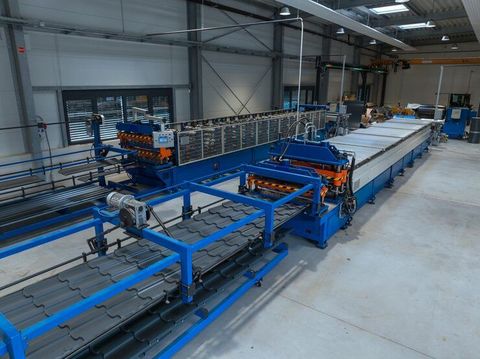
Different conveyor designs are associated with different materials and movement requirements. Belt conveyors use a continuous belt supported by rollers or a flat surface and are widely used for packages, bulk materials, and manufactured products.
Roller conveyors use cylindrical rollers to move items along a horizontal or inclined path. Some systems use powered rollers, while others depend on gravity or manual movement.
Chain conveyors use linked chains to transport heavier products or items that may not move effectively on a smooth belt. Screw conveyors use a rotating helical element to move powders, granules, or other bulk materials through a trough or enclosed housing.
| Conveyor Type | Typical Material | Common Application |
|---|---|---|
| Belt conveyor | Packages, bulk solids, components | Production and material movement |
| Roller conveyor | Boxes, cartons, containers | Warehousing and distribution |
| Chain conveyor | Heavy components, pallets | Manufacturing and assembly |
| Screw conveyor | Powders, granules, bulk solids | Processing plants |
| Magnetic conveyor | Ferrous metal pieces | Metal processing |
| Slat conveyor | Rigid products, containers | Assembly and packaging |
| Pneumatic conveyor | Powder or granular material | Enclosed material transfer |
Conveyor Layouts
The physical arrangement of a conveyor depends on the facility and material path. Straight conveyors provide direct movement, while curved conveyors allow products to change direction without transferring them manually.
Inclined conveyors move materials between different elevations. Overhead conveyors can transport items above the factory floor, leaving ground-level space available for other activities.
Multiple conveyor sections can also be connected through transfer points, diverters, accumulation zones, and automated sorting equipment.
Importance
Why Industrial Conveyor Systems Matter
Material movement is a fundamental part of manufacturing, warehousing, food processing, mining, packaging, and distribution. Industrial Conveyor Systems help establish predictable routes for materials and products within these environments.
Without organized material movement, facilities may require additional manual handling between production stages. Conveyor systems can instead create defined transportation paths that are integrated with other equipment.
The systems are relevant to industries such as:
- Automotive manufacturing
- Food and beverage processing
- Pharmaceutical production
- Mining and mineral processing
- Warehousing
- Parcel handling
- Packaging
- Electronics manufacturing
- Agriculture and bulk-material processing
Material Handling Challenges
Factories and warehouses may handle products that differ considerably in size, shape, weight, temperature, and surface characteristics. A conveyor designed for lightweight cartons may not be appropriate for heavy metal components or abrasive minerals.
Environmental conditions also matter. Dust, moisture, heat, chemicals, and outdoor exposure can influence the selection of belts, bearings, motors, frames, and protective equipment.
Conveyor design therefore considers several variables, including:
- Material weight and dimensions
- Required movement distance
- Horizontal or vertical movement
- Throughput requirements
- Material temperature
- Surface characteristics
- Environmental conditions
- Cleaning requirements
- Available floor space
- Integration with other equipment
Safety Considerations
Conveyors contain moving belts, rollers, chains, shafts, and other mechanical parts that can create pinch, entanglement, and impact hazards. Safe operation requires appropriate guarding, emergency stopping arrangements, maintenance procedures, and operator training.
Emergency-stop devices can allow equipment to be stopped quickly during an unsafe situation. Guards can reduce access to hazardous moving components.
Workers also need awareness of loading areas, transfer points, maintenance procedures, and restricted zones. Safety requirements depend on the equipment, workplace, material, and applicable regulations.
Recent Updates
Automation and Smart Conveyors
Recent developments in Industrial Conveyor Systems increasingly involve automation and digital controls. Sensors can track products and provide information about movement, accumulation, position, and equipment conditions.
Programmable logic controllers can coordinate conveyor sections with scanners, robotic systems, packaging equipment, and automated storage systems. This allows material movement to become part of a larger production-control architecture.
Variable-Speed Operation
Variable-frequency drives and electronically controlled motors allow conveyor speed to be adjusted according to process requirements. Different stages of a production line may therefore operate at different speeds while remaining coordinated.
Speed control can also be integrated with sensors and control software. For example, a conveyor can slow down when an accumulation zone approaches its configured capacity.
Machine Vision and Automated Inspection
Cameras and machine-vision systems are increasingly integrated into material-handling lines. These systems can identify product characteristics, read codes, detect selected surface defects, and determine whether an item should continue along a particular route.
Vision systems can also work with automated diverters and robotic equipment. Their usefulness depends on lighting, camera configuration, product characteristics, software, and inspection requirements.
Predictive Monitoring
Sensors can collect information about motor temperature, vibration, current, belt movement, bearing conditions, and other operating variables. Data analysis can then be used to identify changes that may indicate developing equipment problems.
This approach is part of a broader movement toward condition-based maintenance. Instead of relying only on fixed inspection intervals, maintenance planning can incorporate information from equipment sensors.
Energy and Material Efficiency
Energy management has also become relevant to conveyor operation. Motors, drives, and mechanical components can be selected and controlled according to the required load and operating pattern.
Designers are also examining belt materials, low-friction components, modular structures, and control strategies that can reduce unnecessary movement. Actual energy use depends on conveyor length, load, speed, incline, equipment design, and operating conditions.
Laws or Policies
Industrial Safety in India
Industrial Conveyor Systems operating in India can be affected by workplace safety requirements, environmental rules, electrical regulations, and product-specific standards. The exact requirements depend on the facility and the nature of the operation.
The Occupational Safety, Health and Working Conditions Code, 2020 provides a broad legislative framework relating to occupational safety and working conditions, subject to its applicability and implementation framework.
Facilities may also need to consider requirements relating to electrical safety, fire protection, machinery guarding, workplace access, and emergency arrangements.
Standards and Technical Requirements
Bureau of Indian Standards publications can be relevant to particular machinery, components, electrical equipment, and safety practices. International standards from organizations such as ISO and IEC may also be referenced for machinery safety, electrical systems, control systems, and quality management.
For automated conveyor installations, functional safety and control-system considerations may become particularly important. The applicable standard depends on the machine design and its intended application.
Environmental Considerations
Certain conveyor installations handle materials that can create dust, waste, noise, or other environmental impacts. Facilities may therefore need to comply with applicable requirements administered by the Central Pollution Control Board or State Pollution Control Boards.
Mining, food processing, chemical production, and other sectors can have additional regulatory requirements based on their materials and processes.
Tools and Resources
Conveyor Design Calculations
Conveyor engineering commonly involves calculations related to belt speed, material capacity, motor power, load, incline, friction, and tension. Engineering calculators and manufacturer technical documents can support preliminary calculations.
The calculation method depends on the conveyor type and material. Bulk-material conveyors, for example, require different considerations from roller systems used for cartons.
Monitoring Equipment
Sensors used in conveyor installations can measure several operating conditions. Examples include:
- Photoelectric sensors for object detection
- Proximity sensors for position detection
- Encoders for speed and movement measurement
- Vibration sensors for condition monitoring
- Temperature sensors for motors and bearings
- Current sensors for electrical monitoring
- Belt-alignment switches for tracking problems
These devices can connect to programmable controllers or industrial monitoring systems.
Technical and Regulatory Resources
Useful resources for learning about Industrial Conveyor Systems include:
- Bureau of Indian Standards publications
- Ministry of Labour and Employment resources
- Central Pollution Control Board guidance
- State Pollution Control Board information
- ISO standards
- IEC standards
- Conveyor equipment manuals
- Engineering design references
- Motor and gearbox datasheets
- Industrial safety documentation
These resources address different aspects of conveyor design, operation, inspection, maintenance, and workplace safety.
FAQs
What Are Industrial Conveyor Systems Used For?
Industrial Conveyor Systems are used to transport materials, components, packages, and products between locations within manufacturing plants, warehouses, processing facilities, mines, and distribution environments.
What Are the Main Types of Industrial Conveyor Systems?
Common types include belt, roller, chain, screw, slat, magnetic, and pneumatic conveyors. Each design is associated with particular material characteristics, movement patterns, and operating environments.
How Do Industrial Conveyor Systems Work?
A motor and drive arrangement provides mechanical movement to a belt, roller, chain, screw, or another conveying mechanism. Materials enter the conveyor at a defined point and move along the system toward a destination.
How Are Industrial Conveyor Systems Automated?
Automation can involve sensors, programmable logic controllers, variable-frequency drives, barcode or vision systems, robotic equipment, and automated diverters. These components can coordinate material movement and provide process information.
What Safety Features Are Used on Conveyor Systems?
Common safety features include guards around hazardous moving components, emergency-stop devices, warning systems, controlled access areas, and defined maintenance procedures. Specific requirements depend on the conveyor design and workplace conditions.
Conclusion
Industrial Conveyor Systems provide controlled pathways for moving materials and products through manufacturing, processing, warehousing, and distribution environments. Belt, roller, chain, screw, magnetic, and other conveyor designs serve different material-handling requirements. Current developments include automation, digital monitoring, machine vision, variable-speed control, condition monitoring, and energy management. In India, workplace safety, electrical, environmental, and product-specific requirements can influence conveyor design and operation.