Industrial Pressure Vessels: Explore Designs, Materials and Industrial Uses
Industrial Pressure Vessels are containers designed to hold gases, liquids, vapors, or mixtures at pressures that differ from surrounding atmospheric pressure.
They are used across chemical processing, oil and gas, power generation, food processing, pharmaceuticals, water treatment, and manufacturing. Their design requires careful attention to pressure, temperature, materials, corrosion, inspection, and safety because stored pressure can represent a significant mechanical hazard.
Context
What Are Industrial Pressure Vessels?
Industrial Pressure Vessels are enclosed containers engineered to withstand internal or external pressure within defined operating conditions. Depending on their application, they may store compressed gases, heated fluids, process chemicals, steam, refrigerants, or other materials.
Unlike ordinary storage containers, pressure vessels must account for forces created by pressure acting on their walls, joints, nozzles, covers, and other components. Their construction therefore involves engineering calculations, material selection, fabrication controls, inspection, and testing.
Pressure vessels have been used since the development of steam technology and industrial chemical processing. Early steam vessels demonstrated the need for carefully designed pressure-containing equipment. Modern vessels incorporate established engineering principles, specialized materials, welding procedures, inspection methods, and pressure-relief devices.
How Pressure Vessels Work
A pressure vessel generally contains a substance while maintaining a defined pressure and temperature range. The vessel wall experiences forces from the contained material, and the design must account for these forces over the expected operating life.
A vessel may operate above atmospheric pressure, below atmospheric pressure, or under changing pressure conditions. Some equipment experiences repeated pressure cycles, which can contribute to fatigue over time.
Typical components can include:
- Shell or main pressure boundary
- Heads or end closures
- Nozzles and connections
- Manways or inspection openings
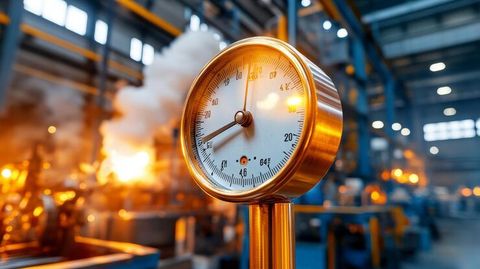
- Pressure gauges and transmitters
- Temperature instruments
- Pressure-relief devices
- Internal supports or process components
- External supports
- Insulation or protective coverings
The exact arrangement depends on the vessel's purpose, dimensions, material, pressure, temperature, and contents.
Common Types of Pressure Vessels
Industrial Pressure Vessels can be classified according to shape, orientation, pressure condition, and application.
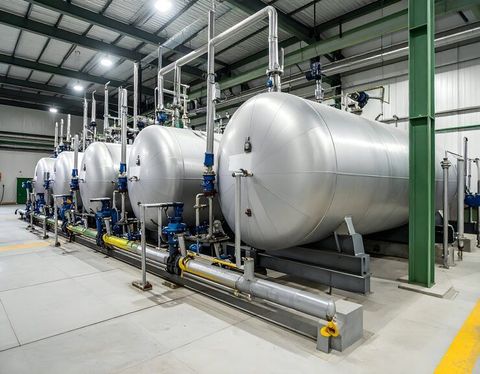
Horizontal vessels are often used for process storage, separation, and certain treatment applications. Vertical vessels can occupy less floor area and are frequently used for process operations, separation, and storage.
Spherical vessels are used for certain high-pressure storage applications because their geometry distributes pressure forces efficiently. Cylindrical vessels are more common across many industrial processes because they can be manufactured and integrated into process systems in numerous configurations.
| Vessel Type | General Characteristic | Common Application |
|---|---|---|
| Horizontal vessel | Long cylindrical arrangement | Storage and process separation |
| Vertical vessel | Upright cylindrical arrangement | Process treatment and storage |
| Spherical vessel | Curved pressure boundary | Selected high-pressure storage |
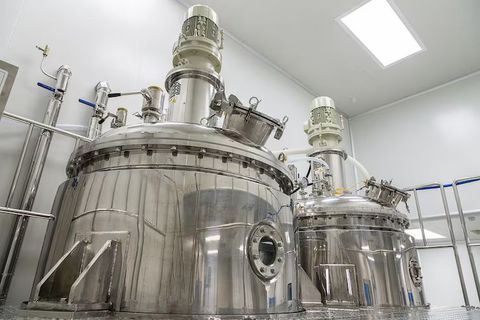
| Reactor vessel | Designed for controlled reactions | Chemical processing |
| Separator vessel | Separates phases or materials | Oil, gas, and process plants |
| Heat-transfer vessel | Transfers thermal energy | Industrial heating and cooling |
Importance
Why Industrial Pressure Vessels Matter
Many industrial processes require materials to be stored or processed under pressure. Pressure vessels provide a controlled environment for these operations while supporting the movement of materials through interconnected production systems.
They can also improve process control by allowing operators to maintain specific pressure, temperature, and material conditions. Examples include compressed-gas storage, chemical reactions, steam generation, air storage, and separation processes.
Industrial Applications
Industrial Pressure Vessels appear in many sectors because pressure is used for storage, heating, cooling, separation, and chemical processing.
Common applications include:
- Chemical processing
- Oil and gas processing
- Power generation
- Food and beverage processing
- Pharmaceutical production
- Water treatment
- Compressed-air systems
- Refrigeration systems
- Petrochemical processing
- Industrial gas storage
The materials contained inside these vessels can range from relatively harmless fluids to corrosive, flammable, toxic, or reactive substances. The vessel design and protective systems therefore depend strongly on the contents.
Materials Used
Steel is widely used in pressure-vessel construction because it can provide appropriate strength and durability for many applications. Carbon steel is used in numerous industrial environments, while stainless steel and specialized alloys may be selected where corrosion resistance or particular temperature characteristics are required.
Material selection depends on factors such as:
- Design pressure
- Design temperature
- Chemical compatibility
- Corrosion conditions
- Mechanical strength
- Fatigue exposure
- Fabrication method
- Inspection requirements
Material compatibility is particularly important when the vessel contains corrosive chemicals or operates at elevated temperatures.
Pressure and Temperature
Pressure and temperature are closely related to pressure-vessel design. Increasing temperature can affect material strength, while changes in pressure can increase mechanical stresses in the vessel wall.
Engineers therefore establish design conditions that account for expected operating ranges and appropriate safety margins. Pressure-relief equipment is also incorporated where necessary to protect the vessel from excessive pressure.
Recent Updates
Digital Monitoring
From 2024 through 2026, Industrial Pressure Vessels have increasingly been integrated with digital monitoring systems. Sensors can measure pressure, temperature, vibration, corrosion indicators, fluid levels, and other operating variables.
Data from these sensors can be connected to plant monitoring systems. This allows operating conditions to be recorded over time and can help identify changes that require engineering review.
Predictive Inspection
Digital inspection methods are becoming more common in industrial asset management. Historical pressure, temperature, corrosion, and inspection information can be organized into centralized records.
Analytical software can help identify patterns in equipment condition. These systems support inspection planning, although physical examination and engineering assessment remain important for pressure-containing equipment.
Advanced Inspection Methods
Non-destructive examination continues to develop through improved ultrasonic testing, radiographic techniques, magnetic-particle examination, dye-penetrant methods, and advanced imaging.
Ultrasonic techniques can evaluate wall thickness and identify certain internal discontinuities. Other methods are selected according to material, component geometry, defect type, and applicable inspection requirements.
Corrosion Monitoring
Corrosion remains an important consideration for many pressure vessels. Sensors, thickness measurements, corrosion coupons, protective coatings, and process monitoring can be used in different applications.
Digital records can help compare measurements taken over time. Corrosion behavior still depends on the chemical environment, temperature, material, flow conditions, moisture, and other process factors.
Computational Engineering
Computer-aided engineering tools are increasingly used for pressure-vessel analysis. Finite element analysis can help engineers examine stress distributions, thermal effects, supports, openings, and other design conditions.
These tools supplement established design codes and engineering calculations. The accuracy of an analysis depends on the material data, geometry, loads, boundary conditions, and assumptions used.
Laws or Policies
Indian Regulatory Context
Industrial Pressure Vessels in India can be subject to regulations covering pressure equipment, factories, worker safety, hazardous substances, fire protection, and environmental management. The applicable requirements depend on vessel type, pressure, contents, location, and industrial activity.
The Static and Mobile Pressure Vessels (Unfired) Rules, 2016 are relevant to certain categories of pressure vessels and compressed-gas installations. Other regulations can apply to boilers, hazardous chemicals, petroleum products, or specific industrial operations.
Design and Inspection
Pressure equipment may need to comply with applicable engineering codes and inspection requirements. Depending on the vessel and application, relevant standards can address materials, fabrication, welding, pressure testing, non-destructive examination, relief devices, and inspection.
The Bureau of Indian Standards publishes standards covering various pressure-equipment and material requirements. International codes such as ASME Section VIII are also widely referenced in pressure-vessel engineering, depending on project specifications and regulatory arrangements.
Workplace Safety
Pressure vessels can contain substantial stored energy. A failure may result in rapid pressure release, flying fragments, fire, chemical exposure, or other hazards depending on the contents.
Workplace safety programs can include:
- Pressure and temperature monitoring
- Relief-device inspection
- Controlled operating procedures
- Periodic examination
- Leakage checks
- Emergency procedures
- Worker training
- Restricted access where appropriate
- Documentation of inspection and maintenance
The exact controls depend on the vessel and its operating environment.
Environmental and Hazardous-Material Rules
Facilities containing hazardous chemicals may have additional requirements for storage, handling, emergency planning, labeling, and environmental protection. Rules can involve central and state authorities depending on the substance and quantity.
The Environment (Protection) Act framework and associated hazardous-chemical rules may apply to particular industrial installations. Facilities should verify the regulations applicable to their specific materials and operations.
Tools and Resources
Pressure-Vessel Design Calculations
Engineering calculations consider design pressure, temperature, material properties, wall thickness, vessel geometry, openings, supports, and applicable code requirements.
Common engineering references include pressure-vessel design codes, material standards, welding specifications, and inspection procedures.
Inspection Equipment
Several inspection technologies are used for pressure vessels:
- Ultrasonic thickness gauges
- Ultrasonic flaw-detection equipment
- Radiographic examination systems
- Magnetic-particle inspection equipment
- Dye-penetrant testing materials
- Visual inspection tools
- Pressure and temperature instruments
The selected method depends on the material and type of examination required.
Monitoring Systems
Pressure transmitters, temperature sensors, level instruments, vibration sensors, and corrosion-monitoring equipment can provide operating information. These instruments may connect to industrial control systems or asset-monitoring platforms.
Technical Resources
Useful technical resources can include:
- Bureau of Indian Standards publications
- Petroleum and Explosives Safety Organisation resources
- Ministry of Labour and Employment materials
- Central Pollution Control Board publications
- State regulatory authority guidance
- ASME pressure-vessel codes
- Equipment manufacturer's technical documentation
- Inspection and non-destructive examination standards
The applicable reference depends on the vessel, process, material, and regulatory framework.
FAQs
What are Industrial Pressure Vessels used for?
Industrial Pressure Vessels are used to contain gases, liquids, vapors, or process mixtures under controlled pressure. Applications include chemical processing, compressed-gas storage, separation, heating, refrigeration, and industrial processing.
How do Industrial Pressure Vessels work?
An Industrial Pressure Vessel contains a material within a defined pressure and temperature range. Its shell, heads, connections, supports, instruments, and pressure-relief equipment are designed according to the intended operating conditions.
What materials are used to make Industrial Pressure Vessels?
Carbon steel, stainless steel, and specialized alloys are commonly used. Material selection depends on pressure, temperature, corrosion conditions, chemical compatibility, mechanical requirements, and applicable design standards.
Why are pressure-relief devices important?
Pressure-relief devices provide a controlled path for relieving excessive pressure when specified conditions occur. Their selection, sizing, installation, inspection, and maintenance must correspond to the vessel and applicable engineering requirements.
How are Industrial Pressure Vessels inspected?
Inspection can include visual examination, wall-thickness measurement, ultrasonic testing, radiographic examination, magnetic-particle testing, dye-penetrant testing, and pressure testing where applicable. The inspection method depends on the equipment, material, operating history, and governing requirements.
Conclusion
Industrial Pressure Vessels are engineered containers used to hold and process materials under controlled pressure and temperature conditions. Their applications include chemical processing, energy production, compressed-gas storage, food processing, refrigeration, and water treatment. Recent developments have emphasized digital monitoring, advanced inspection, corrosion tracking, predictive analysis, and computer-aided engineering. In India, pressure-vessel requirements can involve equipment-specific rules, engineering standards, workplace safety provisions, and hazardous-material regulations.