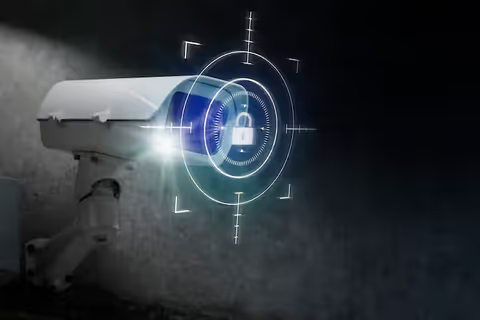
IP Security Camera: A Complete Guide to Network-Based Video Surveillance
An IP security camera is a digital surveillance camera that captures video and transmits it through a computer network using Internet Protocol (IP). Unlike traditional analog CCTV cameras, an IP camera processes video digitally and can connect with network video recorders, video management software, and authorized remote-viewing applications.
IP cameras are commonly used in homes, offices, warehouses, educational facilities, retail locations, industrial environments, and other areas where video surveillance is required. Depending on the system design, cameras can use Ethernet, Power over Ethernet (PoE), Wi-Fi, or other network connections.
How Does an IP Security Camera Work?
An IP camera uses a lens and image sensor to capture a scene. The camera's internal processor converts the captured image into digital video and normally compresses the data using technologies such as H.264 or H.265 before transmitting it across the network.
The video can then be sent to a Network Video Recorder (NVR), video management system, local storage, or an authorized cloud platform. Network connectivity also allows authorized users to view live or recorded footage remotely when the system is configured for remote access.
Key Components of an IP Camera System
IP Camera
The camera is responsible for capturing and processing video. Different models can provide features such as high-definition or 4K video, infrared night vision, motion detection, audio, wide-angle viewing, and on-camera video analytics.
Network Video Recorder
An NVR receives digital video streams from compatible IP cameras and stores recordings on connected storage. It can also provide functions such as playback, recording schedules, camera management, and event searching.
Ethernet and PoE
Many professional surveillance installations use Power over Ethernet (PoE). PoE allows compatible cameras to receive power and network data through the same Ethernet cable, simplifying the physical connection between cameras and network equipment.
Network Infrastructure
A router, network switch, Ethernet cabling, and related equipment connect cameras with recording and management systems. Network capacity should be considered carefully when multiple high-resolution cameras operate simultaneously.
Important IP Security Camera Features
High-Resolution Video
Resolution affects the amount of visual detail captured by a camera. Common specifications include Full HD, 2K, and 4K. Higher resolution can provide additional detail, although lens quality, lighting, sensor size, positioning, and compression also influence the final image.
Night Vision
Infrared illumination can help cameras capture images in low-light environments. Some cameras also use low-light sensors or other technologies designed to maintain color information in darker conditions.
Motion Detection
Motion detection can identify changes within a camera's field of view and trigger recording or notifications. More advanced systems may use video analytics to distinguish between different types of objects or events.
Remote Monitoring
Network connectivity allows authorized users to access live or recorded video through compatible software or applications. Remote access should be protected with strong authentication and appropriate network security controls.
Video Analytics
Modern IP cameras may perform analytics directly on the camera or through a connected server. Depending on the system, analytics can support functions such as motion analysis, object detection, line crossing, and other event-based monitoring.
IP Security Camera Cybersecurity
Because IP cameras are network-connected devices, cybersecurity is an important part of surveillance system management. Camera systems should use strong, unique passwords, current firmware, controlled user permissions, and appropriate network security measures.
Cloud-connected surveillance systems can also use authentication and encryption mechanisms. For example, ONVIF's Profile V specifications address secure cloud video streaming, authentication, encrypted recordings, and event notifications for conformant systems.
IP Camera Storage Options
Video recordings can be stored locally through an NVR or other storage system, while some systems also support cloud-based recording. Storage requirements depend on camera resolution, frame rate, compression, number of cameras, recording schedule, and desired retention period.
H.265 compression can reduce the amount of bandwidth and storage required compared with less efficient compression methods, although actual results depend on the camera and recording configuration.
IP Security Camera vs Traditional CCTV
Traditional analog CCTV generally transmits video using coaxial infrastructure, while IP cameras transmit digital video over a network. IP systems can provide network-based recording, remote access, digital analytics, and integration with other network technologies.
The choice between technologies depends on existing infrastructure, coverage requirements, recording needs, cybersecurity considerations, and system compatibility.
Things to Consider Before Installing an IP Camera System
Camera Placement
Camera position affects the field of view, image quality, and coverage area. Important locations should be evaluated for lighting, obstructions, viewing angles, and environmental conditions.
Network Capacity
Multiple high-resolution cameras can generate significant network traffic. Network switches, cabling, storage systems, and recording equipment should therefore be selected according to the expected camera load.
Storage Requirements
Consider how many cameras will record, whether recording will be continuous or event-based, the required video quality, and how long footage needs to remain available.
Privacy and Data Protection
Video surveillance may involve personal data. Applicable privacy, data protection, signage, access-control, and retention requirements should be reviewed according to the location and intended use.
Conclusion
An IP security camera combines digital imaging with network connectivity to create a flexible approach to modern video surveillance. Technologies such as PoE, NVR recording, high-resolution imaging, video analytics, and secure remote access can support different residential, commercial, and industrial surveillance requirements.
A well-designed IP camera system should consider image quality, network capacity, storage, cybersecurity, camera placement, compatibility, and applicable privacy requirements. These factors help determine how effectively a network video surveillance system can operate over the long term.