Machine Tools Guide for Industrial Manufacturing and Precision Engineering Applications
Machine tools are essential mechanical devices used to shape, cut, drill, grind, or form materials—primarily metals—into precise components required across industries. These tools are foundational to manufacturing and precision engineering, enabling the production of parts with tight tolerances and consistent quality. Common examples include lathes, milling machines, drilling machines, and grinding systems, each designed for specific machining operations.
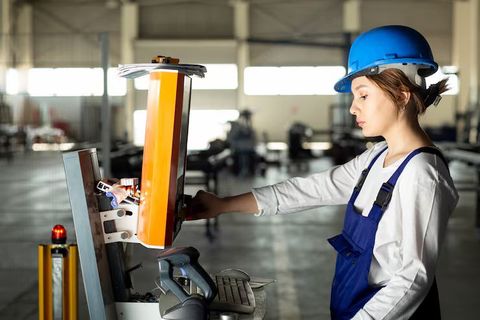
In today’s industrial environment, machine tools have evolved significantly with the integration of computer numerical control (CNC), automation, and digital monitoring systems. This evolution has improved accuracy, reduced human error, and enabled complex geometries that were previously difficult to achieve. Industries such as automotive, aerospace, energy, construction, and medical device manufacturing rely heavily on advanced machine tools.
Recent trends highlight increasing adoption of CNC systems, multi-axis machining, and smart manufacturing technologies. These advancements help improve productivity, reduce material waste, and support high-precision production. As global manufacturing becomes more competitive, machine tools play a critical role in maintaining efficiency, quality standards, and technological advancement.
Who It Affects and What Problems It Solves
Machine tools impact a wide range of industrial and engineering stakeholders:
- Manufacturing companies producing mechanical components
- Precision engineering firms requiring high accuracy
- Automotive and aerospace industries
- Tool and die makers
- Maintenance and repair workshops
- Industrial designers and product developers
Practical Problems Addressed
- Inconsistent dimensions and poor product accuracy
- High material wastage in manual processes
- Limited ability to produce complex geometries
- Low production efficiency and slow turnaround times
- Dependence on manual labor and skill variability
- Difficulty in scaling production volumes
- Surface finish and tolerance issues
Machine tools address these problems by enabling controlled, repeatable, and precise machining operations.
Types of Machine Tools and Their Applications
| Machine Tool Type | Function | Common Applications |
|---|---|---|
| Lathe Machine | Rotates workpiece for cutting operations | Shafts, bolts, cylindrical parts |
| Milling Machine | Removes material using rotating cutters | Slots, gears, complex surfaces |
| Drilling Machine | Creates holes in materials | Fastening, assembly operations |
| Grinding Machine | Provides fine surface finishing | Precision components |
| CNC Machines | Computer-controlled machining | Complex and high-precision parts |
| EDM (Electrical Discharge Machine) | Uses electrical sparks for shaping | Hard materials, intricate designs |
Key Components of Machine Tools
Mechanical Components
- Bed and frame for structural support
- Spindle for rotating tools or workpieces
- Tool holders and fixtures
- Guideways for controlled movement
Control Systems
- Manual controls in traditional machines
- CNC controllers for automated operations
- Sensors and feedback systems for accuracy
Cutting Tools
- Single-point tools (used in lathes)
- Multi-point tools (used in milling and drilling)
- Abrasive tools (used in grinding)
Recent Updates and Industry Trends (Past Year)
1. Growth of CNC and Multi-Axis Machining
Modern industries are increasingly adopting 5-axis and multi-axis CNC machines. These systems allow complex parts to be manufactured in a single setup, reducing production time and improving precision.
2. Integration with Industry 4.0
Machine tools are now connected to digital systems through IoT platforms. This enables real-time monitoring, predictive maintenance, and data-driven decision-making.
3. Automation and Robotics Integration
Robotic arms are being integrated with machine tools for loading, unloading, and handling operations. This reduces manual intervention and enhances productivity.
4. Focus on Energy Efficiency
Manufacturers are developing energy-efficient machine tools that reduce power consumption while maintaining performance.
5. Advanced Materials Machining
New machine tools are designed to handle advanced materials such as composites, titanium alloys, and hardened steels used in aerospace and medical industries.
Comparison of Conventional vs CNC Machine Tools
| Parameter | Conventional Machine Tools | CNC Machine Tools |
|---|---|---|
| Operation | Manual control | Computer-controlled |
| Accuracy | Moderate | High precision |
| Productivity | Lower | Higher |
| Skill Requirement | High operator skill | Programming knowledge |
| Flexibility | Limited | Highly flexible |
| Setup Time | Longer | Shorter |
Laws and Policies Impacting Machine Tools Industry
Machine tools and manufacturing processes are governed by various industrial standards and regulations to ensure safety, quality, and environmental compliance.
Key Regulatory Areas
- Workplace safety standards for machine operation
- Quality certifications such as ISO standards
- Environmental regulations for waste and emissions
- Electrical and machinery compliance standards
Practical Compliance Guidance
| Compliance Area | Requirement | Practical Action |
|---|---|---|
| Safety Standards | Operator protection and machine guarding | Install safety guards and training programs |
| Quality Standards | Consistent production quality | Implement ISO-certified processes |
| Environmental Rules | Waste and emissions control | Use eco-friendly cutting fluids |
| Equipment Certification | Machinery compliance | Regular inspection and certification |
Tools and Resources for Machine Tools
Software Tools
- CAD (Computer-Aided Design) software for designing components
- CAM (Computer-Aided Manufacturing) software for machining programs
- CNC simulation software for testing operations
Equipment and Systems
- CNC controllers and automation systems
- Tool monitoring and condition tracking systems
- Measurement tools such as CMM (Coordinate Measuring Machines)
Training and Skill Development
- Technical training institutes
- Online learning platforms for CNC programming
- Industry workshops and certification programs
SEO-Friendly FAQ Section
What are machine tools used for?
Machine tools are used to shape, cut, drill, and finish materials to create precise components used in manufacturing and engineering.
What is the difference between CNC and conventional machines?
CNC machines are computer-controlled and offer higher precision and automation, while conventional machines rely on manual operation.
Which industries use machine tools the most?
Industries such as automotive, aerospace, construction, energy, and medical manufacturing rely heavily on machine tools.
Why are machine tools important in precision engineering?
They enable accurate and repeatable production of components with tight tolerances and high-quality surface finishes.
What are the latest trends in machine tools?
Recent trends include CNC automation, multi-axis machining, IoT integration, and energy-efficient systems.
Conclusion
Machine tools are fundamental to industrial manufacturing and precision engineering, providing the capability to produce high-quality components efficiently and accurately. With the integration of CNC systems, automation, and digital technologies, machine tools have evolved into intelligent systems that support modern production requirements.
Data-driven manufacturing trends indicate a growing emphasis on precision, efficiency, and sustainability. Organizations adopting advanced machine tools benefit from improved productivity, reduced waste, and enhanced quality control. However, successful implementation requires proper training, compliance with regulations, and investment in appropriate technologies.
A practical approach for businesses is to gradually transition from conventional systems to CNC-based and automated solutions while focusing on workforce skill development and process optimization. This balanced strategy helps ensure long-term efficiency and competitiveness in an increasingly technology-driven industrial landscape.