Ruby Necklace Overview: Discover Facts, Details, and Essential Information
A ruby necklace is a type of gemstone jewelry that features ruby gemstones set in a chain or pendant structure. Rubies belong to the mineral family called corundum, known for their deep red color and remarkable durability. Throughout history, rubies have been valued in jewelry collections because of their striking appearance and association with symbolism such as vitality, strength, and prestige.
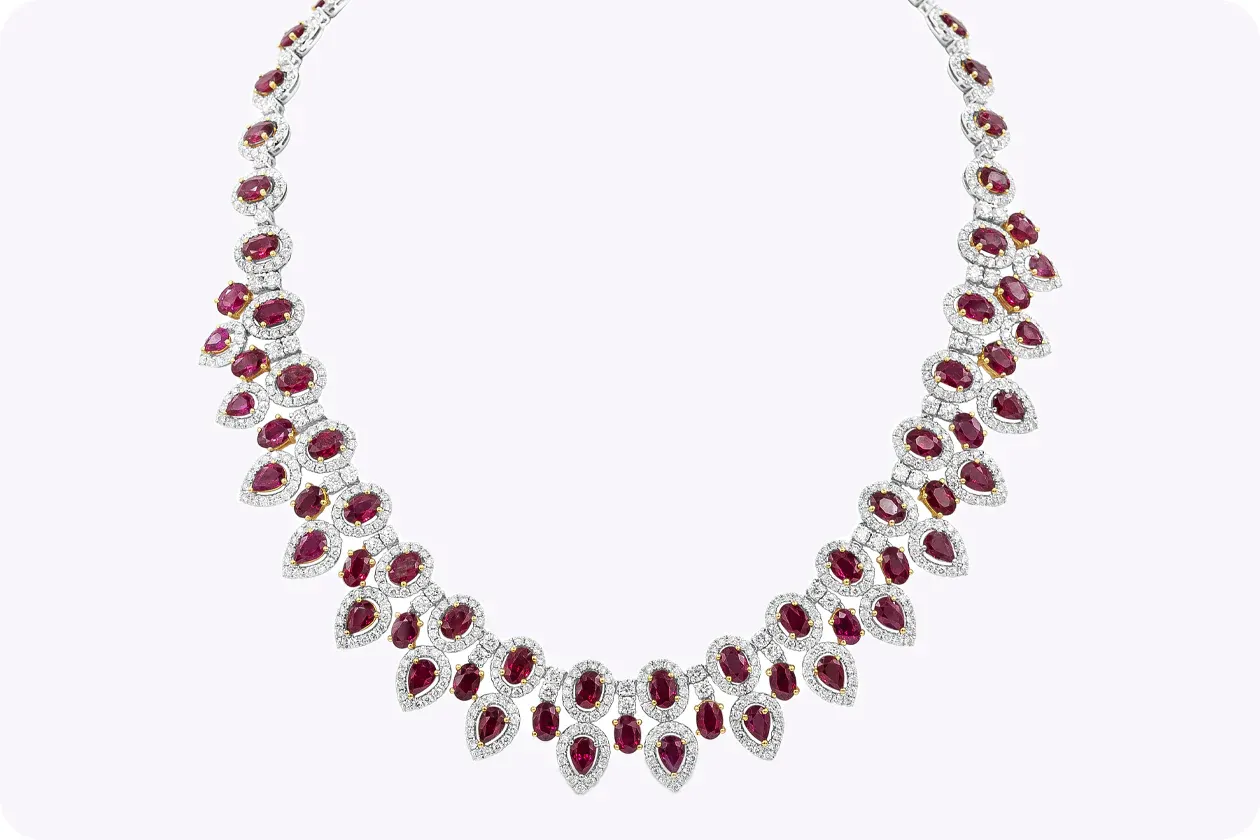
Ruby necklaces exist in many forms, including single pendant designs, multi-stone arrangements, and elaborate gemstone settings. Jewelers typically combine rubies with precious metals such as gold or platinum to enhance both durability and visual contrast.
The red color of rubies comes from the presence of chromium within the crystal structure. Depending on the concentration of chromium and natural geological conditions, ruby gemstones can range from light pinkish red to a deep, vivid red tone often referred to as “pigeon blood” red in gemological discussions.
Rubies are considered one of the four major precious gemstones, alongside diamonds, sapphires, and emeralds. Because of their hardness—ranking 9 on the Mohs hardness scale—ruby necklaces are suitable for long-term wear in many jewelry applications.
Key characteristics that define ruby gemstones used in necklaces include:
-
Color intensity and hue
-
Clarity and internal inclusions
-
Cut and shape of the gemstone
-
Carat weight and gemstone size
-
Origin of the gemstone deposit
These characteristics influence the overall appearance and quality assessment of ruby jewelry.
Why Ruby Necklaces Remain Important Today
Ruby necklaces continue to hold significance in jewelry design, cultural traditions, and gemstone investment discussions. Their popularity comes from a combination of visual appeal, durability, and historical symbolism.
In many cultures, ruby gemstones are associated with energy, passion, and protection. Because of this symbolism, ruby jewelry is often used in ceremonial or commemorative pieces.
Several factors explain why ruby necklaces remain widely discussed in the jewelry and gemstone sector.
Key reasons for their importance include:
-
Gemstone rarity: High-quality rubies are relatively rare compared with many other colored gemstones.
-
Durability: The high hardness of rubies makes them suitable for long-lasting jewelry pieces.
-
Jewelry craftsmanship: Ruby necklaces often involve advanced gemstone setting techniques.
-
Collector interest: Natural rubies with strong color saturation attract attention from gemstone collectors and jewelry enthusiasts.
In addition, ruby necklaces are commonly examined in gemology education, gemstone certification programs, and jewelry design training. Understanding gemstone properties such as color grading, clarity evaluation, and cut proportions helps professionals and enthusiasts learn how gemstones are evaluated and described.
Ruby jewelry also plays a role in the broader luxury jewelry industry, where gemstone quality documentation and gemstone authenticity verification have become increasingly important.
Emerging Trends and Developments in Ruby Jewelry
Recent developments in gemstone technology and jewelry manufacturing have influenced how ruby necklaces are designed, studied, and evaluated.
One important trend is the increased use of gemstone certification laboratories that analyze ruby gemstones using scientific instruments. These laboratories examine gemstone characteristics such as origin, treatments, and natural inclusions.
Another development is the improvement of gemstone traceability systems. Some jewelry manufacturers now use digital tracking methods to document gemstone origin and supply chain transparency. This approach helps improve gemstone authentication and consumer awareness.
Additional trends in the ruby jewelry sector include:
-
Advanced gemstone cutting techniques improving light reflection
-
Lab-grown ruby gemstones used in educational and research contexts
-
Digital gemstone databases used by gemologists and jewelry designers
-
High-resolution gemstone imaging technology for clarity analysis
The table below highlights several gemstone evaluation factors used in ruby jewelry analysis.
| Ruby Evaluation Factor | Description | Importance |
|---|---|---|
| Color | Hue, tone, and saturation of the gemstone | Primary visual characteristic |
| Clarity | Presence of internal inclusions | Affects transparency |
| Cut | Shape and proportions of the gemstone | Influences brilliance |
| Carat Weight | Measurement of gemstone mass | Determines size |
| Origin | Geological source of the gemstone | Relevant in gemology research |
These evaluation factors are widely discussed in gemstone grading systems and gemological research programs.
Regulations and Policies Affecting Ruby Gemstones
Gemstones, including rubies, are subject to a variety of international regulations related to trade transparency, mineral sourcing, and gemstone disclosure standards.
Many countries follow gemstone disclosure guidelines developed by jewelry trade organizations. These guidelines require jewelers and gemstone dealers to disclose information about gemstone treatments such as heating or clarity enhancement.
Common regulatory considerations include:
-
Gemstone treatment disclosure standards
-
Mineral sourcing transparency rules
-
Import and export documentation requirements
-
Jewelry labeling regulations
In several regions, government authorities monitor the gemstone industry through mineral trade regulations and consumer protection policies. These policies aim to ensure that gemstone descriptions and certifications remain accurate and verifiable.
Gemological laboratories and jewelry organizations also publish standards that help maintain consistency in gemstone grading terminology. These standards allow gemologists and jewelry professionals to evaluate gemstones using recognized scientific criteria.
Helpful Tools and Resources for Ruby Jewelry Knowledge
Several tools and educational resources are available for individuals who want to understand ruby necklaces and gemstone evaluation methods.
These resources are commonly used in gemology training programs, jewelry design education, and gemstone authentication studies.
Examples of useful tools include:
-
Gemstone grading charts used to compare ruby color variations
-
Gemstone identification microscopes used for clarity analysis
-
Jewelry design software for creating necklace models
-
Gemstone weight calculators for carat measurement
-
Gemological reference guides explaining mineral properties
Below is a simple comparison chart showing gemstone hardness levels.
| Gemstone | Mohs Hardness | Jewelry Use |
|---|---|---|
| Diamond | 10 | High durability jewelry |
| Ruby | 9 | Necklaces, rings, earrings |
| Sapphire | 9 | Durable gemstone jewelry |
| Emerald | 7.5–8 | Decorative jewelry pieces |
This chart illustrates why ruby gemstones are widely used in jewelry pieces that require long-term durability.
Frequently Asked Questions About Ruby Necklaces
What makes ruby gemstones different from other red gemstones?
Ruby gemstones belong to the corundum mineral family. Their red color is caused by chromium elements within the crystal structure, which distinguishes them from other red gemstones such as garnet or spinel.
How are ruby gemstones graded?
Gemologists evaluate rubies using several criteria including color, clarity, cut, and carat weight. These characteristics help determine the gemstone’s visual quality and classification in gemological reports.
Are all rubies natural?
Not all rubies originate from natural geological deposits. Some rubies are produced through laboratory growth processes for educational, industrial, or decorative uses. Gemological laboratories analyze gemstone properties to determine origin.
Why do rubies often contain inclusions?
Many natural rubies contain internal features known as inclusions. These inclusions form during the gemstone’s geological development and can help gemologists identify natural gemstone formation.
What metals are commonly used in ruby necklaces?
Ruby necklaces are commonly set in precious metals such as gold, platinum, or silver. These metals provide structural support and enhance the visual contrast of the red gemstone.
Conclusion
Ruby necklaces represent a combination of gemstone science, jewelry craftsmanship, and cultural symbolism. Their vivid red color, durability, and historical importance have made rubies one of the most recognized gemstones used in jewelry design.
Understanding ruby necklaces involves examining multiple aspects, including gemstone composition, color grading systems, gemstone treatments, and jewelry design methods. Advances in gemstone analysis technology and improved traceability systems continue to shape how ruby gemstones are studied and documented.
Educational resources, gemstone evaluation tools, and industry standards help ensure that ruby jewelry remains accurately described and scientifically analyzed. As gemstone research and jewelry technology continue to evolve, ruby necklaces will remain an important subject in gemology, jewelry design, and gemstone education.

