The Rise of the Autonomous Gantry Crane: An Overview to Explore Basics and Key Insights
Autonomous gantry cranes are advanced material-handling systems designed to lift, move, and position heavy loads with minimal human intervention. These cranes operate using sensors, control software, and automation technologies to perform tasks such as container handling, warehouse movement, and industrial loading.
The concept exists because modern industries require faster, safer, and more precise material handling. Traditional crane operations rely heavily on manual control, which can be affected by human fatigue, visibility limitations, and safety risks. Autonomous systems aim to improve accuracy and consistency in repetitive lifting operations.
Autonomous gantry cranes are commonly used in ports, logistics hubs, manufacturing plants, and large warehouses. They move along fixed rails or tracks and can transport containers, equipment, or bulk materials efficiently across large areas.
By integrating automation with mechanical lifting systems, these cranes support structured, data-driven industrial operations.
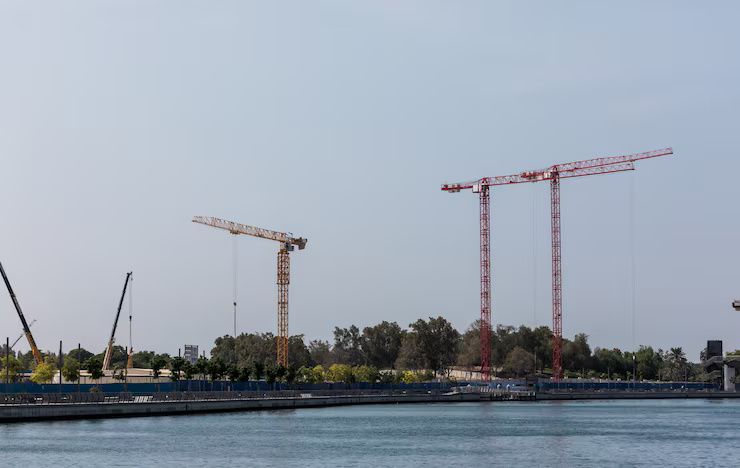
Importance: Why Autonomous Gantry Cranes Matter Today
Autonomous gantry cranes matter because global supply chains and industrial operations increasingly depend on speed, safety, and reliability. As cargo volumes grow and labor conditions become more regulated, automation helps maintain operational continuity.
Key challenges addressed by autonomous gantry cranes include:
-
Human safety risks in heavy lifting
-
Inconsistent load handling
-
High operational complexity
-
Limited visibility in busy work zones
-
Demand for continuous operations
For ports, automated cranes improve container throughput and reduce congestion. For warehouses, they support organized material flow. For manufacturing facilities, they enhance production efficiency.
From a safety perspective, automation reduces direct human exposure to hazardous lifting environments. Sensors and control systems help prevent collisions, overloads, and positioning errors.
Autonomous cranes also support digital transformation by generating operational data that can be used for planning, maintenance, and performance analysis.
Recent Updates and Trends in Autonomous Crane Technology
Between mid-2025 and early-2026, several developments influenced autonomous gantry crane adoption.
In May 2025, AI-based vision systems improved object detection and load alignment accuracy in port cranes.
By August 2025, remote monitoring platforms allowed centralized control of multiple cranes from a single operations center.
In October 2025, predictive maintenance systems became more common, using sensor data to identify component wear before failures occurred.
In January 2026, energy-efficient motor systems reduced power consumption in automated crane operations.
Summary of recent developments
| Update Area | Observed Change | Practical Impact |
|---|---|---|
| AI Vision | Improved load detection | Higher accuracy |
| Remote Control | Centralized operations | Better coordination |
| Maintenance | Predictive monitoring | Fewer breakdowns |
| Energy Use | Efficient motors | Lower power demand |
| Safety Systems | Enhanced sensors | Reduced accidents |
These trends reflect a move toward smarter, safer, and more efficient lifting systems.
Laws, Policies, and Regulatory Influence in India
Autonomous gantry crane operations in India are guided by industrial safety, labor, and infrastructure regulations.
The Factories Act, 1948 sets safety standards for machinery use, worker protection, and industrial operations.
The National Building Code (NBC) provides structural and safety guidelines for industrial installations, including crane systems.
The Occupational Safety, Health and Working Conditions Code, 2020 emphasizes worker safety around automated equipment.
The Bureau of Indian Standards (BIS) issues technical standards for cranes, lifting equipment, and electrical systems.
The Environment Protection Act, 1986 influences energy use, noise control, and emissions in industrial facilities.
Port-based autonomous cranes must also follow regulations issued by port authorities and maritime safety bodies.
These policies ensure safe, compliant, and responsible use of automated lifting systems.
Tools and Resources for Planning and Operation
Several tools support the planning and operation of autonomous gantry cranes.
Helpful categories include:
-
Crane simulation software
-
Load calculation tools
-
Safety compliance manuals
-
Remote monitoring dashboards
-
Predictive maintenance platforms
Common resource types
| Resource Type | Purpose |
|---|---|
| Simulation tools | Test crane movements |
| Load charts | Verify weight limits |
| Safety guides | Follow regulations |
| Monitoring systems | Track performance |
| Maintenance tools | Prevent failures |
These resources help improve operational accuracy and safety.
Common Applications of Autonomous Gantry Cranes
Autonomous gantry cranes are used in:
-
Container terminals
-
Industrial warehouses
-
Manufacturing plants
-
Rail freight yards
-
Heavy equipment facilities
Each application benefits from automated lifting precision.
Manual Cranes vs Autonomous Cranes
| Feature | Autonomous Cranes | Manual Cranes |
|---|---|---|
| Control | Software-based | Operator-driven |
| Safety | Sensor-assisted | Human-dependent |
| Accuracy | High | Variable |
| Operation time | Continuous | Limited |
| Data tracking | Digital | Minimal |
Automation improves consistency and safety.
Role of Sensors and AI
Autonomous cranes rely on:
-
LiDAR and camera sensors
-
Load detection systems
-
AI-based object recognition
-
Motion control algorithms
These ensure precise movement.
Safety and Risk Reduction
Safety systems include:
-
Collision avoidance
-
Load stability monitoring
-
Emergency stop functions
-
Restricted access zones
Automation reduces workplace hazards.
Energy Efficiency
Modern cranes use:
-
Regenerative braking
-
Optimized motor systems
-
Smart power management
-
Energy monitoring tools
Efficiency supports sustainability.
Workforce Interaction
Autonomous systems still require:
-
Supervisory operators
-
Maintenance technicians
-
Safety officers
-
Control system specialists
Human oversight remains important.
Infrastructure Requirements
Autonomous cranes need:
-
Stable power supply
-
Secure communication networks
-
Reinforced rail systems
-
Control rooms
Infrastructure supports reliability.
Challenges in Autonomous Crane Adoption
Common challenges include:
-
High technical complexity
-
System integration
-
Training requirements
-
Cybersecurity risks
Planning helps manage these issues.
Impact on Logistics and Industry
Autonomous cranes support:
-
Faster cargo handling
-
Reduced delays
-
Improved safety
-
Data-driven operations
They enhance industrial efficiency.
Technology Integration
Modern systems use:
-
IoT sensors
-
Cloud-based monitoring
-
Digital twins
-
AI analytics
Technology improves performance.
Educational and Training Value
Autonomous crane systems support:
-
Engineering education
-
Automation training
-
Safety workshops
-
Industrial research
They offer learning opportunities.
Frequently Asked Questions
What is an autonomous gantry crane?
It is a crane that operates with minimal human control using automation.
Why are they important?
They improve safety, speed, and accuracy in material handling.
Are they regulated in India?
Yes, under industrial safety and equipment standards.
Where are they used?
In ports, warehouses, and manufacturing facilities.
Do they replace human workers?
They change roles, focusing more on supervision and maintenance.
Future Outlook for Autonomous Cranes
Future developments may include:
-
Fully AI-controlled operations
-
Advanced collision prevention
-
Lower energy consumption
-
Smarter maintenance systems
These aim to improve safety and efficiency.
Role in Industrial Automation
Autonomous gantry cranes support:
-
Smart ports
-
Automated warehouses
-
Digital manufacturing
-
Logistics modernization
They are key to Industry 4.0.
Responsible Automation Practices
Best practices emphasize:
-
Safety compliance
-
Human oversight
-
Cybersecurity
-
Environmental care
Responsibility ensures sustainable automation.
Conclusion
Autonomous gantry cranes represent a significant step forward in industrial automation. By combining mechanical lifting systems with advanced sensors, software, and AI technologies, these cranes improve safety, accuracy, and operational efficiency.
Recent trends highlight better vision systems, predictive maintenance, and energy-efficient designs. In India, industrial safety laws, equipment standards, and environmental regulations guide responsible crane deployment.
As industries continue to modernize, understanding the basics, regulations, and operational tools related to autonomous gantry cranes helps support safe, efficient, and sustainable material handling systems.