Turbine Manufacturing: Process, Materials, Technology and Quality Control Facts
Turbine manufacturing is an advanced engineering process used to produce machines that convert the energy of steam, gas, water, or wind into mechanical power. Turbines are used across power generation, industrial facilities, renewable energy systems, and other engineering applications. Manufacturing requires careful material selection, precision machining, forming, casting, assembly, and testing.
Importance of Turbine Manufacturing
Modern turbine components operate under demanding mechanical, thermal, and environmental conditions. Manufacturing accuracy is therefore important for components such as blades, rotors, shafts, casings, nozzles, hubs, and other structural parts. The required production method depends on the turbine design, operating conditions, and selected materials.
Types of Turbines
Gas Turbine Manufacturing
Gas turbine manufacturing involves components such as compressors, combustors, turbine blades, vanes, rotors, and casings. High-temperature sections commonly require specialized alloys and manufacturing techniques designed to withstand demanding operating conditions. Processes can include precision casting, machining, grinding, and thermal barrier coating.
Steam Turbine Manufacturing
Steam turbines require carefully manufactured rotors, blades, casings, and blade-fixing systems. Investment casting, rolling, CNC machining, drilling, and advanced manufacturing processes can be used depending on the component and turbine design.
Hydro Turbine Manufacturing
Hydro turbines are designed for operation with moving water and require materials and surface treatments that address erosion and corrosion. Manufacturing can involve casting, rolling, machining, and surface modification techniques.
Wind Turbine Manufacturing
Wind turbine production combines composite manufacturing, steel fabrication, mechanical assembly, and electrical engineering. Major components include blades, towers, hubs, nacelles, generators, and drivetrain systems.
Turbine Manufacturing Process
Design and Material Selection
Manufacturing begins with engineering design and material selection. Engineers consider strength, temperature resistance, fatigue performance, corrosion resistance, weight, manufacturability, and operating conditions when selecting materials and production methods.
Casting and Forming
Casting is widely used for complex turbine components because it can produce detailed geometries that would be difficult to manufacture through machining alone. Gas turbine production can use investment casting and, for specialized components, single-crystal casting and hot isostatic pressing.
CNC Machining and Precision Manufacturing
Precision machining is used to achieve accurate dimensions and surface characteristics on turbine components. CNC milling, drilling, turning, grinding, and other advanced machining methods can be selected according to component geometry and material requirements.
Surface Treatment and Coating
Surface engineering can improve resistance to heat, corrosion, erosion, and wear. Thermal barrier coatings are particularly important for some gas turbine components exposed to high-temperature environments. Current research and industrial development also include alternatives to certain rare-earth-dependent coating materials.
Assembly and Balancing
After individual components are manufactured and inspected, they are assembled into turbine systems. Rotating assemblies require careful alignment and balancing because dimensional errors or mass imbalance can affect vibration, reliability, and operating performance.
Materials Used in Turbine Manufacturing
Metal Alloys
Gas and steam turbines may use specialized steels, nickel-based superalloys, stainless steels, and other engineering alloys. Material selection depends on temperature, mechanical loading, corrosion exposure, and component location.
Composite Materials
Composite materials are particularly important in wind turbine blades. Glass-fiber and carbon-fiber reinforced materials can provide a combination of strength and low weight. Vacuum infusion and related composite manufacturing techniques are widely used for large wind turbine blades.
Quality Control in Turbine Manufacturing
Quality control is an essential part of turbine production because components must meet dimensional, material, structural, and performance requirements. Inspection methods can include dimensional measurement, material testing, non-destructive testing, surface inspection, balancing, and functional testing.
For wind turbines, blade manufacturing can include inspection of geometry, bonding, surface condition, structural integrity, and mass balance. Large turbine systems also require careful quality management because their components can be extremely large and complex.
Modern Turbine Manufacturing Technology
Automation and Digital Manufacturing
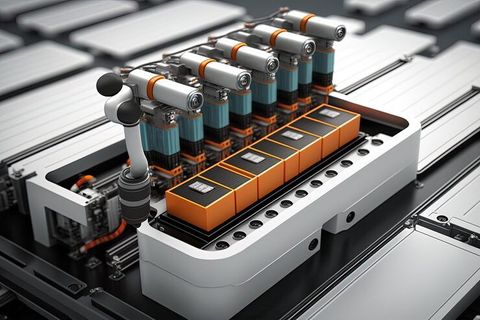
Automation is increasingly used for repetitive and precision-intensive manufacturing operations. Robotic machining, automated material placement, machine-vision inspection, and process monitoring can help improve manufacturing consistency and reduce manual processing requirements.
Advanced Manufacturing
Advanced manufacturing methods such as laser-based processing, additive manufacturing, precision grinding, composite processing, and improved coating technologies are expanding the range of turbine components that can be manufactured efficiently. NPTEL's turbine-manufacturing curriculum specifically covers techniques including laser beam machining, laser metal direct fabrication, creep-feed grinding, and thermal barrier coating.
Challenges in Turbine Manufacturing
Turbine manufacturing involves challenges related to material performance, precision requirements, component size, thermal stresses, fatigue, corrosion, supply chains, and quality assurance. Wind turbine manufacturing also faces transportation and production challenges as blade and tower dimensions increase.
Conclusion
Turbine manufacturing combines mechanical engineering, materials science, precision machining, casting, surface engineering, automation, and quality control. Gas, steam, hydro, and wind turbines require different manufacturing approaches because their components operate under different conditions. Continued development in advanced materials, digital manufacturing, automation, and inspection technologies is shaping the future of turbine production.