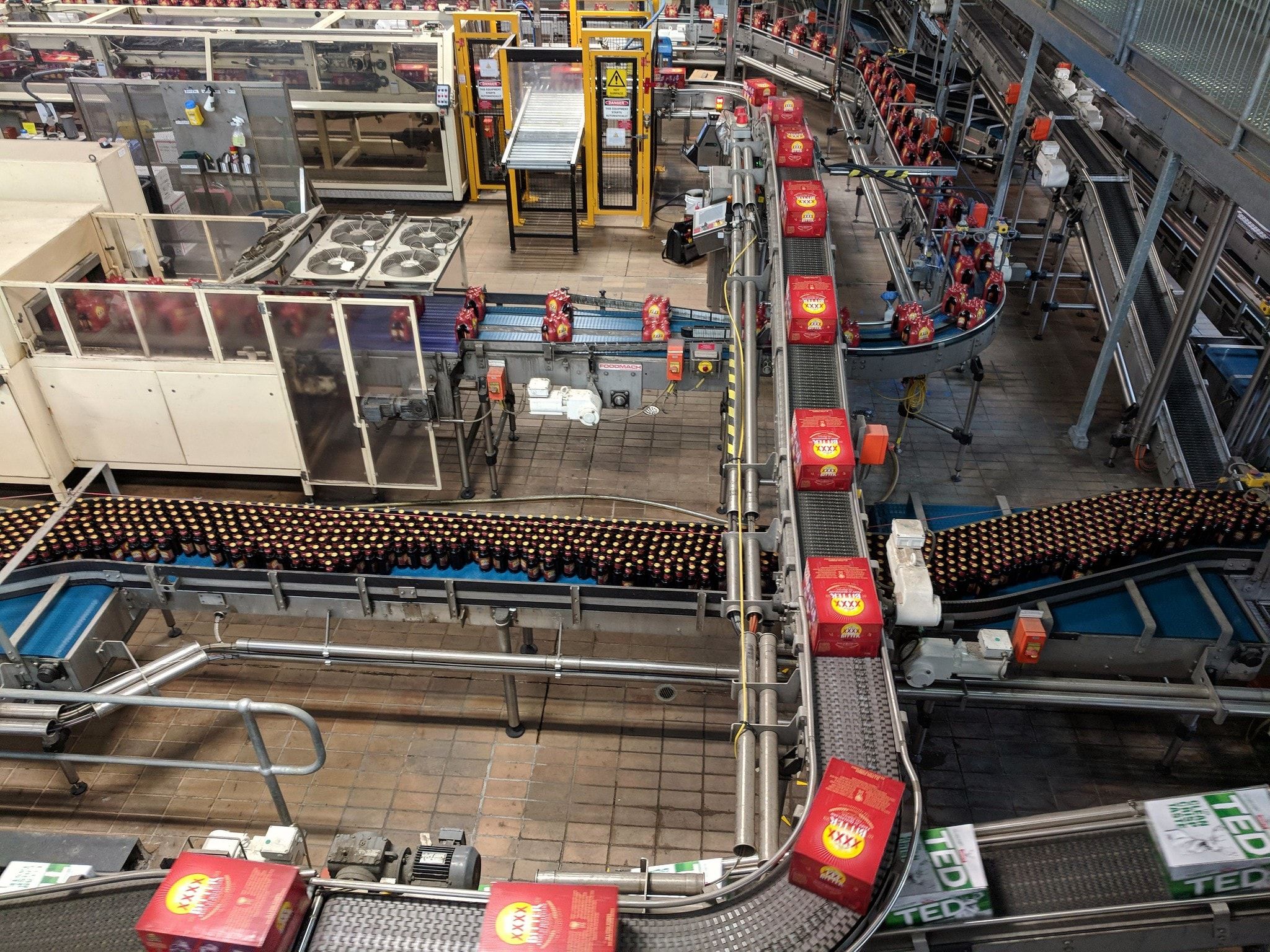
Importance: Why Industrial Packaging Lines Matter Today
Industrial packaging lines directly impact operational efficiency, regulatory compliance, and supply chain reliability. As global consumption increases and customer expectations evolve, companies must package products faster and more accurately than ever.
Key reasons this topic matters:
Operational Efficiency Optimization
Automated packaging equipment reduces human error and downtime. With integrated production line monitoring and predictive maintenance systems, facilities can detect issues before major breakdowns occur.
Product Safety and Compliance
Packaging must meet strict safety and labeling requirements. In food and pharmaceutical industries, incorrect sealing or labeling can lead to product recalls and regulatory penalties.
Supply Chain Stability
Consistent packaging standards help products move smoothly through distribution networks. Uniform packaging supports warehouse automation, barcode scanning systems, and logistics tracking.
Labor Shortages and Workforce Changes
Many regions face skilled labor shortages. Industrial automation solutions help maintain production levels even with reduced workforce availability.
Sustainability Goals
Companies are increasingly adopting sustainable packaging materials and energy-efficient machinery. Packaging lines now integrate waste-reduction mechanisms and recyclable material compatibility.
Packaging Automation Impact
| Area of Impact | Manual Process | Automated Packaging Line |
|---|
| Output Speed | Low to moderate | High throughput |
| Accuracy | Variable | Highly consistent |
| Waste Levels | Higher material waste | Reduced waste |
| Traceability | Limited tracking | Full production data tracking |
| Safety Risk | Higher manual handling risk | Reduced direct handling |
Recent Updates and Industry Trends
Recent developments in industrial packaging focus on digital transformation and sustainability.
Smart Manufacturing Integration
Packaging lines now connect to Industrial Internet of Things (IIoT) platforms. Sensors collect real-time production data, enabling:
-
Remote monitoring
-
Data-driven performance analysis
-
Automated quality checks
-
Real-time error detection
Artificial Intelligence in Quality Control
AI-powered inspection systems identify defects, label misalignment, and seal integrity issues faster than traditional methods.
Flexible Packaging Lines
Manufacturers increasingly require adaptable systems that handle multiple product sizes and packaging formats. Modular packaging equipment allows quick changeovers.
Energy Efficiency Improvements
Modern servo motors and energy-efficient drive systems reduce electricity consumption.
Sustainable Packaging Compatibility
Many facilities now integrate biodegradable materials and lightweight packaging formats to reduce environmental impact.
These trends reflect broader shifts toward digital supply chain management and compliance-focused manufacturing.
Laws and Regulatory Considerations
Industrial packaging operations must comply with national and international regulations, depending on the industry and location.
Common regulatory influences include:
Food Safety Regulations
Food packaging lines must comply with hygiene standards and contamination prevention rules. Equipment must be easy to sanitize and made from approved materials.
Pharmaceutical Packaging Standards
Pharmaceutical manufacturers must follow Good Manufacturing Practices (GMP). Packaging lines often require validation, documentation, and batch tracking systems.
Workplace Safety Standards
Occupational safety regulations require machine guarding, emergency stop systems, and employee safety training.
Environmental Regulations
Governments increasingly regulate packaging waste and encourage recyclable materials. Facilities must track material usage and disposal processes.
Labeling Compliance
Packaging lines must ensure accurate product labeling, including batch numbers, expiry dates, and ingredient information.
Failure to meet these standards may result in penalties, product recalls, or operational restrictions. Therefore, compliance management software and audit-ready documentation systems are essential parts of modern packaging operations.
Tools and Resources for Industrial Packaging Optimization
Several digital and technical tools help improve packaging line performance and regulatory compliance.
Production Line Monitoring Software
These platforms track:
-
Machine uptime and downtime
-
Production rates
-
Error frequency
-
Output consistency
OEE Calculators (Overall Equipment Effectiveness)
OEE is a key metric in manufacturing performance. It measures availability, performance efficiency, and quality rate.
OEE Formula
OEE = Availability × Performance × Quality
Example table:
| Metric | Value |
|---|
| Availability | 90% |
| Performance | 92% |
| Quality | 97% |
| OEE Result | 80.4% |
Higher OEE indicates more efficient packaging operations.
PLC Programming Tools
Programmable logic controllers control automation sequences. PLC programming software allows operators to modify timing, sensor inputs, and safety parameters.
Preventive Maintenance Scheduling Systems
Digital maintenance platforms schedule inspections and reduce unexpected downtime.
Compliance Documentation Templates
Standard operating procedure templates and audit checklists help maintain regulatory readiness.
Safety Training Modules
Interactive safety training resources ensure workers understand machine handling protocols.
These tools support manufacturing process optimization, industrial automation strategy, and packaging line performance improvement.
Frequently Asked Questions
What is the main purpose of an industrial packaging line?
The primary purpose is to automate and standardize the process of preparing products for distribution. It ensures consistency, efficiency, safety, and compliance with regulatory standards.
How does automation improve packaging efficiency?
Automation reduces manual intervention, minimizes human error, and increases production speed. It also enables real-time monitoring and data-driven improvements.
What industries use automated packaging lines?
Common industries include food processing, pharmaceuticals, cosmetics, electronics, chemicals, and consumer goods manufacturing.
What is OEE in packaging operations?
OEE stands for Overall Equipment Effectiveness. It measures how efficiently a packaging line operates by evaluating machine availability, performance speed, and product quality.
How can packaging lines reduce workplace accidents?
Safety features such as machine guards, emergency stop buttons, automated handling systems, and employee training programs significantly reduce physical interaction with moving equipment.
Conclusion
Industrial packaging lines are essential components of modern manufacturing systems. They streamline product preparation, enhance operational efficiency, and support regulatory compliance. With increasing emphasis on automation technology, smart manufacturing systems, and sustainability initiatives, packaging operations continue to evolve.
Organizations that invest in process optimization, digital monitoring systems, and safety compliance frameworks are better positioned to maintain consistent production standards. As industries adopt advanced industrial automation solutions and data-driven quality control systems, packaging lines remain central to efficient and reliable supply chains.
Understanding how these systems function helps manufacturers, engineers, compliance teams, and operations managers make informed decisions about productivity, safety, and long-term manufacturing performance.