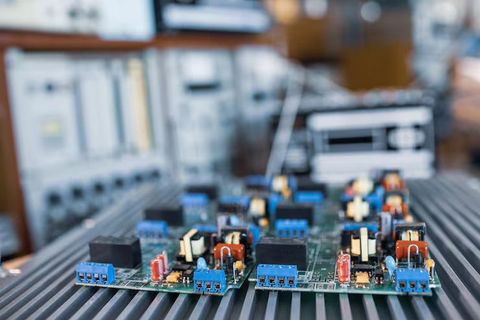
Understanding Smart Sensors and Automation and Their Functional Roles
Smart sensors are advanced sensing devices that not only detect physical parameters such as temperature, pressure, motion, light, or humidity but also process and transmit data digitally. Automation refers to the use of control systems, software, and intelligent equipment to perform tasks with minimal human intervention.
Smart sensors and automation exist because modern industrial, commercial, and residential systems require accurate, real-time data and efficient operational control. Traditional sensors only measured values, while smart sensors integrate microprocessors, connectivity, and analytics capabilities to enable automated decision-making.
With the growth of Industry 4.0, Internet of Things (IoT), and intelligent infrastructure, smart sensors became essential components in automated systems where continuous monitoring and rapid response are critical.
Importance: Why Smart Sensors and Automation Matter Today
Smart sensors and automation play a key role in improving efficiency, safety, and data-driven decision-making across industries.
This topic is relevant to:
-
Manufacturing and automation engineers
-
Industrial plant operators
-
Building management professionals
-
Smart infrastructure developers
These technologies help solve challenges such as manual monitoring limitations, delayed system response, and inefficient resource usage. Automated systems equipped with smart sensors can detect anomalies, optimize processes, and enhance operational reliability.
In today’s digitally connected environment, automation supported by intelligent sensors enables scalable, responsive, and efficient system management.
Core Functional Roles of Smart Sensors in Automation
Smart sensors perform multiple functional roles within automated systems.
Data acquisition and monitoring
They continuously collect real-time environmental and operational data.
Signal processing
Built-in microcontrollers filter and analyze raw sensor signals.
Communication and connectivity
Sensors transmit data to control systems via wired or wireless networks.
Decision support and control input
Sensor data guides automated responses in control systems.
The table below summarizes functional roles:
| Functional Role | Description |
|---|---|
| Monitoring | Real-time condition tracking |
| Processing | Data filtering and analysis |
| Communication | Data transmission to controllers |
| Control input | Triggering automated actions |
These roles make smart sensors central to automation ecosystems.
How Smart Sensors Work in Automated Systems
Smart sensors operate through an integrated workflow.
Sensing phase
Physical parameters are detected through sensing elements.
Signal conversion
Analog signals are converted into digital data.
Data processing
Embedded processors analyze and validate readings.
Transmission
Data is sent to controllers, cloud platforms, or automation systems.
Automated response
Control systems adjust operations based on sensor input.
This closed-loop process enables intelligent automation.
Types of Smart Sensors Used in Automation
Different sensor types serve specific automation needs.
Temperature sensors
Used in HVAC systems, manufacturing, and energy management.
Pressure sensors
Monitor fluid systems and industrial equipment.
Proximity and motion sensors
Support robotics and automated assembly lines.
Optical and vision sensors
Enable quality inspection and object detection.
Environmental sensors
Measure humidity, air quality, and gas levels.
The table below outlines common sensor applications:
| Sensor Type | Typical Automation Use |
|---|---|
| Temperature | Climate and process control |
| Pressure | Fluid and hydraulic systems |
| Proximity | Robotics and automation lines |
| Optical | Inspection and detection |
| Environmental | Smart building systems |
Selecting appropriate sensor types ensures accurate automation performance.
Role of Automation Systems in Industrial and Smart Environments
Automation systems use smart sensor data to optimize operations.
Process control
Automated systems regulate machinery and workflows.
Predictive maintenance
Sensor data identifies early signs of equipment wear.
Energy management
Sensors help optimize energy consumption patterns.
Safety monitoring
Automated alerts improve workplace safety.
These applications enhance operational efficiency and reliability.
Recent Updates and Industry Trends (2025–2026)
Smart sensor and automation technologies have advanced significantly.
AI-integrated sensor analytics (2025)
Artificial intelligence improved predictive monitoring accuracy.
Edge computing adoption
Local data processing reduced latency in automation systems.
Wireless industrial sensor networks
Enhanced flexibility in smart factory deployments.
Energy-efficient sensor design
By late 2025, low-power sensors supported sustainable automation systems.
The table below highlights key trends:
| Trend Area | Observed Direction |
|---|---|
| Intelligence | AI-enhanced analytics |
| Infrastructure | Edge computing integration |
| Connectivity | Wireless sensor networks |
| Sustainability | Low-power sensor technologies |
These trends reflect the evolution of intelligent automation systems.
Laws, Regulations, and Compliance Considerations
Smart sensors and automation systems must comply with regulatory standards.
Industrial safety regulations
Automated systems must include safety controls and fail-safe mechanisms.
Data protection regulations
Sensor data must be securely stored and transmitted.
Electromagnetic compliance standards
Wireless sensors must meet communication regulations.
Quality and operational standards
Industries may require certified automation systems.
Compliance ensures safe and reliable system deployment.
Tools and Resources for Smart Sensor and Automation Implementation
Several tools support effective automation integration.
SCADA systems
Provide supervisory monitoring and control.
Industrial IoT platforms
Enable sensor data collection and analytics.
Calibration and diagnostic tools
Ensure sensor accuracy and reliability.
Automation design software
Assist in workflow simulation and planning.
Maintenance monitoring dashboards
Track system performance and alerts.
These resources enhance automation efficiency and oversight.
Operational Considerations for Smart Sensor Deployment
Effective implementation depends on proper system planning.
Sensor placement optimization
Accurate positioning improves data quality.
Network reliability
Stable communication supports real-time automation.
Regular calibration
Maintains measurement accuracy.
Cybersecurity measures
Protect connected automation systems from threats.
Attention to these considerations strengthens system reliability.
FAQs About Smart Sensors and Automation
What are smart sensors in automation?
They are sensors with built-in processing and communication capabilities used in automated systems.
How do smart sensors improve automation?
They provide real-time data that enables automated decision-making.
Are smart sensors used only in industrial systems?
No, they are also used in smart homes, healthcare, and environmental monitoring.
Why is calibration important for smart sensors?
Calibration ensures accurate and reliable data output.
Can smart sensors support predictive maintenance?
Yes, they help detect early equipment performance issues.
Conclusion
Smart sensors and automation form the backbone of modern intelligent systems across industrial, commercial, and smart infrastructure environments. By combining real-time data collection, digital processing, and automated control, these technologies enhance efficiency, safety, and operational precision.
Understanding their functional roles, system integration methods, recent technological advancements, regulatory considerations, and supporting tools provides a clear framework for effective implementation. As digital transformation continues across industries, smart sensors and automation will remain essential for building responsive, data-driven, and future-ready operational systems.