Vietnam Rice Terrace Villages Explained: Geography, Seasonal Beauty, Ethnic Communities, and Visitor Advice
Vietnam rice terrace villages are rural communities built around stepped agricultural fields carved into mountain slopes. These terraces are designed to grow wet rice in highland areas where flat land is limited. Over generations, local ethnic groups shaped hillsides into layered steps that hold water, reduce soil erosion, and support sustainable farming.
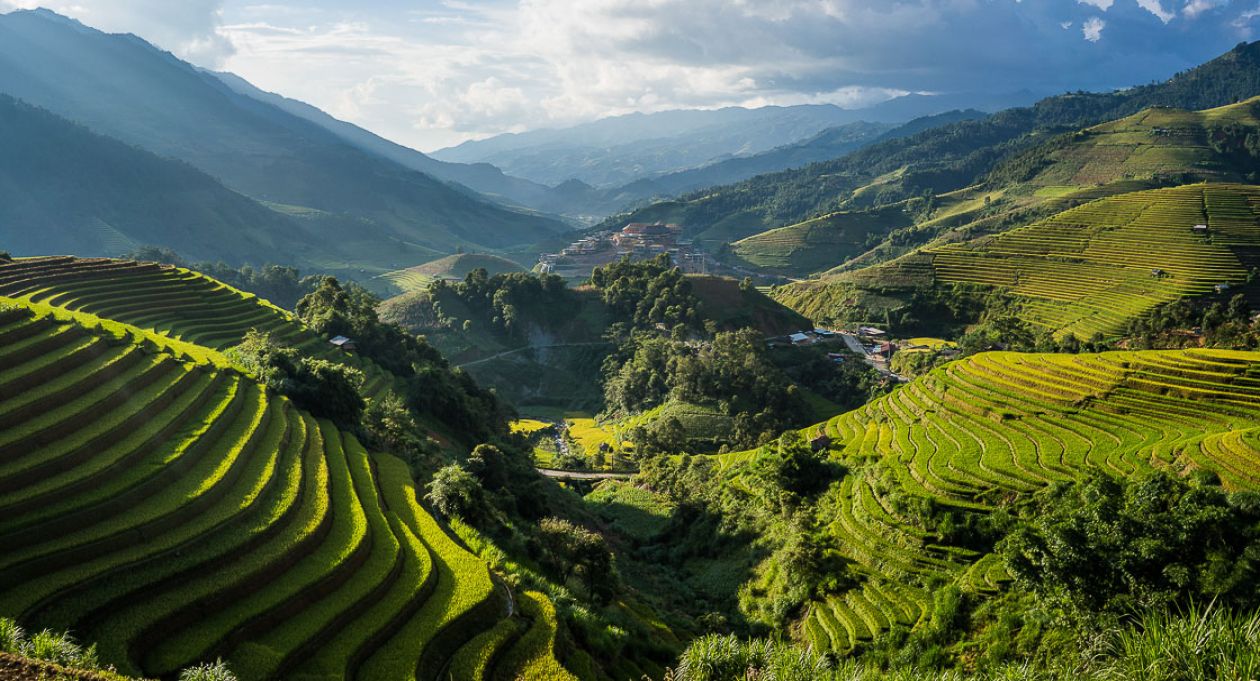
These landscapes exist mainly in northern Vietnam, where steep mountains, heavy rainfall, and traditional farming practices intersect. The terraced system allows water to flow gradually from one level to another, creating an efficient irrigation structure without modern machinery. Beyond agriculture, these villages represent a living example of climate adaptation, cultural preservation, and sustainable land management.
Geographic Setting of Vietnam’s Rice Terraces
The most well-known rice terrace regions are located in northern highland provinces:
-
Mu Cang Chai
-
Sa Pa
-
Hoang Su Phi
-
Y Ty
These areas lie within the Hoàng Liên Sơn mountain range. Elevations often exceed 1,000 meters, resulting in cooler temperatures compared to lowland regions. Rainfall is seasonal, supporting one major rice harvest per year in many highland zones.
The geography shapes village design:
-
Homes are typically built on stable ridges.
-
Terraces follow natural contours of the hills.
-
Water is guided from mountain streams into layered fields.
-
Paths between terraces connect households and farming plots.
This combination of steep slopes and controlled irrigation makes terrace farming possible in otherwise challenging terrain.
Seasonal Beauty and Agricultural Cycle
Rice terraces change dramatically throughout the year, making them a subject of landscape photography, cultural tourism, and environmental studies.
Water Season
At the start of the planting cycle, terraces are filled with water. The surface reflects the sky, creating mirror-like landscapes. Farmers transplant young rice seedlings by hand. This period highlights the irrigation engineering behind terrace farming.
Green Season
As rice plants grow, terraces turn bright green. The hills appear layered with curved ribbons of vegetation. This stage demonstrates the productivity of subsistence agriculture in mountainous regions.
Harvest Season
When rice ripens, the fields become golden. Farmers harvest using traditional tools in many villages. This period is culturally significant, often associated with community gatherings and local traditions.
Mist and Cloud Cover
Highland weather patterns frequently produce morning fog. Combined with stepped terrain, this creates a layered visual effect that attracts nature photography enthusiasts.
The seasonal transformation is closely linked to rainfall patterns and traditional farming calendars. Changes in climate variability have gradually influenced planting schedules in some regions.
Cultural and Ethnic Communities
The rice terraces are closely tied to ethnic minority groups in northern Vietnam. Major communities include:
-
Hmong
-
Dao
-
Tay
-
Giay
Each group maintains distinct languages, clothing styles, housing structures, and agricultural knowledge systems.
Key cultural characteristics:
-
Wooden or earthen houses adapted to mountain climates
-
Traditional embroidery and textile patterns
-
Oral storytelling and folk music
-
Community-based farming practices
Terrace construction techniques are typically passed down through generations. Knowledge of soil stability, water flow control, and seasonal timing forms part of local heritage.
In some regions, terrace landscapes are recognized as cultural heritage sites due to their environmental and social importance.
Why Vietnam Rice Terrace Villages Matter Today
These villages matter for several reasons:
Environmental Sustainability
Terraces reduce soil erosion and manage water flow in steep terrain. Compared to slash-and-burn farming, terrace agriculture stabilizes mountain ecosystems.
Climate Adaptation
The structure of terraces helps control water distribution during heavy rainfall. As climate patterns shift, this system offers insights into resilient agricultural design.
Cultural Preservation
Highland ethnic communities face pressures from urban migration and modernization. Terrace villages help preserve traditional agricultural knowledge and cultural identity.
Responsible Travel and Rural Development
Visitors contribute to local income when staying in village homestays, purchasing handicrafts, or joining guided walks. Sustainable tourism management is essential to prevent environmental degradation.
The topic affects:
-
Rural farmers
-
Cultural heritage organizations
-
Environmental researchers
-
Travel planners and responsible tourism operators
Rice terraces also contribute to academic research in sustainable agriculture, mountain geography, and cultural anthropology.
Recent Updates and Trends
In recent months, several developments have influenced Vietnam’s rice terrace regions:
-
Increased focus on eco-tourism guidelines in highland provinces to protect landscapes from overcrowding.
-
Expanded domestic tourism in mountain areas, leading to improved road access in some villages.
-
Community-based tourism initiatives emphasizing cultural respect and environmental protection.
-
Digital mapping and drone photography projects documenting terrace patterns for heritage preservation.
Some local authorities have introduced visitor management strategies during peak harvest viewing periods to reduce environmental pressure.
Climate monitoring efforts have also received attention, particularly concerning rainfall variation and its impact on rice productivity in mountainous terrain.
Laws, Policies, and Government Programs
Vietnam’s rice terrace regions are influenced by national and provincial policies related to agriculture, heritage, and tourism.
Agricultural Policies
Government agricultural programs support rice cultivation, irrigation improvements, and rural development planning. Highland farming communities may receive technical guidance for crop productivity and soil conservation.
Cultural Heritage Protection
Certain terrace areas are designated as national scenic landscapes or cultural heritage zones. This status can regulate construction, infrastructure expansion, and land conversion.
Tourism Regulations
Local authorities manage homestay registration, environmental standards, and visitor safety requirements. Regulations aim to balance tourism growth with cultural integrity.
Environmental Protection Laws
Land-use policies restrict deforestation and unsustainable hillside development. Environmental assessments are sometimes required for infrastructure projects in sensitive regions.
These policies aim to protect both livelihoods and landscapes while encouraging responsible development.
Tools and Resources for Visitors and Researchers
Several tools help individuals understand or plan visits to rice terrace villages:
Mapping Applications
-
Satellite-based map tools for terrain visualization
-
Offline map apps for mountainous regions
Weather Monitoring Platforms
-
Mountain weather forecast applications
-
Seasonal rainfall tracking tools
Travel Planning Resources
-
Provincial tourism information portals
-
Community-based tourism directories
Photography and Research Tools
-
Drone imaging software for landscape documentation
-
Agricultural yield estimation calculators
-
GIS mapping systems for terrain analysis
Language Translation Apps
-
Useful for communication with ethnic communities
Below is a simple comparison table of seasonal characteristics:
| Season Type | Landscape Color | Farming Activity | Visitor Considerations |
|---|---|---|---|
| Water Season | Reflective silver | Field preparation | Slippery paths |
| Green Season | Bright green | Plant growth monitoring | Warm daytime weather |
| Harvest Season | Golden yellow | Rice cutting and drying | Increased visitor flow |
This overview helps travelers plan according to climate, photography interests, and walking conditions.
Frequently Asked Questions
What are rice terraces and why are they built in steps?
Rice terraces are layered fields carved into hillsides. The stepped design allows water to flow evenly from one level to another while preventing soil erosion.
Which region of Vietnam has the most famous rice terraces?
Northern highland provinces such as Lao Cai, Ha Giang, and Yen Bai are widely recognized for extensive terrace landscapes.
Are rice terrace villages open to visitors year-round?
Yes, but seasonal conditions vary. Planting and harvest periods are visually distinctive, while heavy rains can affect accessibility.
Do local ethnic communities still farm using traditional methods?
Many communities continue to rely on manual planting and harvesting techniques, although some modern tools have been introduced in accessible areas.
How does tourism impact rice terrace villages?
Tourism can provide income and cultural exchange opportunities. However, unmanaged visitor flow may strain local infrastructure and natural resources.
Conclusion
Vietnam rice terrace villages represent a balance between geography, agriculture, and cultural heritage. Built across steep mountain slopes, these terraces demonstrate centuries of adaptation to challenging terrain. They remain central to the identity and livelihoods of highland ethnic communities.
Today, the terraces serve multiple roles: food production systems, cultural landmarks, and destinations for responsible tourism. Environmental policies, heritage recognition, and sustainable travel planning continue to shape their future.
Understanding their geography, seasonal transformation, community traditions, and regulatory framework provides a deeper appreciation of how human ingenuity interacts with nature in mountainous regions of Vietnam.

