Diamond Rings: Types, Cuts & How to Choose
Diamond rings are chosen for different personal reasons.
Understanding their styles, cuts, settings, and quality can help buyers make informed decisions. Whether exploring an Engagement ring online or considering Custom engagement rings, it is useful to learn how diamonds are assessed and what protection may be available after purchase.
A ring's appearance depends on more than its centre stone. The diamond shape, setting, metal, craftsmanship, and personal preferences all contribute to the final design.
Understanding Diamond Ring Types
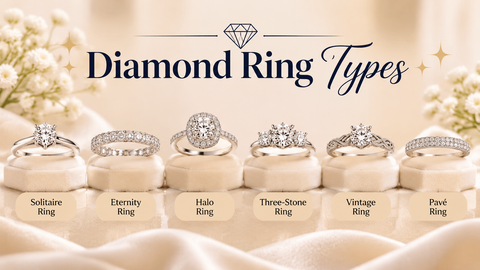
Diamond rings are available in several styles, each with a different arrangement of stones and overall appearance. Learning about common designs can help buyers identify options that match their preferences and daily activities.
Solitaire Rings
A solitaire ring features one main gemstone, usually held in a setting with several prongs or a surrounding structure. Its simple design places attention on the centre diamond and allows the stone's shape to remain prominent.
Solitaire rings are available in different metal types and diamond shapes. The setting should hold the stone securely while allowing suitable light to enter the diamond.
Halo Rings
Halo rings feature a central diamond surrounded by smaller stones. This arrangement creates a detailed appearance and adds additional sparkle around the centre stone.
The surrounding diamonds may be arranged in a single or multiple rows. Buyers should examine the setting carefully because small stones require secure placement and regular maintenance.
Three-Stone Rings
Three-stone rings contain a central diamond with a smaller stone on each side. The side stones may match the centre diamond or use different shapes to create contrast.
This design can provide a balanced appearance, although the overall width and height depend on the size and arrangement of the stones.
Pavé and Side-Stone Rings
Pavé rings feature small diamonds set closely together along part of the band. Side-stone designs use additional diamonds beside the centre stone, creating more detail than a traditional solitaire.
These styles may require additional cleaning and occasional setting inspections because they contain several small gemstones.
Understanding Diamond Shapes and Cuts
Diamond shape and diamond cut are related but different concepts. Shape describes the stone's outline, while cut refers to how its proportions, symmetry, and finish influence its interaction with light.
Common Diamond Shapes
Popular diamond shapes include:
Round brilliant: A circular shape designed to reflect light through multiple facets.
Princess: A square or rectangular shape with a modern appearance.
Oval: An elongated shape that creates a softer outline.
Pear: A teardrop-shaped design with one rounded end and one pointed end.
Emerald: A rectangular shape with step-like facets and a broad, open appearance.
Cushion: A square or rectangular shape with rounded corners.
The choice of shape is largely personal. Buyers should consider how the stone looks from different angles and whether its proportions suit the ring setting.
The Four Cs of Diamond Quality
The four Cs are commonly used to describe diamond characteristics. They provide a framework for comparing stones, although personal preferences and budget also influence the final choice.
| Factor | Meaning | What buyers can consider |
|---|---|---|
| Cut | Proportions and finish | Light performance and symmetry |
| Colour | Degree of colourlessness | Visible colour differences |
| Clarity | Internal and external characteristics | Visibility and location of inclusions |
| Carat | Diamond weight | Size in relation to dimensions |
Carat measures weight rather than physical size. Two diamonds with the same carat weight may look different because their shapes and proportions differ.
Checking Diamond Quality and Authenticity
A diamond's description should be supported by reliable documentation where available. Buyers can use grading information to understand the stone's characteristics and compare it with other options.
Understanding a GIA Report Check
A GIA report check involves reviewing a diamond grading report issued by the Gemological Institute of America. The report may describe details such as carat weight, colour, clarity, cut grade for eligible round brilliant diamonds, and identifying characteristics.
Buyers can verify report details through the official GIA report-check service. It is important to confirm that the report information matches the diamond being considered, including any inscription details where applicable.
A grading report describes a diamond's characteristics; it is not the same as an appraisal for insurance or resale value. Buyers should understand the purpose of each document before relying on it.
Questions to Ask Before Buying
Before making a purchase, consider asking:
Is the diamond natural or laboratory-grown?
Is a grading report available?
Does the report number match the stone?
What metal and setting materials are used?
What are the return, exchange, and resizing conditions?
Is maintenance or repair information provided?
Clear answers can help buyers understand what they are purchasing and what responsibilities may follow.
Choosing Between Online and Custom Rings
Digital shopping has made it possible to compare ring designs and specifications without visiting multiple physical stores. However, online purchases require careful attention to product descriptions, documentation, and seller policies.
Buying an Engagement Ring Online
When considering an Engagement ring online, review detailed photographs, diamond specifications, metal information, shipping arrangements, and return conditions. Check whether the seller provides an independent grading report for the centre diamond.
Ring size is another important consideration. Buyers should review sizing guidance and understand whether resizing is possible after delivery.
Exploring Custom Engagement Rings
Custom engagement rings allow buyers to select elements such as the diamond shape, setting, band style, and metal. A jeweller may prepare a design or model before producing the finished ring.
Customisation can provide more control over appearance, but it may involve additional time and design costs. Buyers should confirm the final specifications, production timeline, payment terms, and modification policy before approving the design.
Protecting a Diamond Ring With Insurance
After purchasing a ring, owners may consider whether insurance is appropriate. Jewelry insurance can help address certain financial losses, depending on the policy terms, exclusions, and coverage limits.
Understanding Engagement Ring Insurance
Engagement ring insurance may cover specified events such as theft, accidental loss, or damage. Coverage differs between providers, so policy wording should be reviewed carefully.
Insurance for engagement rings may be available through a dedicated jewelry policy or as an addition to an existing home or contents insurance policy. Buyers should compare limits, deductibles, exclusions, and claim requirements.
Documents Needed for Coverage
Insurers may request a purchase receipt, appraisal, grading report, photographs, or other proof of ownership. An appraisal may help establish an agreed or estimated value, depending on the policy.
Owners should keep documents updated if the ring is altered, repaired, or significantly changes in value. They should also confirm whether the policy covers travel, accidental loss, and damage outside the home.
Frequently Asked Questions
Which diamond ring type is suitable for everyday wear?
Solitaire and low-profile settings may be practical for everyday use, depending on their construction. Secure settings and suitable maintenance are important for any ring style.
Why is a GIA report check important?
It helps buyers verify available grading information and compare diamond characteristics. The report should match the specific diamond being purchased.
Is jewelry insurance necessary for every diamond ring?
Insurance is a personal decision. Owners can compare the ring's value, replacement cost, existing coverage, and policy conditions before deciding.
What should buyers check when choosing custom engagement rings?
Review the design, diamond specifications, metal type, final cost, production timeline, resizing terms, and repair arrangements.
Conclusion
Choosing a diamond ring involves understanding its style, shape, quality, setting, and documentation. Comparing options carefully and reviewing purchase conditions can help buyers make informed decisions. After purchase, suitable maintenance and a clear understanding of jewelry insurance can support responsible long-term ownership.