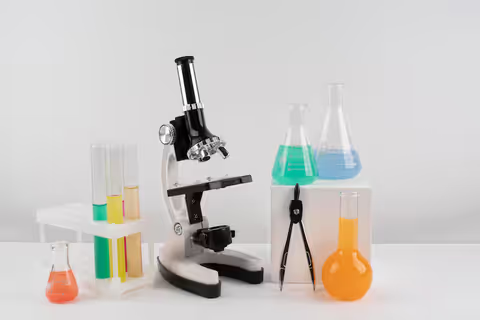
Guide to Buying Lab Equipment Online for Researchers and Schools
Laboratories depend on suitable equipment for accurate experiments.
Researchers, educational institutions, and science laboratories use different instruments to conduct experiments, analyse samples, measure materials, and demonstrate scientific concepts. Buying lab equipment online provides access to different product categories, specifications, and supplier information through digital platforms.
Online purchasing has made it easier for schools and research organisations to explore laboratory instruments without visiting multiple physical suppliers. However, selecting suitable products requires careful evaluation of technical specifications, product quality, safety requirements, and supplier services.
Laboratory requirements vary depending on the intended application. A school science laboratory may need basic microscopes, glassware, and measuring instruments, while a research facility may require advanced analytical equipment and specialised testing systems.
Importance of Choosing the Right Laboratory Equipment
Selecting appropriate laboratory equipment is important for maintaining organised and effective scientific activities. The quality, suitability, and condition of instruments can influence experimental procedures, measurement consistency, and laboratory safety.
Educational institutions generally require durable equipment that supports practical learning and demonstrations. Research laboratories may prioritise precision, repeatability, specialised features, and compatibility with established experimental methods.
Before purchasing, buyers should identify their laboratory requirements and consider the following factors:
Purpose: Determine whether the equipment is intended for teaching, testing, research, or sample preparation.
Accuracy: Review measurement ranges, resolution, and stated accuracy specifications.
Capacity: Check whether the instrument can handle the required sample sizes or workload.
Compatibility: Confirm compatibility with existing instruments, accessories, and laboratory systems.
Safety: Examine protective features and relevant safety documentation.
Maintenance: Understand cleaning procedures, calibration needs, and servicing requirements.
A clear understanding of these factors helps buyers avoid purchasing instruments that do not meet their actual laboratory needs.
Types of Laboratory Equipment Available Online
Online laboratory suppliers offer equipment for different scientific disciplines and applications. Understanding the main categories helps researchers and educational institutions organise their purchasing requirements.
Analytical and Measuring Instruments
Analytical instruments are used to examine samples and measure different physical or chemical properties. Common examples include pH meters, analytical balances, spectrophotometers, and conductivity meters.
These instruments are used in educational, industrial, and research laboratories. Buyers should compare measurement ranges, accuracy specifications, calibration requirements, and available software features before selecting a product.
General Laboratory Equipment
General laboratory equipment supports routine activities such as sample preparation, heating, mixing, and storage. Common products include laboratory glassware, centrifuges, hot plates, magnetic stirrers, and laboratory ovens.
Schools often require basic instruments for classroom demonstrations and practical experiments. Research facilities may need specialised versions with additional controls, higher capacity, or more precise operating settings.
Microscopes and Observation Equipment
Microscopes allow students and researchers to examine objects that cannot be observed clearly with the unaided eye. Different types are available for educational demonstrations, biological studies, and specialised research applications.
When comparing microscopes, buyers should review magnification ranges, optical quality, illumination systems, focusing mechanisms, and compatibility with imaging accessories.
Safety and Laboratory Support Equipment
Laboratory safety equipment helps maintain suitable working conditions. Common examples include laboratory coats, protective eyewear, fume cupboards, eyewash stations, safety cabinets, and suitable waste containers.
The required equipment depends on the materials handled and the activities performed. Institutions should consider applicable safety regulations and conduct appropriate laboratory risk assessments.
How to Evaluate Suppliers When Buying Lab Equipment Online
Choosing a suitable supplier is as important as selecting the instrument itself. A reliable supplier should provide clear product information, technical documentation, and appropriate support.
Check Supplier Experience and Product Information
Buyers should review supplier details, product catalogues, technical specifications, and available customer support services. Product descriptions should explain the instrument's intended applications, operating requirements, and limitations.
It is also useful to check whether the supplier provides manufacturer information and genuine product documentation.
Review Certifications and Quality Standards
Certain laboratory instruments may require compliance with specific technical or safety standards. Depending on the equipment category, buyers may review applicable ISO standards, electrical safety certifications, calibration documentation, and manufacturer quality information.
Not every certification applies to every product. Institutions should identify the relevant requirements before purchasing rather than assuming that all laboratory equipment follows identical standards.
Compare Warranty and After-Sales Support
Laboratory instruments may require installation, calibration, maintenance, or technical assistance. Buyers should understand warranty coverage, service availability, replacement-part arrangements, and repair procedures.
These considerations are particularly important for specialised instruments that require trained technicians or periodic calibration.
Comparing Laboratory Equipment Before Purchase
Comparing products using consistent criteria helps buyers understand differences between available instruments. The following table presents some common equipment categories and important purchasing considerations.
| Equipment | Common application | Important purchasing factor |
|---|---|---|
| Microscope | Sample observation | Magnification and optical quality |
| Analytical balance | Accurate weighing | Readability and capacity |
| pH meter | Measuring acidity and alkalinity | Accuracy and calibration |
| Centrifuge | Sample separation | Speed and capacity |
| Spectrophotometer | Sample analysis | Wavelength range |
| Laboratory oven | Heating and drying | Temperature range and control |
| Autoclave | Sterilisation | Capacity and safety controls |
Product specifications should always be checked against the manufacturer's documentation and the laboratory's intended application.
Benefits and Challenges of Online Laboratory Purchasing
Buying laboratory instruments online offers several practical advantages. Buyers can review different products, compare specifications, examine prices, and access supplier information from a single location.
Online catalogues also help institutions identify accessories and related products required for laboratory setups. This can make purchasing research more organised, particularly when multiple departments have different requirements.
However, online purchasing also has certain limitations. Buyers may not be able to physically inspect instruments before ordering, and product photographs may not communicate their complete technical characteristics.
Other challenges can include:
Differences between advertised and actual product specifications.
Limited availability of installation or maintenance services.
Delivery delays for specialised instruments.
Unclear warranty and replacement conditions.
Additional transportation, customs, or installation expenses.
Requesting technical documents, written quotations, and product demonstrations where available can help address some of these concerns.
Planning Laboratory Installation and Maintenance
Purchasing equipment is only one part of establishing an effective laboratory. Proper installation, operator training, and regular maintenance are also necessary.
Institutions should ensure that instruments are installed according to manufacturer instructions. Requirements may include suitable electrical connections, ventilation, temperature conditions, stable work surfaces, and adequate operating space.
Maintenance schedules should be established according to equipment specifications. Regular cleaning, calibration, inspection, and servicing help maintain instruments in appropriate working condition.
Laboratory staff and students should also receive relevant operating and safety instructions before using unfamiliar equipment.
Frequently Asked Questions
What Should Researchers Consider When Buying Lab Equipment Online?
Researchers should review technical specifications, measurement accuracy, product compatibility, supplier reliability, warranty conditions, and maintenance requirements.
Is Online Laboratory Equipment Purchasing Suitable for Schools?
Yes. Schools can purchase educational microscopes, glassware, measuring instruments, and other laboratory supplies online after checking product suitability and safety requirements.
How Can Buyers Check Laboratory Equipment Quality?
Buyers can review manufacturer documentation, technical specifications, applicable certifications, calibration information, and supplier support arrangements.
Which Laboratory Equipment Is Commonly Used in Research?
Common instruments include analytical balances, microscopes, centrifuges, pH meters, spectrophotometers, and specialised sample preparation equipment.
Why Is After-Sales Support Important?
After-sales support helps laboratories access technical assistance, servicing, replacement parts, and maintenance information when required.
Conclusion
Buying lab equipment online provides researchers and educational institutions with access to different instruments and laboratory supplies. However, purchasing decisions should be based on application requirements, technical specifications, safety considerations, and supplier reliability.
Comparing products carefully and planning for installation, calibration, and maintenance can help laboratories manage their equipment requirements more effectively. A structured purchasing approach supports organised educational and research activities.