Paper Bag Making Machines: Types, Processes, Materials and Production Guide
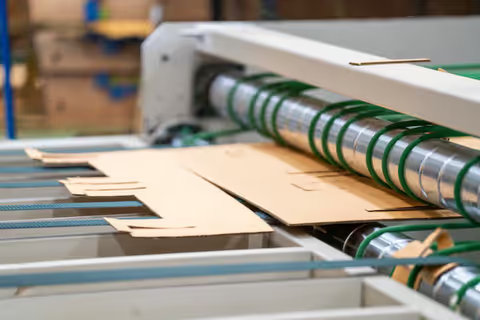
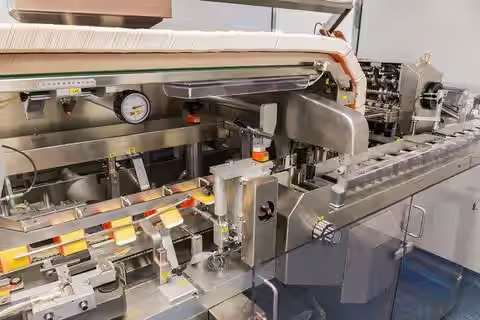
Paper bag making machines are industrial machines used to convert paper rolls or sheets into finished paper bags through a sequence of feeding, printing, cutting, folding, gluing, forming, and handle-making operations.
They are used in packaging facilities, food packaging plants, retail packaging production, and other industries that require paper-based carrying bags.
The development of paper bag making machines is closely connected with changes in packaging practices and the growing use of paper-based materials. Modern equipment can automate several stages that were previously performed manually. Depending on the machine design, paper bags can be produced in different sizes, shapes, handle styles, and paper grades.
Context
What Are Paper Bag Making Machines?
Paper bag making machines are mechanical production systems that transform paper into bags with defined dimensions and structures. A typical machine begins with a paper roll or sheet and progressively forms it into a tube or folded structure before creating the bottom and, where required, attaching handles.
The production sequence varies according to the bag design. A basic process may include:
Paper roll feeding
Web alignment
Printing
Cutting or sheet formation
Folding
Side gluing
Bottom folding
Bottom gluing
Handle preparation
Handle attachment
Bag counting and collection
Some machines combine several of these functions into one production line, while others are designed for a particular stage.
Development of Paper Bag Production
Paper bags have been used for packaging for many decades. Early paper bag production involved substantial manual folding, cutting, and adhesive application. Mechanical equipment gradually introduced repeatable forming processes and increased production capacity.
Industrial machines later incorporated automatic paper feeding, rotary cutting systems, controlled adhesive application, and electronic controls. Current equipment can include programmable controllers, sensors, servo motors, digital displays, and automatic alignment systems.
Types of Paper Bag Making Machines
Paper bag making machines can be classified according to bag construction, paper feeding method, handle design, and automation level.
Common categories include:
Flat paper bag machines for simple bags without a separate bottom structure
Square-bottom bag machines for bags with a flat base
Twisted-handle bag machines for bags with twisted paper handles
Flat-handle bag machines for bags using flat paper handles
SOS bag machines for self-opening paper bags
Manual and semi-automatic machines for smaller production arrangements
Automatic production lines for integrated bag forming
The appropriate machine configuration depends on paper thickness, bag dimensions, handle type, printing requirements, and production specifications.
Importance
Packaging Applications
Paper bags are used in many areas of everyday packaging. Retail stores, bakeries, restaurants, food outlets, pharmacies, clothing stores, and other businesses may use paper-based carrying bags for different products.
Different applications require different paper characteristics. A lightweight bag may be suitable for small dry products, while heavier products may require stronger paper, reinforced handles, or a different bottom construction.
Production Consistency
Machine-based production can create repeatable bag dimensions and folding patterns. Controlled paper feeding helps maintain alignment, while automated adhesive application can provide consistent placement when the machine is correctly adjusted.
Consistency matters because poorly aligned folds or adhesive areas can affect bag shape and structural integrity. Paper moisture, thickness, machine speed, and adhesive characteristics can also influence the final product.
Material Selection
Paper selection is an important part of bag manufacturing. Common considerations include:
Paper grammage
Fiber composition
Surface finish
Moisture resistance
Tear resistance
Printing compatibility
Bag dimensions
Intended load
The paper grade should correspond to the intended application and applicable packaging requirements.
Production Stages
Paper bag production usually combines several mechanical processes. The following table presents a general view of common machine stages.
| Production stage | Main function | Common equipment element |
|---|---|---|
| Paper feeding | Moves paper into the machine | Roll stand or feeder |
| Printing | Adds graphics or information | Flexographic printing unit |
| Tube forming | Creates the bag body | Folding and forming section |
| Side sealing | Joins the paper edges | Adhesive application unit |
| Bottom forming | Creates the bag base | Folding and gluing section |
| Handle preparation | Creates carrying handles | Handle-making unit |
| Handle attachment | Connects handles to the bag | Handle attachment system |
| Collection | Organizes finished bags | Counting or stacking unit |
Not every machine contains every stage. A production line may also use separate printing, handle-making, or finishing equipment.
Operational Considerations
Paper bag production involves moving rollers, cutting mechanisms, folding sections, adhesive systems, and electrical components. Operators therefore need suitable training in machine operation, adjustment, cleaning, and workplace safety.
Paper dust and adhesive residues can also affect machine performance if they accumulate around moving components. Regular inspection and appropriate housekeeping are important parts of industrial operation.
Recent Updates
Automation and Electronic Controls
Recent developments in paper bag making machines have increasingly focused on automation. Programmable logic controllers and touchscreen interfaces can coordinate feeding, folding, gluing, cutting, and other production stages.
Servo-driven systems can provide controlled movement of paper webs and forming components. Sensors may detect paper position, material breaks, or selected operating conditions.
Digital Printing Integration
Some paper bag production lines incorporate digital printing technologies alongside conventional flexographic systems. Digital printing can support variable graphics and shorter production runs without requiring the same plate arrangements used in conventional processes.
The appropriate printing method depends on artwork complexity, production volume, paper characteristics, ink requirements, and drying arrangements.
Improved Paper Handling
Paper is sensitive to moisture, tension, and alignment. Modern equipment increasingly uses sensors and automatic adjustment systems to maintain web position and tension during production.
Automatic correction mechanisms can detect certain alignment variations and adjust machine parameters. Their actual capabilities depend on the machine architecture and control system.
Energy and Material Management
Manufacturers are also examining energy consumption and material utilization. Efficient motors, controlled heating systems, optimized machine movement, and reduced paper waste can contribute to more efficient production processes.
Material management includes controlling trim waste, defective bags, paper roll changes, adhesive use, and printing materials. Waste handling procedures vary according to the materials involved.
Flexible Bag Designs
Modern paper bag equipment can accommodate a wider range of dimensions and construction styles. Interchangeable forming components and programmable settings can support different bag formats when the machine is designed for such flexibility.
Digital control systems can store selected production parameters, reducing the need to manually recreate every setting during repeated production runs.
Laws or Policies
Packaging Rules in India
Paper bag production in India is influenced by general packaging, environmental, consumer, workplace, and product-specific requirements. The applicable rules depend on how the bags are used and whether they come into direct contact with food or other regulated products.
The Food Safety and Standards Authority of India (FSSAI) provides requirements relevant to materials that come into contact with food. Food-contact paper packaging may therefore require additional consideration regarding material composition, inks, adhesives, coatings, and contamination control.
Environmental Considerations
Paper manufacturing and conversion can generate paper waste, printing residues, adhesive residues, wastewater, and other materials. Facilities need to follow applicable environmental requirements based on their activities and location.
The Central Pollution Control Board and State Pollution Control Boards provide regulatory frameworks and guidance relevant to industrial environmental management. Requirements can vary by facility type, production scale, emissions, and waste streams.
Workplace Safety
Paper bag machines contain rotating components, cutting mechanisms, heated sections, electrical systems, and moving conveyors. Appropriate guarding, emergency controls, electrical protection, and operating procedures are important for workplace safety.
Indian occupational safety requirements can include provisions under the Occupational Safety, Health and Working Conditions Code, 2020, along with applicable rules and state-level requirements.
Product and Labeling Considerations
When paper bags are used for food or other regulated products, additional requirements may apply to the materials and information printed on the packaging. Businesses should check the relevant product-specific regulations before production.
Tools and Resources
Production Planning Tools
Digital spreadsheets can be used to record paper roll dimensions, grammage, bag measurements, production quantities, waste levels, adhesive consumption, and machine settings.
A basic production worksheet can include:
Paper roll identification
Paper width and grammage
Bag dimensions
Handle type
Printing configuration
Production quantity
Reject quantity
Waste quantity
Machine operating parameters
Such records can help organize production information and identify recurring process variations.
Quality-Control Equipment
Common inspection tools include measuring tapes, digital calipers, weighing scales, paper thickness gauges, moisture meters, and tensile or tear testing equipment where applicable.
Bag dimensions, handle attachment, adhesive bonding, printing alignment, paper condition, and bottom formation can be inspected according to the intended product specification.
Technical Resources
Useful resources include Bureau of Indian Standards publications, FSSAI regulations for relevant food-contact packaging, CPCB information, State Pollution Control Board guidance, machine manuals, electrical diagrams, and maintenance documentation.
Technical drawings and machine manuals are particularly useful for understanding permissible material dimensions, adjustment ranges, lubrication points, safety controls, and replacement components.
FAQs
What are paper bag making machines used for?
Paper bag making machines are used to convert paper rolls or sheets into finished bags through processes such as feeding, folding, gluing, cutting, forming, and handle attachment. The exact production sequence depends on the bag design.
How do paper bag making machines work?
Paper enters the machine through a controlled feeding system. It is then aligned, folded, shaped, glued, and cut according to programmed or manually adjusted settings before the finished bags are collected.
What types of paper bag making machines are available?
Common types include flat bag machines, square-bottom bag machines, SOS bag machines, twisted-handle bag machines, and flat-handle bag machines. Equipment may also be classified as manual, semi-automatic, or automatic.
What paper is used in paper bag making machines?
Paper selection depends on bag dimensions, intended load, printing requirements, moisture conditions, and construction method. Grammage, fiber composition, surface characteristics, and strength are important considerations.
Can paper bag making machines produce bags with handles?
Yes. Some machines include integrated handle preparation and attachment systems, while other production arrangements use separate handle-making equipment. The compatible handle design depends on the machine configuration.
Conclusion
Paper bag making machines convert paper materials into structured bags through feeding, folding, cutting, gluing, forming, and handle attachment processes. Equipment ranges from relatively simple machines to automated production lines incorporating sensors, electronic controls, printing systems, and material-handling equipment. Recent developments have emphasized automation, paper alignment, digital monitoring, flexible bag formats, and resource management. In India, manufacturers need to consider food-contact requirements where applicable, environmental rules, workplace safety provisions, and product-specific packaging regulations.