Understanding Modern Bottling Line Manufacturing Systems
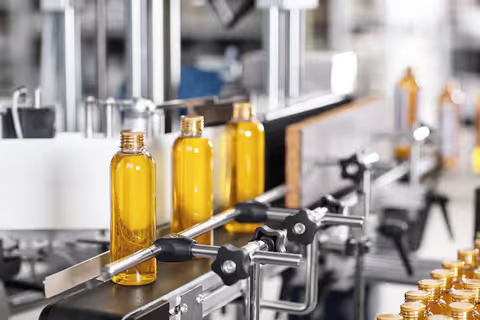
Modern bottling line manufacturing systems play an important role in the food, beverage, pharmaceutical, chemical, and personal care industries. These systems combine specialized machines, conveyors, sensors, and automation software to move containers through different production stages. From bottle feeding and cleaning to filling, capping, labeling, and packaging, each operation contributes to an organized manufacturing process.
As production requirements become more complex, manufacturers are adopting automated bottling equipment to improve process consistency, manage production workflows, and support quality control. Understanding how these systems operate helps businesses evaluate machinery, production capacity, and industrial packaging requirements.
What Are Bottling Line Manufacturing Systems?
A bottling line is a connected arrangement of machines designed to prepare, fill, close, inspect, label, and package bottles or other containers. The equipment may operate as individual stations or as an integrated automatic bottling line.
A modern bottling line manufacturing system can include:
Bottle feeding and unscrambling machines
Bottle washing and rinsing equipment
Automatic liquid filling machines
Bottle capping and sealing machines
Labeling and coding equipment
Inspection and quality control systems
Conveyor and material handling systems
Case packing and palletizing equipment
The configuration depends on the product, container material, production capacity, hygiene requirements, and packaging format.
How a Modern Bottling Line Works
A typical automated bottling line follows a sequence of connected operations. Not every production facility requires every stage, but the following processes are common.
1. Bottle Feeding and Preparation
Empty bottles are supplied to the production line through manual loading, depalletizing equipment, or automatic bottle unscramblers. Unscramblers organize randomly positioned containers and transfer them to the conveyor.
This stage helps maintain a steady supply of containers for the next operations.
2. Bottle Washing and Rinsing
Before filling, containers may require cleaning or rinsing depending on the product and packaging process. Some systems use water, filtered air, or other approved cleaning methods.
The required process depends on container type, product characteristics, hygiene standards, and applicable industry regulations.
3. Automatic Liquid Filling
The automatic liquid filling machine is one of the central components of a bottling line. It dispenses a controlled quantity of liquid into each container.
Different filling technologies are used for different products:
Gravity filling: Suitable for certain free-flowing liquids.
Piston filling: Often used for thicker liquids and products with higher viscosity.
Volumetric filling: Dispenses a predetermined volume.
Flowmeter filling: Uses flow measurement to control the filling quantity.
Counter-pressure filling: Used for carbonated beverages where pressure control is important.
Selecting the right filling machine requires consideration of liquid viscosity, foaming behavior, temperature, container design, and filling accuracy requirements.
4. Bottle Capping and Sealing
After filling, bottles move to the capping station. An automatic bottle capping machine places and tightens closures according to the container and cap design.
Common closure types include screw caps, press-on caps, crown caps, and specialized pharmaceutical closures.
Some production lines also include induction sealing, foil sealing, or tamper-evident packaging equipment. Proper closure control helps reduce leakage and maintain product integrity.
5. Labeling and Coding
A bottle labeling machine applies product labels in the required position. Depending on the packaging design, manufacturers may use wrap-around labels, front-and-back labels, sleeve labels, or pressure-sensitive labels.
Coding machines can print information such as batch numbers, manufacturing dates, expiry dates, and other traceability details.
Accurate labeling and coding are important for product identification and applicable regulatory requirements.
6. Inspection and Final Packaging
Inspection equipment checks selected product and packaging characteristics. Depending on the system, checks may include fill level, cap presence, label position, code readability, and visible defects.
Rejected containers can be separated from the production flow. Accepted bottles proceed to case packing, carton sealing, and palletizing.
Types of Bottling Line Manufacturing Systems
Different industries use different bottling configurations according to their production needs.
Automatic Bottling Line
An automatic bottling line connects multiple machines through conveyors and coordinated controls. It can reduce the amount of manual handling required between production stages.
These systems are used in beverage manufacturing, food processing, household products, and other industries.
Semi-Automatic Bottling Line
Semi-automatic systems combine machine-controlled operations with manual loading, positioning, or handling. They may be appropriate for smaller production facilities or businesses with changing production requirements.
Water Bottling Production Line
A water bottling production line may include bottle rinsing, water treatment connections, filling, capping, labeling, coding, and secondary packaging.
The equipment configuration depends on the water source, container type, required treatment process, and applicable food safety standards.
Beverage Bottling Line
Beverage production systems handle products such as juice, carbonated drinks, flavored water, and other liquid refreshments. Equipment selection depends on carbonation, temperature, viscosity, packaging material, and shelf-life requirements.
Pharmaceutical Bottling Line
Pharmaceutical bottling systems may require specialized filling, cleaning, environmental controls, inspection, and traceability features. Their design must meet the relevant manufacturing and quality requirements for the products being handled.
Importance of Automation in Bottling Manufacturing
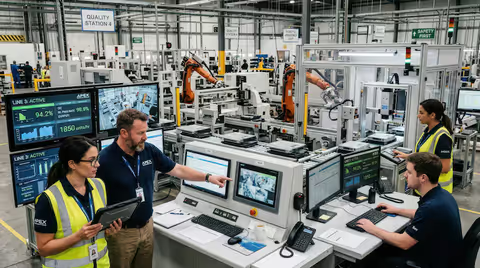
Packaging line automation connects equipment, sensors, programmable controllers, and production software to coordinate manufacturing operations.
Automation can support:
Consistent machine operation
Coordinated movement between production stations
Monitoring of filling and packaging processes
Detection of selected production faults
Reduced repetitive manual handling
Collection of production and downtime information
Programmable logic controllers (PLCs) commonly coordinate machine functions, while human-machine interfaces (HMIs) allow operators to monitor settings, alarms, and production status.
More advanced systems may connect production equipment with manufacturing execution systems (MES) or enterprise resource planning (ERP) platforms.
Key Equipment Used in Industrial Bottling Lines
A complete bottling line may use several types of industrial packaging machinery.
Conveyor systems: Transfer bottles between different production stations and may include accumulation sections to manage differences in machine speed.
Filling machines: Control the quantity of liquid or other suitable products placed into containers.
Capping machines: Apply closures and help maintain packaging integrity.
Labeling machines: Apply product identification and required packaging information.
Inspection systems: Use sensors, cameras, or measurement devices to identify selected packaging defects.
Packing and palletizing machines: Arrange finished products into cartons, cases, or pallet loads for storage and transportation.
The machines must be compatible with one another to avoid bottlenecks and unnecessary interruptions.
How to Select Bottling Line Equipment
Selecting suitable bottling line equipment requires evaluating the complete production process rather than focusing on one machine.
Consider these factors:
Product characteristics: Identify whether the product is water, juice, oil, chemicals, medicine, or another liquid.
Container design: Check bottle material, size, shape, opening, and closure type.
Production capacity: Determine the required output and the operating speed of each machine.
Filling technology: Match the filling method with product viscosity, foaming, and temperature.
Automation level: Compare manual, semi-automatic, and fully automatic configurations.
Cleaning requirements: Review cleaning procedures, hygienic design, and material compatibility.
Control systems: Check PLC, HMI, sensor, and software integration requirements.
Maintenance and support: Consider spare parts, operator training, maintenance access, and technical assistance.
A facility assessment and production trial can help identify compatibility issues before equipment installation.
Industry Trends in Bottling Line Manufacturing
Modern bottling systems are increasingly incorporating digital monitoring, advanced inspection, and connected automation technologies.
Machine vision systems can inspect selected packaging characteristics, while sensors help monitor equipment conditions and production parameters. Predictive maintenance approaches use operational information to identify possible equipment problems before they cause significant disruption.
Energy-efficient motors, improved compressed-air management, water-use monitoring, and packaging material optimization are also important areas of development.
Flexible production lines are another growing area of interest. Manufacturers may need to handle multiple bottle sizes, closures, labels, and product types using the same production facility. Modular equipment and adjustable machine settings can support these requirements when designed appropriately.
Frequently Asked Questions
1. What is a bottling line manufacturing system?
It is an integrated arrangement of machines used to prepare, fill, close, inspect, label, and package bottles or other containers.
2. What machines are used in an automatic bottling line?
Common equipment includes bottle unscramblers, rinsers, filling machines, cappers, labeling machines, conveyors, inspection systems, and packaging machines.
3. What is an automatic liquid filling machine?
It is a machine that dispenses a controlled quantity of liquid into containers. Filling technology varies according to product characteristics and production requirements.
4. What is the difference between automatic and semi-automatic bottling lines?
Automatic lines coordinate multiple production stages with limited manual handling. Semi-automatic systems require operators for some activities, such as loading or positioning containers.
5. Which industries use bottling line equipment?
Food and beverage, pharmaceuticals, cosmetics, chemicals, household products, and water processing facilities use bottling equipment.
6. What factors affect bottling line performance?
Machine compatibility, filling accuracy, conveyor design, container specifications, maintenance, operator training, and production scheduling all influence performance.
Conclusion
Modern bottling line manufacturing systems combine filling, capping, labeling, inspection, and packaging equipment into coordinated production processes. Automation technologies help manufacturers manage repetitive operations, monitor production activities, and maintain consistent packaging procedures.
The right system depends on the product, container design, required production capacity, hygiene standards, and integration needs. As industrial automation and digital monitoring continue to develop, bottling lines are becoming more adaptable and connected components of modern manufacturing facilities.