How Mobile Robots Are Transforming Modern Industries
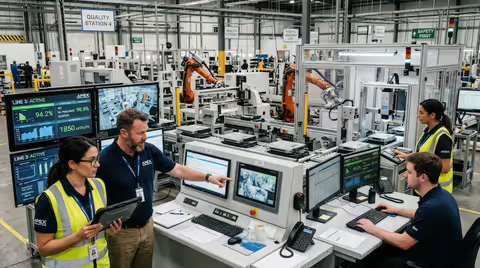
Mobile robots are becoming an important part of modern industrial operations. These machines can move materials, transport products, inspect equipment, and support repetitive tasks with different levels of automation. As manufacturing facilities, warehouses, and logistics companies adopt advanced technologies, mobile robotics is helping businesses improve the organization of their daily operations.
Modern mobile robots combine sensors, navigation systems, control software, and artificial intelligence to perform specific tasks. Some follow predefined routes, while others can navigate changing environments. Their applications extend across manufacturing, healthcare, food processing, automotive production, and distribution facilities.
What Are Mobile Robots?
Mobile robots are machines designed to move through an environment while carrying out assigned tasks. Unlike stationary industrial robots that operate from a fixed position, mobile robots can travel between different locations.
They may operate independently, follow programmed instructions, or receive commands from a central control system.
Common types include:
Autonomous mobile robots (AMRs): Navigate using sensors, mapping technology, and onboard software.
Automated guided vehicles (AGVs): Transport materials along predefined routes or using installed navigation systems.
Collaborative mobile robots: Operate in shared environments with employees when designed and assessed for that purpose.
Inspection robots: Move through industrial facilities to collect information about equipment and operating conditions.
Delivery robots: Transport supplies, containers, or products between designated locations.
The appropriate robot depends on the application, operating environment, payload, and required level of automation.
Why Mobile Robots Matter in Modern Industries
Industrial facilities regularly move raw materials, components, tools, and finished products. These activities connect storage, production, packaging, and distribution departments.
Traditional transportation methods can involve repetitive manual movement and coordination. Mobile robots provide another way to organize these activities.
1. Improving Manufacturing Operations
Manufacturing facilities use mobile robots to move components between production stations, storage areas, and assembly lines.
For example, an automotive factory may use automated guided vehicles to transport parts to assembly stations. An electronics manufacturer may use smaller autonomous mobile robots to deliver components to different production areas.
These applications support manufacturing automation by organizing internal transportation and reducing the need for employees to perform repetitive material movement.
2. Supporting Warehouse Automation
Warehouses handle inventory, packaging materials, containers, and customer orders. Mobile robots can transport goods between storage locations, picking stations, packing areas, and dispatch zones.
Warehouse automation systems may combine mobile robots with conveyors, automated storage equipment, barcode scanners, and warehouse management software.
Common applications include:
Inventory transportation
Order fulfillment support
Goods-to-person picking
Pallet movement
Stock replenishment
Internal warehouse deliveries
The effectiveness of warehouse mobile robots depends on the facility layout, traffic conditions, software integration, and inventory processes.
3. Improving Logistics and Material Handling
Logistics operations depend on the organized movement of products throughout a supply chain. Mobile robots can support internal transportation in distribution centers, manufacturing facilities, and suitable storage environments.
Automated material handling equipment may include mobile robots, conveyor systems, pallet transport equipment, and robotic lifting systems.
When these technologies are properly coordinated, businesses can organize product movement between operational areas and monitor transportation activities more consistently.
Technologies Used in Industrial Mobile Robots
Mobile robot systems combine several technologies that allow machines to move, identify obstacles, and perform assigned tasks.
Sensors and Navigation Systems
Sensors help robots understand their surroundings. Depending on the design, a mobile robot may use LiDAR, cameras, ultrasonic sensors, infrared sensors, or other detection technologies.
Autonomous mobile robots often use mapping and localization methods to estimate their position. Simultaneous localization and mapping (SLAM) allows a robot to build or update a map while tracking its location within an environment.
Artificial Intelligence and Machine Learning
Artificial intelligence can support object recognition, route planning, obstacle detection, and task coordination.
Machine learning may help certain systems analyze operational information and improve specific functions. However, performance depends on software quality, sensor capabilities, training data, and the conditions in which the robot operates.
Robot Control and Fleet Management Software
Fleet management software coordinates multiple mobile robots working in the same facility. Depending on the system, it can assign tasks, manage routes, monitor robot status, and organize charging schedules.
Integration with warehouse management systems (WMS), manufacturing execution systems (MES), and enterprise resource planning (ERP) software can connect robot operations with wider business processes.
Major Industrial Applications of Mobile Robots
Mobile robotics has applications across several industries.
Automotive Industry
Automotive manufacturers use mobile robots and AGVs to transport components, tools, and materials between production areas. These systems can support assembly operations and internal logistics.
Pharmaceutical Industry
Pharmaceutical facilities may use mobile robots to transport packaged products, containers, and approved materials. Deployment must consider hygiene, traceability, environmental controls, and applicable manufacturing requirements.
Food and Beverage Industry
Mobile robots can support the movement of ingredients, packaging materials, and finished products. Equipment selection must account for hygiene requirements, cleaning procedures, and operating conditions.
Electronics Manufacturing
Electronics production involves the movement of small components, circuit boards, and assembly materials. Mobile robots can support deliveries between storage, production, and inspection areas.
Healthcare Facilities
Some healthcare environments use delivery robots to transport supplies, documents, and other approved items between departments. Their use depends on building design, operational procedures, and safety requirements.
Benefits and Limitations of Mobile Robotics
Industrial mobile robots can provide several operational advantages when selected and implemented appropriately.
Potential benefits include:
Organized movement of materials and products
Reduced repetitive transportation activities
Flexible internal logistics
Integration with warehouse automation systems
Better coordination of transportation tasks
Operational information for workflow analysis
Potential limitations include:
Initial equipment and integration requirements
Maintenance and battery management
Navigation challenges in crowded environments
Software compatibility requirements
Employee training and operational adjustments
Safety assessments and ongoing monitoring
A robot does not automatically improve every process. Businesses should identify the specific transportation problem and evaluate whether automation is suitable for the task.
How to Choose the Right Industrial Mobile Robot
Selecting an industrial mobile robot requires an assessment of the facility and its operating requirements.
Important factors include:
Payload capacity: Check the weight, size, and shape of materials the robot must transport.
Navigation method: Compare predefined-route navigation with sensor-based autonomous navigation.
Operating environment: Consider floor conditions, ramps, narrow passages, lighting, and pedestrian movement.
Battery performance: Review operating duration, charging requirements, and battery maintenance.
Software compatibility: Check integration with existing WMS, MES, and ERP platforms.
Safety features: Evaluate obstacle detection, emergency stops, speed controls, and relevant safety standards.
Technical support: Review maintenance arrangements, spare parts, software updates, and operator training.
A site assessment and practical equipment evaluation can help determine whether a particular system fits the intended application.
Future Trends in Mobile Robotics
The future of industrial mobile robots is closely connected to developments in artificial intelligence, sensors, connectivity, and automation software.
Improved navigation technology is helping robots operate in more dynamic environments. Fleet management platforms are also developing to coordinate different robot models and connect them with other industrial equipment.
Other developments include robotic inspection, automated inventory movement, collaborative systems, and integration with smart manufacturing platforms.
As industrial facilities become more connected, mobile robots are expected to play an increasingly important role in warehouse automation, manufacturing logistics, and material handling operations.
Frequently Asked Questions
1. What are mobile robots used for in industries?
Mobile robots are used to transport materials, move inventory, support production activities, inspect equipment, and perform internal deliveries in industrial facilities.
2. What is the difference between AMR and AGV robots?
AMRs generally use onboard sensors and mapping systems to navigate dynamically. Traditional AGVs commonly follow predefined routes or installed navigation infrastructure, although modern systems can have overlapping capabilities.
3. Which industries use mobile robots?
Manufacturing, automotive, pharmaceuticals, electronics, food processing, healthcare, warehousing, and logistics are among the industries using mobile robotics.
4. How do mobile robots navigate?
Depending on the model, mobile robots use cameras, LiDAR, sensors, mapping software, route planning, and localization technologies to move through their environment.
5. What is warehouse mobile robot automation?
It involves using mobile robots to transport inventory, pallets, containers, and products within warehouses and distribution centers.
6. What should businesses consider before adopting mobile robots?
Businesses should assess payload requirements, navigation technology, safety, operating conditions, software integration, maintenance, and employee training.
Conclusion
Mobile robots are transforming modern industries by supporting manufacturing automation, warehouse operations, logistics, and material handling. Their ability to transport products and perform assigned tasks across different environments makes them useful for organizations seeking more structured and connected operations.
Successful implementation requires suitable equipment, compatible software, workplace safety assessments, and clear operational planning. As robotics and automation technologies continue to develop, mobile robots will remain an important part of modern industrial systems.