How Automation Is Changing the Metal-Working Industry
Automation is transforming the metal-working industry by changing how metal components are designed, cut, shaped, welded, and finished. Modern manufacturing facilities increasingly use CNC machines, robotic systems, laser cutting equipment, and digital production software to manage complex manufacturing processes.
Metalworking automation helps manufacturers improve production consistency, manage repetitive tasks, and respond to changing production requirements. As demand grows for precision components in automotive, construction, aerospace, electronics, and industrial equipment, automated manufacturing technologies are becoming an important part of modern production
What Is Automation in the Metal-Working Industry?
Metalworking automation refers to the use of machines, robotics, sensors, and computer-controlled systems to perform manufacturing activities with reduced manual intervention.
Traditional metalworking often relies on operators to control cutting, drilling, bending, welding, and finishing equipment. Automated systems can perform some of these operations using programmed instructions and digital controls.
Common technologies include:
Computer numerical control (CNC) machines
Automated laser cutting machines
CNC milling and turning equipment
Robotic welding systems
Automated press brake machines
Metal forming and stamping equipment
Industrial sensors and production monitoring software
These technologies can work independently or as part of an integrated production line.
Why Automation Matters in Metal Manufacturing
Metal manufacturing involves operations that require accurate measurements, consistent processing, and careful material handling. Manual processes may become difficult to coordinate when production volumes increase or components have complex specifications.
Industrial automation helps manufacturers organize these activities through programmable equipment and connected production systems.
1. Improving Precision Through CNC Machining
CNC machining is one of the most widely used technologies in modern metalworking. It uses computer-controlled instructions to operate cutting tools and manufacture components according to defined specifications.
CNC milling machines remove material using rotating cutting tools, while CNC turning machines rotate the workpiece against a cutting tool. These processes are used to manufacture shafts, housings, brackets, machine components, and precision parts.
CNC machining can support repeatable production when machines are properly programmed, maintained, and inspected.
2. Transforming Sheet Metal Fabrication
Sheet metal fabrication includes cutting, bending, punching, forming, and assembling metal sheets into finished products.
Automated sheet metal fabrication equipment can perform several operations with programmed settings. Laser cutting machines use focused energy to cut metal sheets, while CNC press brake machines control bending operations.
These technologies are used in:
Automotive body components
Electrical enclosures
Industrial cabinets
Construction panels
Metal furniture
Machinery housings
The selection of a sheet metal cutting machine depends on material type, thickness, required accuracy, production volume, and the desired cutting process.
3. Making Welding Operations More Consistent
Robotic welding systems use programmable robotic arms and welding equipment to perform repetitive joining operations.
They are commonly used in automotive manufacturing, structural fabrication, heavy equipment production, and metal component assembly.
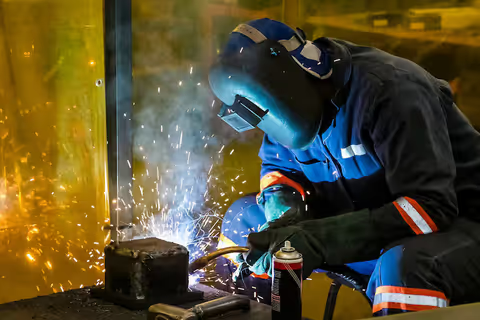
Automated welding can help maintain consistent movement and process settings across repeated tasks. However, welding quality still depends on joint preparation, material properties, equipment condition, programming, and inspection.
Human operators remain important for system setup, quality control, maintenance, and complex welding work.
4. Supporting Metal Forming and Press Operations
Metal forming changes the shape of a material through processes such as bending, stamping, pressing, and rolling.
Automated metal forming machines use controlled movements and programmed parameters to produce components with defined dimensions.
CNC press brake machines are used for bending sheet metal, while automated stamping presses produce components for automotive, electrical, and appliance manufacturing.
Automation can also connect material feeding, forming, and unloading activities into a coordinated production process.
Important Technologies Used in Automated Metalworking
Several technologies work together to support modern metal fabrication and machining operations.
CNC Control Systems
CNC control systems translate programmed instructions into machine movements. They control operations such as cutting speed, tool movement, positioning, and machining sequences.
Modern CNC machines may support multiple axes, automatic tool changing, and digital production monitoring.
Industrial Robotics
Industrial robots are used for welding, machine tending, material handling, grinding, and component placement.
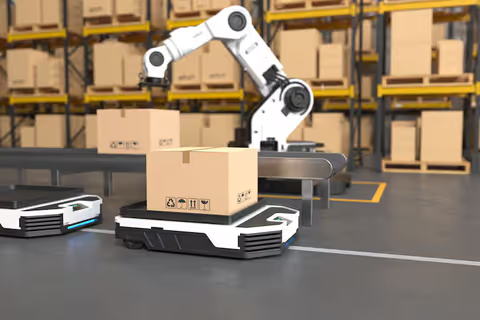
A robotic arm can load raw material into a CNC machine, remove finished parts, and transfer components to another production station. This type of integration is often called robotic machine tending.
Laser Cutting Technology
Laser cutting machines use concentrated laser energy to process materials. They are commonly used for sheet metal cutting, profile production, and detailed component manufacturing.
Fiber laser systems are widely used for processing suitable metal materials. Machine selection should consider material thickness, cutting speed, power requirements, operating environment, and maintenance arrangements.
Sensors and Industrial Automation Software
Sensors monitor conditions such as temperature, position, pressure, vibration, and machine status.
Manufacturing execution systems (MES) can help coordinate production activities, record manufacturing information, and monitor operational performance. When integrated with other business systems, they can connect production data with planning and inventory processes.
Benefits of Automation in the Metal-Working Industry
Automation can provide several operational advantages when implemented according to production requirements.
Improved production consistency: Programmable machines can repeat defined operations under controlled conditions.
Reduced repetitive work: Automated material handling, machine tending, and welding can reduce the need for employees to perform certain repetitive activities.
Better production monitoring: Sensors and manufacturing software can provide information about machine status, production activity, and process conditions.
Flexible manufacturing: Some CNC and robotic systems can be reprogrammed for different components and production requirements.
Material utilization: Suitable cutting software and nesting systems can help organize material layouts and reduce avoidable waste.
However, actual results depend on machine capability, operator skills, maintenance, material quality, and production planning.
Challenges of Implementing Metalworking Automation
Despite its advantages, automation requires careful planning and investment.
Important considerations include:
Equipment acquisition and installation requirements
CNC programming and technical training
Software compatibility and system integration
Maintenance and replacement components
Workplace safety and risk assessment
Power supply and factory infrastructure
Production downtime during installation
Manufacturers should evaluate the complete production process before selecting CNC machinery, robotic welding equipment, or automated fabrication systems.
How to Select the Right Metalworking Machinery
Choosing industrial machinery requires an understanding of the components being manufactured and the processes involved.
Consider these factors:
Material compatibility: Identify whether the equipment will process steel, stainless steel, aluminum, or other metals.
Production requirements: Estimate the component dimensions, production volume, and required processing operations.
Machine capability: Review working area, cutting capacity, operating speed, accuracy, and supported materials.
Automation features: Examine CNC controls, robotic integration, automatic loading, and production monitoring.
Software compatibility: Check whether the machine works with existing CAD, CAM, CNC, and manufacturing systems.
Maintenance requirements: Review servicing schedules, spare parts availability, and technical support.
Safety systems: Evaluate machine guarding, emergency stops, operator protection, and applicable workplace safety requirements.
A practical assessment should compare equipment specifications with actual manufacturing needs rather than relying only on advertised performance figures.
Future Trends in Metalworking Automation
The metal-working industry is moving toward connected and data-driven manufacturing. Artificial intelligence, industrial robotics, and smart sensors are supporting more advanced production monitoring and process control.
Some important developments include:
AI-assisted production planning and inspection
Connected CNC machines and industrial IoT systems
Automated material handling
Robotic welding and machine tending
Predictive maintenance using equipment data
Digital twins for production planning
Integration of manufacturing execution systems
These developments are contributing to smart manufacturing, where machines, software, and production teams share information to coordinate industrial operations.
Frequently Asked Questions
1. What is metalworking automation?
Metalworking automation uses CNC machinery, robotics, sensors, and software to perform or control manufacturing activities such as cutting, bending, welding, and machining.
2. What machines are used in automated metal fabrication?
Common equipment includes CNC milling machines, CNC lathes, laser cutting machines, automated press brakes, robotic welding systems, and metal stamping machines.
3. How does CNC machining help metal manufacturers?
CNC machining uses programmed instructions to control machine movements and cutting operations. It supports the production of components with defined dimensions and repeatable processes.
4. What is robotic welding?
Robotic welding uses programmable robotic arms to perform welding operations. It is commonly used for repetitive joining tasks in automotive, structural, and industrial manufacturing.
5. What is the role of AI in metal manufacturing?
AI can support production planning, machine monitoring, quality inspection, and maintenance analysis. Its effectiveness depends on data quality and the manufacturing application.
6. Is automation suitable for small metalworking businesses?
It can be suitable for smaller manufacturers when the equipment matches their production volume, available space, technical skills, and operational requirements. Automation does not always require a fully integrated production line.
Conclusion
Automation is changing the metal-working industry through CNC machining, robotic welding, laser cutting, automated metal forming, and connected manufacturing software. These technologies help manufacturers manage repetitive operations, improve production consistency, and organize increasingly complex manufacturing workflows.
Successful adoption requires careful equipment selection, trained operators, system integration, regular maintenance, and appropriate safety procedures. As smart manufacturing technologies continue to develop, automation will remain an important part of modern metal fabrication and industrial production.