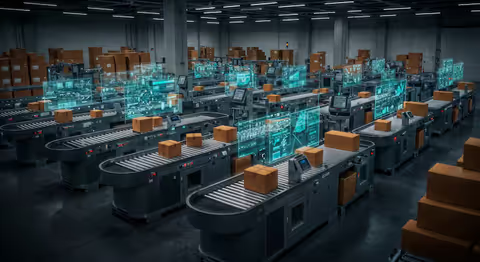
How Warehouse Automation Transforms Modern Storage Operations
Warehouse automation is changing how businesses store, organize, track, and distribute products. As supply chains become more complex and customer expectations for order accuracy and delivery speed increase, companies are adopting technologies that improve the movement of goods and management of inventory.
Modern warehouse automation combines robotics, software, conveyor systems, sensors, and automated storage equipment. These technologies help businesses coordinate daily operations, reduce repetitive manual activities, and make better use of available storage space.
From e-commerce distribution centers to manufacturing warehouses, automated systems are becoming an important part of modern industrial infrastructure.
What Is Warehouse Automation?
Warehouse automation refers to the use of machinery, robotics, software, and digital technologies to perform or support warehouse activities with reduced manual intervention.
Traditional warehouses often depend on employees to receive products, organize inventory, pick orders, transport materials, and prepare shipments. Automated warehouses use connected technologies to coordinate some of these activities.
Common warehouse automation technologies include:
Automated storage and retrieval systems (AS/RS)
Autonomous mobile robots (AMRs)
Automated guided vehicles (AGVs)
Conveyor and sortation systems
Warehouse management software (WMS)
Robotic picking and palletizing systems
Barcode and RFID tracking technology
The level of automation can vary. Some facilities automate only inventory tracking or transportation, while others integrate several systems across storage, picking, packing, and dispatch operations.
Why Warehouse Automation Is Important for Modern Businesses
Warehouses manage large quantities of products, components, and raw materials. As inventory volumes increase, manual processes can become difficult to coordinate.
Warehouse automation helps businesses organize these activities through connected systems and equipment.
1. Improving Inventory Management
Inventory management is one of the most important functions of a warehouse. Businesses need accurate information about product quantities, storage locations, incoming materials, and outgoing orders.
Warehouse management systems help monitor inventory records and coordinate stock movements. Barcode scanners and radio-frequency identification (RFID) technology can capture product information during receiving, storage, picking, and dispatch.
Warehouse inventory management software can also provide information about stock levels, product movement, and inventory discrepancies.
These tools support better inventory visibility, although accuracy still depends on correct scanning procedures, system configuration, and regular data checks.
2. Increasing Storage Capacity
Efficient storage space management is important for warehouses operating in limited areas. Automated storage and retrieval systems help organize products vertically and retrieve them using controlled mechanical equipment.
An automated storage and retrieval system (AS/RS) may use cranes, shuttles, lifts, or specialized storage mechanisms to move products between storage locations and picking stations.
Common AS/RS applications include:
Pallet storage and retrieval
Small-item storage
Component storage
High-density inventory systems
Automated production material storage
These systems can make better use of available building space, depending on the warehouse layout, product dimensions, and storage requirements.
3. Supporting Faster Order Fulfillment
Order fulfillment includes receiving customer orders, locating products, picking items, packing shipments, and preparing goods for dispatch.
Automated picking systems, conveyors, sortation equipment, and mobile robots can support these activities.
Goods-to-person systems bring products to employees at designated workstations. This can reduce the need for workers to travel between storage locations for every item.
Robotic picking systems may also support repetitive product-handling tasks. Their suitability depends on product size, shape, weight, packaging, and handling requirements.
Key Technologies Used in Warehouse Automation
Modern warehouse automation systems combine multiple technologies to manage storage and material movement.
Automated Storage and Retrieval Systems
AS/RS technology uses automated equipment to store and retrieve products from designated locations. It is commonly used in facilities that handle high inventory volumes or require organized storage arrangements.
Different configurations include unit-load systems, mini-load systems, shuttle systems, and vertical lift modules.
Warehouse Management System Software
Warehouse management system software helps coordinate inventory, receiving, picking, packing, and dispatch activities.
A WMS can provide information about product locations, stock movements, order status, and warehouse workflows.
Businesses may also integrate WMS platforms with enterprise resource planning (ERP), transportation management systems (TMS), and warehouse control systems (WCS).
Autonomous Mobile Robots and AGVs
Autonomous mobile robots navigate through warehouse environments using sensors, cameras, mapping technology, and onboard software.
They can transport containers, materials, and products between different operational areas.
Automated guided vehicles generally follow predefined routes or installed navigation infrastructure, although capabilities vary by model and system design.
Both technologies can support internal transportation and material handling operations.
Conveyor and Sortation Systems
Conveyor systems move products between receiving, storage, picking, packing, and dispatch areas.
Sortation systems direct packages or products toward specific destinations using scanning technology and mechanical equipment.
These systems are particularly useful in distribution centers where large quantities of packages need to be processed.
Barcode and RFID Technology
Barcode and RFID systems help identify and track products throughout warehouse operations.
Barcode systems require optical scanning, while RFID technology uses radio-frequency communication to identify compatible tags.
These technologies support inventory tracking, product identification, and data collection.
Industries Using Warehouse Automation
Warehouse automation is relevant to several industries with complex storage and distribution requirements.
E-Commerce and Retail
E-commerce businesses manage large product catalogs and frequent customer orders. Automated picking, sorting, inventory software, and mobile robots can support order processing and distribution.
Automotive Manufacturing
Automotive facilities store components, spare parts, tools, and production materials. Automated material handling systems help move these items between storage and assembly areas.
Pharmaceutical Industry
Pharmaceutical warehouses handle medicines, packaging materials, and regulated products. Inventory tracking, controlled storage conditions, and traceability are important considerations when selecting automation technology.
Food and Beverage
Food and beverage warehouses may use conveyors, automated storage, and inventory management software to organize packaged goods and ingredients. Equipment must be appropriate for hygiene, temperature, and handling requirements.
Third-Party Logistics
Third-party logistics providers manage storage and distribution activities for different businesses. Warehouse automation can support inventory coordination, order processing, and product movement across multiple customer operations.
Benefits and Challenges of Warehouse Automation
Warehouse automation can improve operational coordination, but its performance depends on implementation quality and the specific application.
Potential benefits include:
Improved inventory visibility
More organized product storage
Reduced repetitive material movement
Better coordination of warehouse tasks
Support for order processing and sorting
Improved use of available storage space
Operational data for performance analysis
Challenges to consider include:
Equipment installation and integration requirements
Software compatibility
Employee training
Equipment maintenance
Network and system reliability
Changes to warehouse layouts
Safety procedures and risk assessments
Automation does not remove the need for employees. Human supervision, maintenance, exception handling, quality checks, and system management remain important.
How to Choose Warehouse Automation Equipment
Selecting suitable warehouse automation equipment requires an understanding of the facility's operational needs.
Consider these factors before choosing a system:
Storage requirements: Review product dimensions, inventory volume, storage density, and stock movement.
Equipment capacity: Check payload limits, operating speed, and expected daily workload.
Warehouse layout: Examine available floor space, ceiling height, aisle width, and movement patterns.
Software compatibility: Check integration with WMS, ERP, WCS, and other existing platforms.
Safety requirements: Review emergency stops, sensors, access controls, and employee operating procedures.
Maintenance needs: Understand inspection schedules, spare parts availability, and technical support.
Future expansion: Consider whether the system can accommodate additional equipment, storage areas, or operational demand.
A warehouse assessment and equipment evaluation can help determine which combination of automation technologies is appropriate.
Future Trends in Warehouse Automation
Warehouse automation is moving toward more connected and data-driven operations. Artificial intelligence, robotics, IoT sensors, and advanced warehouse software are influencing how facilities manage inventory and material movement.
Some important developments include:
AI-based warehouse analytics: Software can analyze operational information and help identify workflow patterns.
Robotic picking: Advances in robotic vision and gripping technology are expanding automated product-handling applications.
Connected inventory systems: RFID, barcode scanning, and IoT sensors support improved inventory visibility.
Flexible mobile robots: AMRs can support changing transportation requirements in suitable warehouse environments.
Integrated warehouse platforms: WMS, WCS, and WES platforms can coordinate different automation systems.
These technologies are not equally suitable for every facility. Businesses should evaluate their operational requirements, technical infrastructure, and safety needs before implementation.
Frequently Asked Questions
1. What is warehouse automation used for?
Warehouse automation supports activities such as inventory tracking, product storage, order picking, packaging, sorting, and internal material transportation.
2. What is an automated storage and retrieval system?
An AS/RS is a technology that uses automated equipment to place products into storage locations and retrieve them when required.
3. What is warehouse management software?
Warehouse management software helps businesses monitor inventory, organize product locations, coordinate orders, and manage warehouse activities.
4. How do autonomous mobile robots help warehouses?
Autonomous mobile robots transport products, containers, and materials between warehouse locations using onboard navigation technologies.
5. What is the difference between WMS and WCS?
A warehouse management system generally manages inventory and operational workflows, while a warehouse control system coordinates the movement and activities of automated equipment.
6. Which industries benefit from warehouse automation?
Retail, e-commerce, automotive, pharmaceuticals, food and beverage, manufacturing, and third-party logistics operations can use warehouse automation.
Conclusion
Warehouse automation is transforming modern storage operations through robotics, inventory software, automated storage systems, conveyors, and intelligent material handling equipment. These technologies help businesses organize inventory, coordinate product movement, and support order fulfillment.
However, successful automation depends on choosing appropriate equipment, integrating software, training employees, and maintaining safe operating conditions. As digital technologies and industrial robotics continue to develop, warehouse automation will play an increasingly important role in modern storage and supply chain operations.