Mini-Flex Corporation: Understanding Metal Bellows, Manufacturing, and Applications
Mini-Flex Corporation is a U.S.-based manufacturer specializing in precision metal bellows, custom metal bellows, bellows assemblies, and related engineering and manufacturing services. The company is based in Ventura, California, and has been involved in metal bellows manufacturing since 1961.
Metal bellows are flexible, corrugated components used in mechanical and industrial systems where controlled movement, vibration absorption, pressure changes, thermal expansion, or sealed motion must be accommodated. They are used across industries such as aerospace, semiconductor technology, industrial equipment, vacuum systems, and other precision applications.
What Is Mini-Flex Corporation?
Mini-Flex Corporation focuses on the design and manufacture of metal bellows and bellows assemblies. Its product range includes both stock metal bellows and customized components designed around specific engineering requirements.
The company provides manufacturing capabilities associated with metal bellows production, including welding, brazing, machining, tubing, cleaning, and processing. These capabilities can be important when a bellows must be integrated into a larger mechanical or vacuum assembly.
Mini-Flex and Precision Metal Bellows
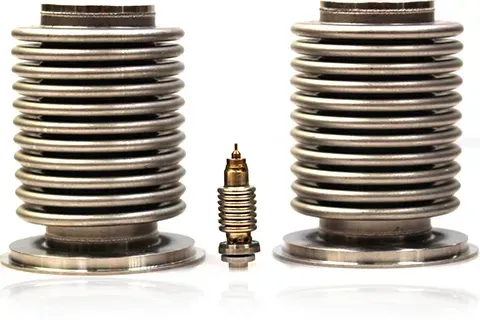
Precision metal bellows are engineered flexible components made from thin metal tubing or sheet material and formed into a series of convolutions. The convoluted structure allows the component to move axially while maintaining a sealed mechanical boundary.
Depending on the design, metal bellows can be used to accommodate:
- Axial movement
- Thermal expansion
- Mechanical vibration
- Pressure changes
- Equipment movement
- Misalignment
- Sealed mechanical motion
The exact performance of a bellows depends on factors such as material, wall thickness, diameter, number of convolutions, operating pressure, temperature, stroke, and cycle requirements.
Why Are Metal Bellows Important?
Metal bellows solve a specific engineering problem: allowing movement while maintaining a controlled and, in many applications, sealed environment.
Traditional flexible connections may not be appropriate for high-temperature, vacuum, corrosive, or precision applications. Metal bellows can provide a flexible connection while maintaining mechanical strength and environmental separation.
Applications of Metal Bellows
Metal bellows are found in a wide variety of industrial and technical applications.
Common application areas include:
- Aerospace equipment
- Semiconductor manufacturing equipment
- Vacuum systems
- Industrial machinery
- Instrumentation
- Process equipment
- Medical and laboratory equipment
- Energy systems
- Precision mechanical assemblies
The appropriate bellows design depends on the operating environment and the required movement.
Custom Metal Bellows vs. Stock Metal Bellows
One of the important considerations when purchasing a metal bellows is whether a standard component is sufficient or a custom design is required.
Stock Metal Bellows
Stock bellows are manufactured to predefined specifications. They can be useful when the required dimensions, material, connection configuration, and movement characteristics match an available product.
Standardized components can simplify procurement and may reduce engineering time when they meet the application's requirements.
Mini-Flex maintains stock metal bellows in addition to its custom manufacturing capabilities.
Custom Metal Bellows
Custom metal bellows are designed according to application-specific requirements.
A custom bellows specification may consider:
- Outside diameter
- Inside diameter
- Wall thickness
- Overall length
- Number of convolutions
- Stroke
- Operating pressure
- Temperature
- Material compatibility
- End connections
- Expected cycle life
Custom engineering can be particularly useful when a standard component cannot meet the dimensional or performance requirements of an industrial system.
Metal Bellows Manufacturing Process
Manufacturing precision metal bellows requires careful control of material, geometry, forming, joining, and inspection.
Material Selection
Material selection is one of the first engineering decisions.
Depending on the application, designers may evaluate materials based on:
- Corrosion resistance
- Temperature resistance
- Fatigue properties
- Flexibility
- Pressure requirements
- Chemical compatibility
- Weldability
The selected material should be compatible with the operating environment and expected service conditions.
Bellows Forming
The metal is formed into a corrugated structure containing multiple convolutions. These convolutions provide the flexibility required for controlled movement.
The final geometry has a direct effect on mechanical performance, including spring characteristics, movement capability, and fatigue life.
Welding and Joining
Welding may be required to connect bellows to end components or create assemblies.
Mini-Flex describes several welding methods for metal bellows assemblies, including laser beam welding, electron beam welding, and tungsten inert gas welding.
Electron beam welding can be useful for applications requiring high-purity welds and vacuum environments, while laser welding can be suitable for thin-wall components where control of the heat-affected zone is important.
Machining and Tubing
Additional machining and tubing operations may be required when a bellows becomes part of a larger assembly.
Mini-Flex describes conventional machining capabilities for prototypes and tooling and also provides tubing-related manufacturing services.
Metal Bellows for Aerospace Applications
Aerospace systems often require components that can withstand demanding mechanical and environmental conditions.
Metal bellows can be used where controlled movement, vibration management, thermal expansion, or sealed connections are required.
For aerospace applications, engineers generally evaluate factors such as:
- Weight
- Operating temperature
- Pressure
- Vibration
- Fatigue life
- Material compatibility
- Dimensional accuracy
- Reliability requirements
Mini-Flex identifies aerospace and technology markets among the industries it serves.
Vacuum Metal Bellows
Vacuum systems require components capable of maintaining a controlled environment while allowing mechanical movement.
Vacuum metal bellows can provide a flexible sealed connection between moving components without relying on conventional sliding seals.
This makes them useful in applications where contamination control, leak prevention, and controlled mechanical movement are important.
Electron beam welding is one joining method used for metal bellows where vacuum sealing and high-purity welds are required.
How to Select a Metal Bellows
Selecting the right bellows requires more than choosing a diameter or material. Engineers should consider the complete operating environment.
Operating Pressure
Determine the normal and maximum pressure the bellows will experience.
Both internal and external pressure can affect bellows performance, so pressure conditions should be clearly specified during the design process.
Temperature
Temperature affects material properties and fatigue behavior. The minimum and maximum operating temperatures should be considered before selecting the material and construction.
Required Movement
The expected movement should be identified, including:
- Axial compression
- Axial extension
- Lateral movement
- Angular movement
The number of cycles expected during the component's service life is also an important engineering consideration.
Connection Requirements
End connections can vary depending on the application. Common configurations include tube, cup, flange, root, split-convolute, and other custom neck arrangements.
Mini-Flex's design information identifies multiple neck configurations for metal bellows.
Important Engineering Specifications
A metal bellows quotation or engineering request normally benefits from detailed specifications.
Dimensions
Important dimensional specifications can include:
- Outside diameter
- Inside diameter
- Wall thickness
- Neck diameter
- Neck length
- Overall length
- Number of convolutions
Accurate dimensional information helps manufacturers determine whether an existing stock product can meet the requirement or whether a custom bellows is necessary.
Material
The material should be selected according to pressure, temperature, corrosion, fatigue, and compatibility requirements.
Cycle Life
Bellows can experience repeated movement throughout their operating life. Therefore, expected cycle requirements should be considered during design.
A component intended for occasional movement may have substantially different requirements from one used continuously in an automated industrial system.
Quality and Compliance Considerations
For industrial purchasing, quality documentation and regulatory requirements can be important factors.
Mini-Flex provides customer access to compliance-related documents covering subjects such as RoHS, REACH, conflict minerals, extended minerals reporting, and other supply-chain compliance information.
Businesses purchasing precision components should verify the specific certifications, testing documents, material records, and quality requirements applicable to their own industry and application.
Questions to Ask a Metal Bellows Manufacturer
Before ordering custom metal bellows, buyers can prepare several technical questions.
What Are the Operating Conditions?
Provide the manufacturer with the expected:
- Pressure
- Temperature
- Movement
- Cycle frequency
- Environment
- Media or chemicals
Is a Stock Product Available?
A stock bellows may be appropriate when its dimensions and performance characteristics meet the application's requirements.
If not, a custom metal bellows can be evaluated.
What Material Should Be Used?
Material selection should be based on actual application conditions rather than price alone.
Compatibility with temperature, pressure, chemicals, vacuum conditions, and repeated movement should be evaluated.
What Documentation Is Available?
For industrial procurement, buyers may need documentation such as:
- Material certifications
- Compliance documents
- Inspection records
- Dimensional reports
- Welding documentation
- Testing information
The exact documentation depends on the product and industry.
Mini-Flex Resources for Engineers
Mini-Flex provides technical resources for customers evaluating metal bellows. Its website includes a metal bellows catalog, stock bellows information, specification resources, and compliance documentation.
These resources can help engineers and purchasing teams understand available configurations before requesting a quotation or specifying a custom component.
Conclusion
Mini-Flex Corporation is an established manufacturer specializing in metal bellows, custom bellows assemblies, and related precision manufacturing services. The company has operated in the metal bellows industry since 1961 and serves applications across aerospace, technology, and industrial markets.
For companies evaluating metal bellows, the most important considerations are not simply product price or dimensions. Pressure, temperature, material compatibility, movement, fatigue requirements, connection design, manufacturing tolerances, and expected service life all influence the appropriate solution.
Understanding these factors can help engineers, maintenance teams, and procurement professionals make more informed decisions when evaluating stock or custom metal bellows for industrial equipment.