Tractor Part Number: A Practical Guide to Identifying the Right Tractor Parts
A tractor part number is an identification code used to distinguish a particular component from other parts used in agricultural machinery. Tractors contain hundreds of components, including engine parts, transmission components, hydraulic parts, electrical systems, filters, steering components, and body parts. Because many components can look similar, using the correct part number can make the identification process more accurate.
Understanding tractor part numbers is particularly useful when researching tractor replacement parts, planning tractor maintenance, or checking technical information for agricultural equipment. A part number can help identify the intended component, its specifications, and in some cases its compatibility with a particular tractor model.
What Is a Tractor Part Number?
A tractor part number is a unique or manufacturer-specific reference assigned to a tractor component. Depending on the manufacturer, the number may contain letters, numbers, or a combination of both. Some manufacturers use different numbering systems for engine components, hydraulic parts, electrical components, and other assemblies.
The part number is different from the tractor model number or serial number. The model number identifies the tractor series or configuration, while the serial number generally identifies a particular machine. The part number identifies an individual component or assembly.
Why Tractor Part Numbers Are Important
Accurate part identification is important because tractors often have different configurations within the same model family. A component used on one production year or engine configuration may not necessarily be identical to a component used on another version.
Using the correct tractor part number can reduce confusion when comparing technical specifications. It can also help maintenance professionals, agricultural equipment operators, and machinery owners locate information about a specific component.
For example, two hydraulic filters may have similar dimensions but different filtration specifications. Similarly, electrical components may have different voltage ratings or connector configurations even when their external appearance is similar.
Where to Find a Tractor Part Number
Check the Existing Tractor Part
One of the first places to look is the component itself. Many tractor components have a stamped, engraved, printed, or molded identification number. Depending on the component, the number may be located on a label, metal plate, housing, or packaging.
Before recording the number, it is useful to clean the surrounding area carefully so that dirt, grease, or corrosion does not obscure any characters.
Check the Tractor Manual
The operator's manual, maintenance manual, or parts catalog may contain detailed information about tractor components. Parts catalogs can be particularly useful because they may show exploded diagrams together with corresponding part numbers.
Technical documentation should be checked carefully because part numbers can change between model years or production configurations.
Check the Tractor Identification Plate
A tractor identification plate can provide information such as the model, serial number, engine details, and production information. These details can be important when researching the appropriate replacement component.
The tractor's model and serial information should generally be recorded together with the part number because they provide additional context for identifying compatible components.
How to Read a Tractor Part Number
There is no universal tractor part-number format. Different manufacturers and suppliers can use different numbering systems. Some numbers may contain prefixes or suffixes that indicate a component family, revision, size, or other internal classification.
A part number should therefore not be interpreted solely by looking at individual digits unless the manufacturer's documentation explains the numbering system.
When researching a component, it is better to compare the complete part number with the technical documentation rather than assuming that similar-looking numbers represent interchangeable parts.
Tractor Part Number vs. Model Number
A tractor model number identifies the tractor itself, while a tractor part number identifies a component.
For example, a tractor may have a model designation that identifies its engine power class and equipment configuration. Individual components fitted to that tractor will have their own part numbers.
The distinction becomes important when searching for tractor replacement parts. Searching only by tractor model may produce a broad list of components, whereas searching with the correct part number can narrow the identification process.
Tractor Serial Number and Part Number
The serial number is another important identification reference. Unlike a part number, which relates to a component, the serial number normally identifies an individual tractor.
A serial number can help determine the production period and configuration of a machine. This information can be useful when a manufacturer changed a component during the production life of a particular tractor model.
For this reason, it is often helpful to record the tractor model, tractor serial number, engine information, and existing component part number before researching a replacement.
Common Categories of Tractor Parts
Engine Parts
Engine-related components can include filters, gaskets, pistons, bearings, belts, pumps, and other internal or external components. Engine part numbers should be checked carefully because seemingly similar components may have different specifications.
Hydraulic Parts
Hydraulic systems are essential for many tractors and agricultural machines. Hydraulic components can include pumps, valves, hoses, filters, cylinders, seals, and fittings.
Correct identification is particularly important for hydraulic components because pressure ratings, dimensions, connection types, and material specifications can differ.
Transmission Parts
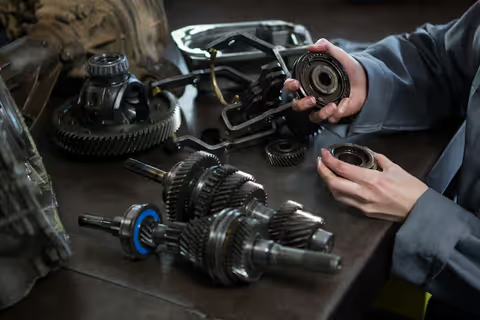
Transmission components can include gears, shafts, bearings, seals, clutches, and related assemblies. The correct part number can help distinguish components designed for different transmission configurations.
Electrical Components
Electrical tractor parts can include alternators, starters, switches, sensors, relays, wiring components, and control units. Voltage, amperage, connector design, and other specifications may need to be considered alongside the part number.
Filters and Maintenance Components
Oil filters, fuel filters, air filters, and hydraulic filters are commonly replaced during routine tractor maintenance. Their part numbers can help identify the correct filter specification for a particular machine.
How to Verify a Tractor Replacement Part
Compare the Complete Part Number
The first step is to compare the complete number rather than only part of it. Even a small difference in a suffix or prefix can represent a different component.
Check the Tractor Model and Serial Range
A component may be designed for a specific model or a particular serial-number range. Checking this information can help prevent compatibility problems.
Compare Technical Specifications
Dimensions, material, connection type, operating pressure, electrical rating, and other specifications should be considered where applicable.
Review Manufacturer Documentation
Manufacturer parts catalogs and technical documentation can provide more reliable identification information than photographs or informal listings alone.
Common Mistakes When Searching for Tractor Parts
One common mistake is relying only on the visual appearance of a component. Two parts can look almost identical while having different technical specifications.
Another mistake is using an incomplete part number. Missing one character can lead to a completely different reference.
It is also important not to assume that every part listed for a particular tractor model will fit every version of that model. Production changes, engine variations, attachments, and serial-number ranges can affect component compatibility.
Tractor Part Numbers and Preventive Maintenance
Accurate part identification can support preventive maintenance planning. Tractor owners and maintenance teams can maintain records of commonly replaced components and their corresponding part numbers.
Keeping maintenance records can also make future servicing more organized. A record may include the tractor model, serial number, component name, part number, installation date, and maintenance notes.
This approach can be useful for agricultural operations where several tractors or different equipment configurations are maintained.
Digital Tools for Tractor Part Identification
Modern agricultural equipment information is increasingly available through digital catalogs and technical databases. These resources can make it easier to search by tractor model, serial number, component category, or part number.
Some manufacturers also provide electronic parts catalogs containing diagrams and component references. When using online information, it is important to verify that the information applies to the correct tractor model and production configuration.
Frequently Asked Questions
What is a tractor part number?
A tractor part number is a manufacturer or supplier reference used to identify a particular tractor component or assembly.
Where can I find a tractor part number?
It may be printed or engraved on the component, listed in a parts catalog, shown in a maintenance manual, or included in technical documentation.
Is a tractor part number the same as a model number?
No. A model number identifies the tractor, while a part number identifies an individual component.
Can the same tractor model use different part numbers?
Yes. Different production years, serial-number ranges, engines, transmissions, or equipment configurations can sometimes use different components.
Why is the tractor serial number useful?
The serial number can help identify the specific production configuration of a tractor and can provide additional information when researching compatible components.
Conclusion
Understanding the tractor part number is an important part of accurate agricultural equipment maintenance and component identification. Part numbers provide a structured way to distinguish engine components, hydraulic parts, transmission components, electrical equipment, filters, and other tractor systems.
For reliable identification, it is useful to consider the complete part number together with the tractor model, serial number, production information, and relevant technical specifications. Checking manufacturer documentation and parts catalogs can further reduce confusion when researching tractor replacement parts.